 Retro Replay Retro Gaming History, Reviews & Emulation
Retro Replay Review
Gameplay
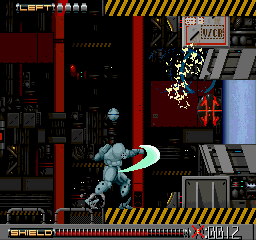
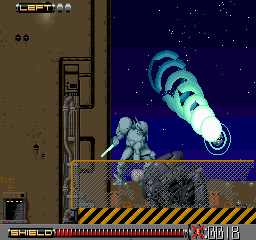
The first thing that separates Genocide 2 from a routine side-scrolling action game is how much it asks of Tracer’s movement. Ken’s mech comes prepared with a default melee weapon and the eight-directional capsule Betty from the start, but the sequel puts greater weight on platforming than the original. You are not simply pushing forward through enemies; you are expected to negotiate dangerous spaces with a jump and double jump that matter to survival.
That is a promising combination for a mecha action game. A close-range default weapon encourages you to get involved, while an attack that reaches in eight directions gives you options beyond a straight-ahead shot. Starting with Betty is a smart call: the game does not make you wait to access one of Tracer’s defining tools, and that should make the opening stretch feel more immediately capable than a slow build toward basic mobility or firepower.
The potential frustration is equally clear. When a game makes double-jumping necessary in hazardous areas, missed movement will carry more weight than it would in a looser run-and-gun. If you enjoy learning the shape of a stage and committing to jumps, that pressure is part of the reward. If you came mainly for uncomplicated robot combat, the platforming emphasis may feel like it is constantly asking you to prove yourself before letting the action breathe.
Still, the design has a coherent pull. Tracer is equipped to attack around itself and move through perilous terrain, and Genocide 2 leans into both sides rather than treating its mech as a slow tank. Give it a chance if the thought of a more athletic, exacting side-scroller sounds better to you than a purely weapon-driven shooter.
Graphics
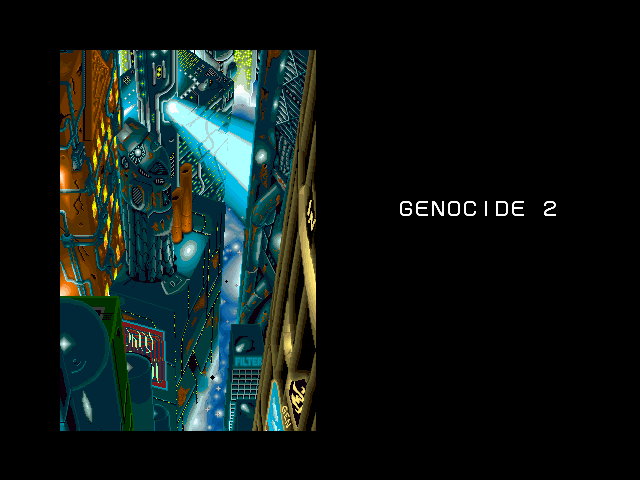
The action is viewed from the side, keeping Tracer, enemy robots, platforms, and hazards in the same clear plane. That is a natural fit for the game’s mix of combat and jump-focused navigation: you can judge where the mech needs to land while watching the threats sharing the route.
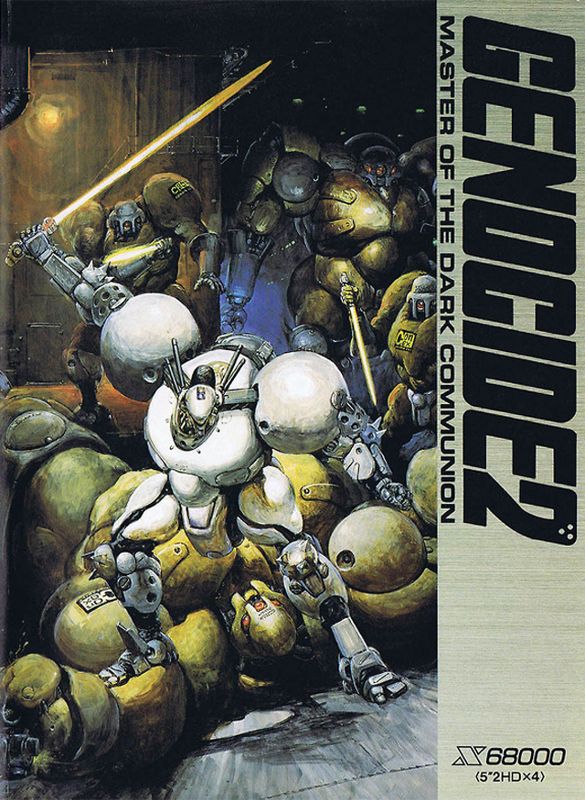
Its sci-fi imagery centers on a giant robot fighting through a world still scarred by a war against a neurocomputer and now threatened by a corporation building new machines. The strongest visual draw is the basic fantasy of piloting Tracer through that machine-heavy conflict, not a detached cutaway view or a distant strategy map.
Story
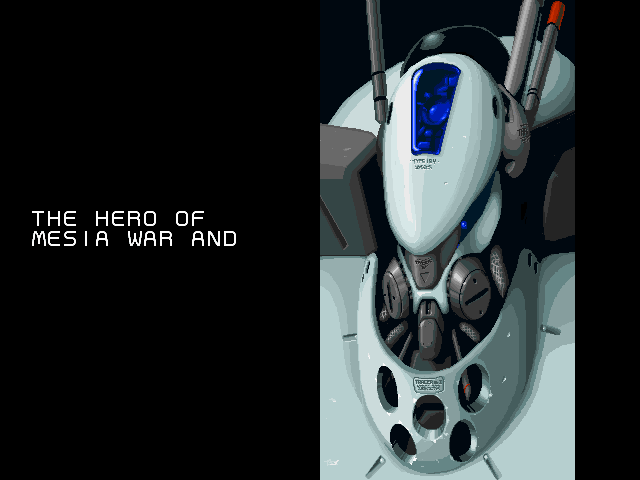
Genocide 2 starts from a stronger position than a blank-slate sequel. Humanity has already defeated MESIA, the powerful neurocomputer that threatened Earth, and Ken Ryugasaki is already known as the man who saved it. That gives his return in Tracer some welcome weight: you are stepping back into the cockpit of a hero with history rather than being handed a random mech and told to care.
The new conflict is built around Conex, a corporation rebuilding cities devastated by the earlier war and producing new robot models. Its public face initially looks benevolent, which makes the turn toward world domination a solid piece of sci-fi paranoia. In a world recovering from a machine war, a company offering reconstruction and robots is exactly the sort of power that deserves suspicion.
Ken’s mission is admirably direct: board Tracer and stop Conex’s plans. The setup does not need to tangle itself in an elaborate detour to establish why the fighting matters. You are facing an enemy tied to the same anxiety that fueled the first war—humanity once again placing immense power in the hands of systems and machines it may not control.
Overall Experience
Genocide 2 sounds most convincing when it treats the mech as a nimble platform-action lead rather than merely a walking gun. The melee weapon, eight-directional Betty, and required double jumps all point toward an action game that wants you active in every part of the screen, not just parked at one end firing forward.
Its biggest dividing line is also its clearest recommendation. The heavier platforming focus gives the sequel a reason to exist beyond repeating the original’s side-scrolling action, but it means the hazardous routes are not optional seasoning. You should go in ready to make careful jumps and accept that navigation can be as important as attacking.
For fans of 1990s sci-fi mecha action, the payoff is a focused continuation with a credible new antagonist and a more demanding physical challenge for Tracer. It is an easy recommendation if you like side-view robot combat with platforming teeth. Skip it only if precise jumping inside a combat game sounds like work rather than the reason to play.


Reviews
There are no reviews yet.