 Retro Replay Retro Gaming History, Reviews & Emulation
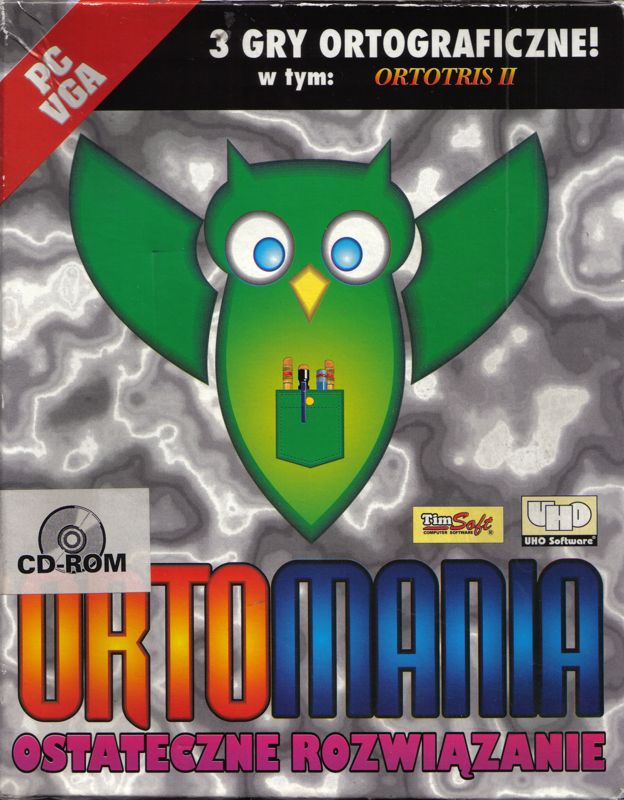


Retro Replay Review
Gameplay
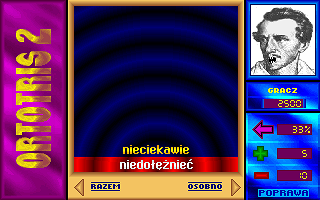
Ortomania understands that spelling practice becomes less tedious when you have something immediate to react to. In Ortotris 2, you are not arranging falling blocks; you are selecting the correct form of a word from alternatives with the cursor keys. The uncertain section is highlighted, so the game keeps your attention on the exact spelling problem rather than asking you to hunt through the entire word.
That simple loop has a nice bite. A correct choice disappears, while a mistake remains, making errors feel like clutter you have to live with. The on-screen percentage of correct answers adds just enough accountability to turn “I think that looks right” into a decision you want to get right. It is straightforward, but it gives basic orthography drills a cleaner sense of consequence than a static quiz.
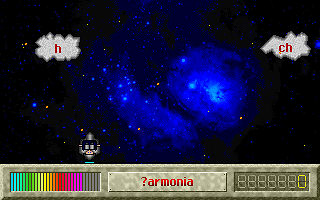
AstroOrto and Ortoidy reframe the same core test as space action. You complete the displayed word by firing at the appropriate answer; choosing badly costs time in AstroOrto and energy in Ortoidy. The change is modest rather than transformative, yet it matters for practice sessions: swapping modes can stop repetition from feeling like you are grinding one exercise forever.
The limitation is also clear: success depends on caring about Polish spelling and being willing to repeat word choices. If that is not your goal, the arcade framing will not suddenly make it a deep action game. For learners, though, the focused prompts and quick penalties make it a more involving drill than its educational label suggests.
Graphics
Ortomania uses clear, functional game screens built around words and answers. Ortotris 2 keeps the highlighted portion of each word and the accuracy percentage in view, while AstroOrto and Ortoidy put the spelling task on a spacecraft dashboard and send you firing toward answer targets.
Story
There is no narrative to carry you from one challenge to the next. Ortomania’s through-line is learning Polish spelling, with the three games supplying different arcade wrappers for that job.
The space settings in AstroOrto and Ortoidy give their exercises a little motion and context: you are completing words from a craft rather than filling in a bare prompt. That is enough to make the drills feel less dry, even if there is no plot to uncover.
Ortotris 2 is even more direct. Its tension comes from clearing correct answers and seeing mistakes persist, not from characters or story stakes. Go in expecting a teaching tool with game-like momentum, not an adventure.
Overall Experience
Ortomania is at its best when you want Polish spelling practice that asks for quick recall instead of passive memorization. The three formats are variations on a narrow idea, but they are sensible variations: cursor selection and persistent mistakes in Ortotris 2, then answer-targeting pressure governed by time or energy in the space games.
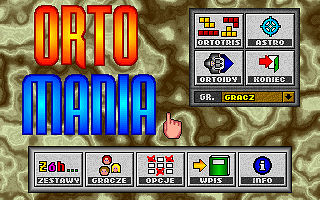
The standout extra is Ortowpis II, which lets you add words to the dictionary. That gives the compilation more staying power for structured study, since you can shape practice around the words that actually need work rather than exhaust a fixed list and stop.
This is not a game you finish for a grand finale; its payoff is noticing that troublesome spellings become easier to recognize. Give it a chance if you are studying Polish or setting up spelling exercises for someone else. If you only want arcade action, the educational core will be too exposed, but for its intended task Ortomania is a smart, pleasantly playful package.

Reviews
There are no reviews yet.