 Retro Replay Retro Gaming History, Reviews & Emulation

Retro Replay Review
Gameplay
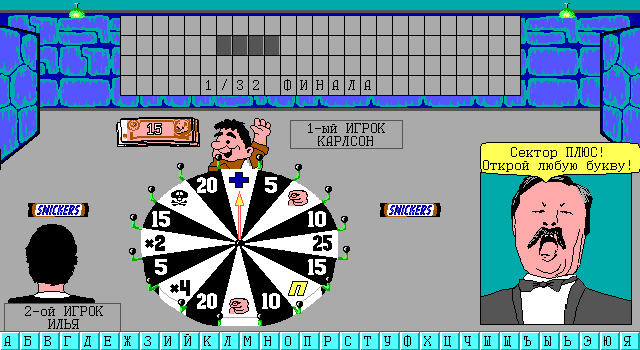
The first few turns get straight to the point: spin the wheel, call a letter, and hope the board starts opening up before somebody else takes control. That simplicity is the game’s strength. You do not need to learn a complicated system before the competition begins; the fun comes from deciding whether to build money carefully with another letter or gamble on solving the whole word.
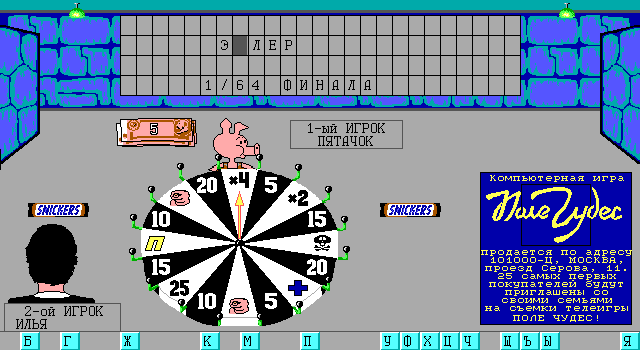
Up to three contestants can play at once, with two human-controlled slots and an AI opponent drawn from famous USSR cartoons. That makes it a much better fit for passing turns between two people than for treating it as a demanding solo word-puzzle challenge. The computer gives the format a third seat at the table, but the best moments will come from the human players second-guessing one another’s guesses.
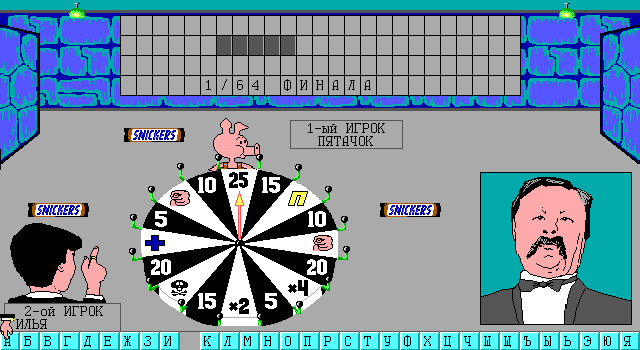
The wheel prevents the quiz from becoming a dry spelling exercise. Cash values and multipliers make correct letters matter, while lost turns and the chance to burn all your money can make a strong round collapse abruptly. Opening any letter offers a useful escape hatch, and the super prize adds a deliberately odd decision: take it, and your contestant leaves the game.
That volatility can sting, especially after you have accumulated money and one bad spin erases it. Still, it is true to the game-show spirit: a correct answer alone is not enough; you also have to survive the wheel. The rule that a full-word answer must be completely correct makes bold guesses appropriately dangerous rather than an easy shortcut.
Graphics
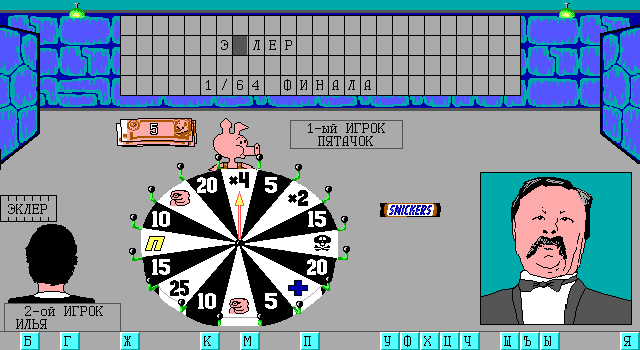
The most distinctive faces are the AI contestants, represented by characters from well-known USSR cartoons. Beyond that, the focus stays on the word board and the wheel-driven contest, fitting a DOS adaptation built around following guesses and scores rather than lavish imagery.
Story
There is no grand adventure to carry this along. The structure is the television contest itself: contestants take turns chasing money while trying to reveal and solve a word.
Its personality comes from the prizes. Winning an apparently worthless toothpick or lace, then being left an address to collect it, is a dry joke that keeps the stakes knowingly unserious.
That humor is important because it stops the money totals from feeling overly important. You are here for the familiar rhythm of a quiz-show round, plus the punchline that the reward may be almost comically useless.
Overall Experience
Pole Chudes: Capital Show has a narrow target, but it understands that target. It captures the push and pull of a televised word game: a useful letter feels great, a wrong full-word attempt feels foolish, and the wheel can turn a comfortable lead into trouble in seconds.
Give it a chance if you want a compact multiplayer word game with a distinctly Russian game-show flavor, or if the source program has nostalgic value for you. It is especially easy to recommend for a short two-person session, where the pauses between guesses become part of the fun.
Its limits are equally plain. The format lives or dies on whether you enjoy word guessing and can accept luck deciding a round. If you want a puzzle game built around elaborate progression, varied challenges, or a story outside the studio contest, this will feel thin. For a quick, goofy adaptation of its source show, though, the wheel’s nasty surprises and useless-prize gag give it more character than a bare vocabulary test.


Reviews
There are no reviews yet.