 Retro Replay Retro Gaming History, Reviews & Emulation
Retro Replay Review
Gameplay
The first hour of Smooth Tetris is pleasantly disarming. Pieces fall more slowly than in the original Tetris, so you have breathing room to inspect the stack rather than immediately reacting on instinct. If faster falling-block games make you freeze up, this measured pace may be exactly what gets you comfortable enough to enjoy the puzzle instead of merely surviving it.
The fundamentals are clean and familiar: rotate a block, move it left or right, or drop it into place before the board fills. Completed horizontal layers disappear, and every placement asks the same enduring question: are you fixing a problem now, or making a much worse one for the next piece? The slower descent does not remove that pressure. It just makes your mistakes feel more deliberate, which can be satisfying when you recover and irritating when you realize you had time to see the bad move coming.
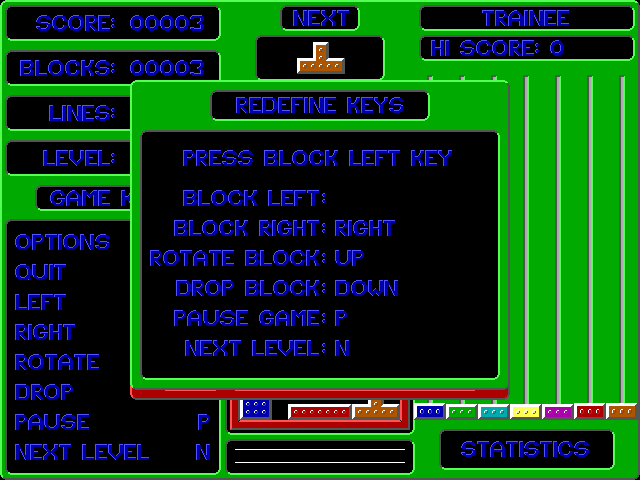
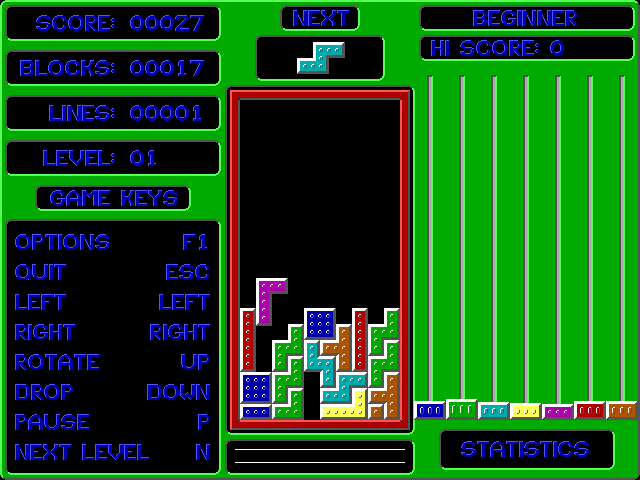
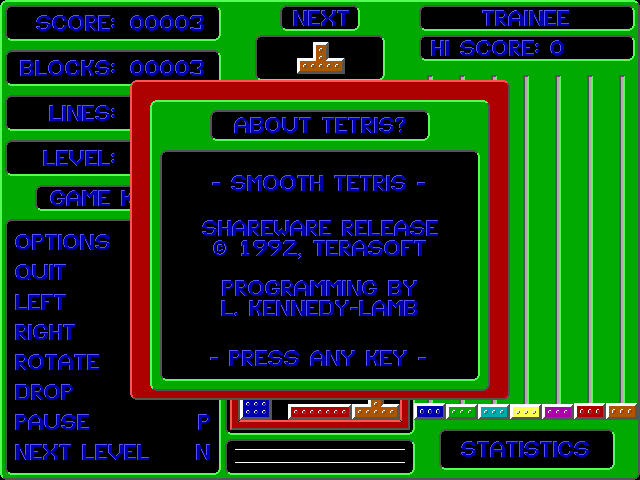
The rising bar chart at the right of the play area is a neat wrinkle. Since it tracks the types of blocks you have removed, it gives clearing pieces a little more feedback than simply watching the score climb. Reconfigurable keyboard controls are practical, too; with a game built around rapid directional inputs and rotation, being able to settle on comfortable keys matters more than it might in a slower puzzle game.
Graphics
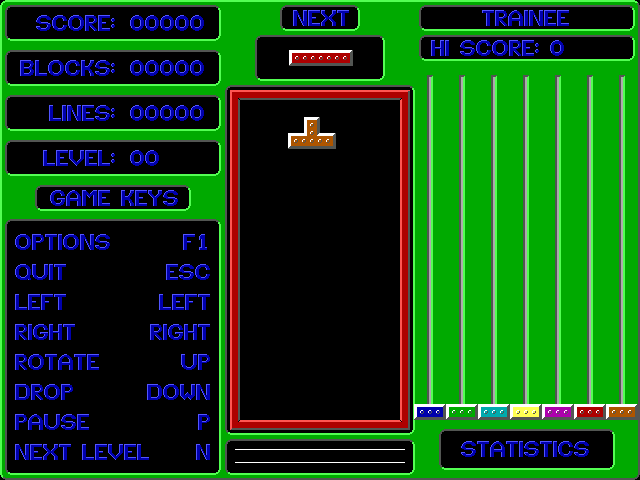
Smooth Tetris keeps the important information in front of you: falling blocks descend inside a boxed playfield, while the bar chart sits to the right. The simple arrangement makes it easy to watch the shape of your stack and check your block-clearance progress without losing track of the active piece.
Story
There is no need for a grand narrative here. The drama comes from the board itself: an open stack feels full of promise, while an awkward hole can turn a routine drop into the start of a collapse.
Each game writes a tiny, wordless arc through its pieces. You begin with room to plan, gradually inherit the consequences of earlier placements, and either restore order by completing layers or watch the box become impossible to manage.
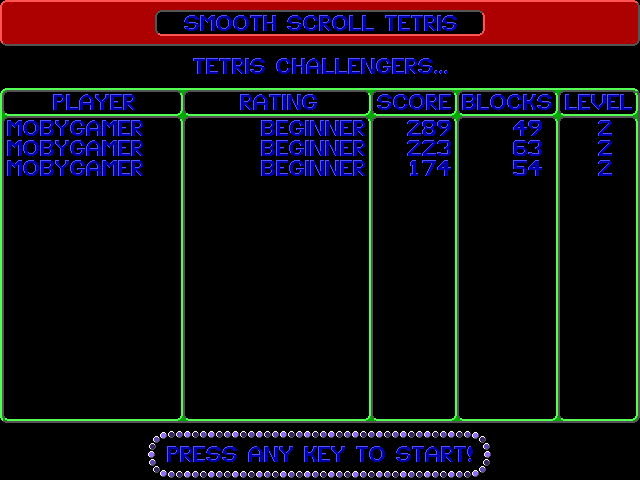
That makes the high-score list the closest thing Smooth Tetris has to a lasting story. Your name records a successful run, then challenges you to improve it the next time you sit down.
Overall Experience
Smooth Tetris succeeds because it understands the strength of the source material and does not bury it. The slower falling speed makes it friendlier without making the basic loop mindless, and the board still becomes tense once your clean early layout starts to fray.
Do not expect a radically different take on Tetris. This is a clone with a modest pace adjustment, a block-type chart, customizable keys, and score-chasing motivation. That restraint is either a virtue or a limitation depending on what you want: it is immediately legible, but it has little interest in surprising you.
If you want a straightforward DOS falling-block game where you can think through placements before committing, Smooth Tetris is worth a look. Veterans may find the gentler speed less demanding than they prefer, but anyone who enjoys tidying a dangerous stack one line at a time will still recognize the familiar pull of “just one more game.”



Reviews
There are no reviews yet.