 Retro Replay Retro Gaming History, Reviews & Emulation

Retro Replay Review
Gameplay
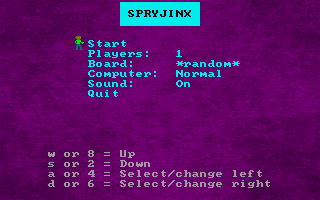
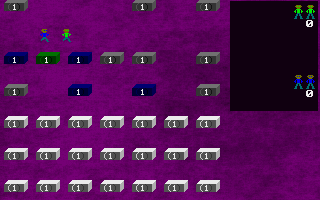
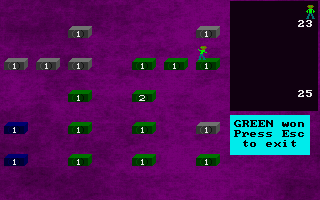
Spryjinx gets its hooks in quickly because every landing carries a small argument: take the nearest safe platform, chase a bigger number, or deny your opponent a valuable claim? Platforms begin grey, then take your color when you jump on them. Since their value is awarded only when they drop off the bottom of the screen, claiming ground is never quite the same thing as securing points. That wait gives the game more tension than a straightforward highest-jump competition.
The moving field forces you to make decisions in motion. Platforms arrive from above and are destroyed below, so a good position is temporary by design. Question-mark blocks introduce a gamble, while red-devil blocks can shift into adjacent free spaces. That makes the board feel slippery enough that you should resist treating any lead as permanent.
The bonuses are where a friendly score chase can turn mean. A paint bucket locks in a platform’s color, lightning doubles your speed, glue can pin the other competitor down, bombs remove blocks, and the magnet lets you relocate platforms while airborne. These tools give you ways to interfere instead of simply racing for the next landing. The downside is obvious: a carefully built scoring advantage can be wrecked abruptly, and that kind of reversal will either make you laugh or make you want an immediate rematch.
Having two win conditions is a smart pressure valve. You can win on points, but three kills also end the contest, so a rival cannot safely focus on bookkeeping alone. The result is a competitive arcade game with more bite than its basic jumping premise suggests. It will work best with someone beside you who enjoys stealing momentum as much as earning it.
Graphics
The action is built around platforms scrolling from the top of the screen to the bottom. Grey blocks change to each competitor’s color when claimed, while printed numbers, question marks, and red-devil symbols make the different platform types easy to spot during the scramble.

Story
Spryjinx does not lean on a character tale or a long campaign setup. Its drama comes from the match itself: one competitor’s colored platforms sliding toward a payday while the other tries to repaint, move, or destroy them.
That stripped-down approach fits the game’s short-form rivalry. The meaningful beats are reversals on the score, a bonus that changes the board, and the looming threat of the third kill. You are creating the memorable moments through close contests rather than following a scripted arc.
If you need a platform game to supply a world, a cast, or narrative stakes, this is unlikely to hold you for that reason. If a direct head-to-head challenge is enough, the score race gives each match a clear little story of greed, disruption, and comeback attempts.
Overall Experience
Spryjinx has a genuinely sharp competitive idea at its center. Delaying score awards until claimed platforms leave the screen turns territory control into a tense investment game, and the bonus items ensure that movement skill is only part of the contest. A lead feels earned, but it never feels entirely safe.
Its rough edge is the same thing that gives it energy: the disruptive items and kill condition can make a match swing hard. If you want a pure, orderly platforming race, the glue, bombs, and platform manipulation may feel less like clever tactics than chaos. Go in expecting a scrappy duel rather than a clean test of jumping precision.
With two competitive-minded people, that volatility is the payoff. Spryjinx seems built for quick rematches, post-loss complaints, and the satisfaction of turning an opponent’s nearly banked score into nothing. Give it a chance if you like arcade competition where the board is as important as the jump.


Reviews
There are no reviews yet.