 Retro Replay Retro Gaming History, Reviews & Emulation

Retro Replay Review
Gameplay
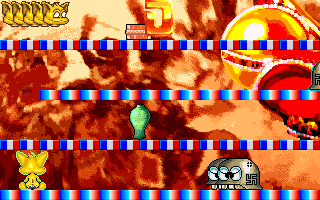
Tonko gets straight to the point: you are dropped into a tiny platform stage full of enemies, and the job is to clear a path with jumps and hammer swings. That compact format is its strongest hook. Rather than asking you to commit to long wandering levels, it serves up quick obstacle courses where positioning matters immediately.
The hammer gives the action its bite. Smacking monsters on the head is simple, but power-ups can upgrade the weapon, including an electricity charge, so grabbing one feels meaningful rather than incidental. The stages are small enough that you can quickly understand the layout, then focus on timing a jump or lining up an attack before an enemy reaches you.
Frustration arrives with the contact damage. An enemy touching Tonko costs a life, and running out ends the game, so careless movement can turn a short stage into a costly setback. If you enjoy old-school platformers that demand alert, deliberate play, that pressure is part of the fun. If you want room to absorb mistakes, Tonko’s sharp punishment may wear on you.
Graphics
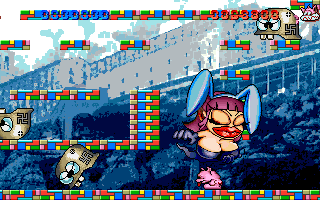
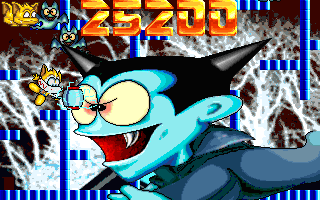
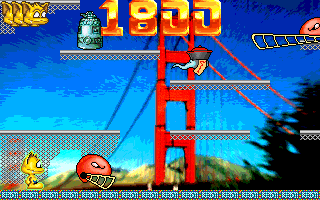
You control a cute yellow goblin armed with a hammer, set against real-world geographical backgrounds. The monster lineup is the memorable visual flourish: Nazi ghosts, vampires, beer mugs, American football helmets, and crazy fish make each small platform structure feel agreeably odd rather than generic.
Story
Tonko is built around a direct arcade premise rather than a sprawling tale. You guide its yellow goblin through a succession of monster-filled stages, with the journey moving through locations marked by real-world geographical backdrops.
That leaves the game’s character in its moment-to-moment absurdity. A hammer-wielding goblin fighting vampires, spectral Nazis, animated beer mugs, and football helmets has the loose, anything-goes energy of a mid-1990s arcade game.
Don’t come to Tonko for a deep dramatic payoff. Its flavor comes from the contrast between its cute hero and its bizarre enemy parade, giving even a straightforward clear-the-stage objective a slightly surreal edge.
Overall Experience
Tonko’s best quality is its concentration. Each near-single-screen stage gets you into the action quickly, asks you to deal with a crowded platform structure, and moves on before the formula has much time to drift. It is a focused game for short sessions, especially when you want platforming stripped down to jumps, attacks, and survival.
The unusual enemy selection does more work than you might expect. It turns familiar platform-game combat into something less predictable in tone, and the hammer upgrades add a small but satisfying lift to the basic attacks. You are not just hopping between platforms; you are navigating a compact mess of oddball threats with very little room for sloppy play.
Give Tonko a chance if you like demanding DOS-era action games and can enjoy a rougher, more punishing rhythm. Its payoff is not complexity but immediacy: a string of brisk monster fights, strange sights, and just enough weapon improvement to make another stage tempting after a bad loss.



Reviews
There are no reviews yet.