 Retro Replay Retro Gaming History, Reviews & Emulation
Retro Replay Review
Gameplay
For the first hour, Dancing Blade asks you to settle into its rhythm rather than master a system. Scenes play out as anime FMV, and your direct input arrives only at occasional dialogue prompts. That makes it immediately approachable: there are no complicated controls to learn and no chance of getting stuck on a puzzle. It also means you need to be in the mood for a mostly hands-off experience.
When a choice appears, it carries the weight of the whole game because your decisions steer the scenario toward one of four endings. The pleasure comes from committing to an answer, seeing where that version of the story goes, and then wondering what another response might have changed. This is branching-story play in a very concentrated form, not an adventure built around exploration or problem-solving.
The replay structure is the smartest part of the design. After reaching an ending, you can replay that scenario without interruption, and every scene you have already watched becomes freely available to revisit. That removes the usual annoyance of retracing old material just to check a route or revisit a favorite moment. If you enjoy comparing endings, it makes the game far friendlier than its limited interaction initially suggests.
Graphics
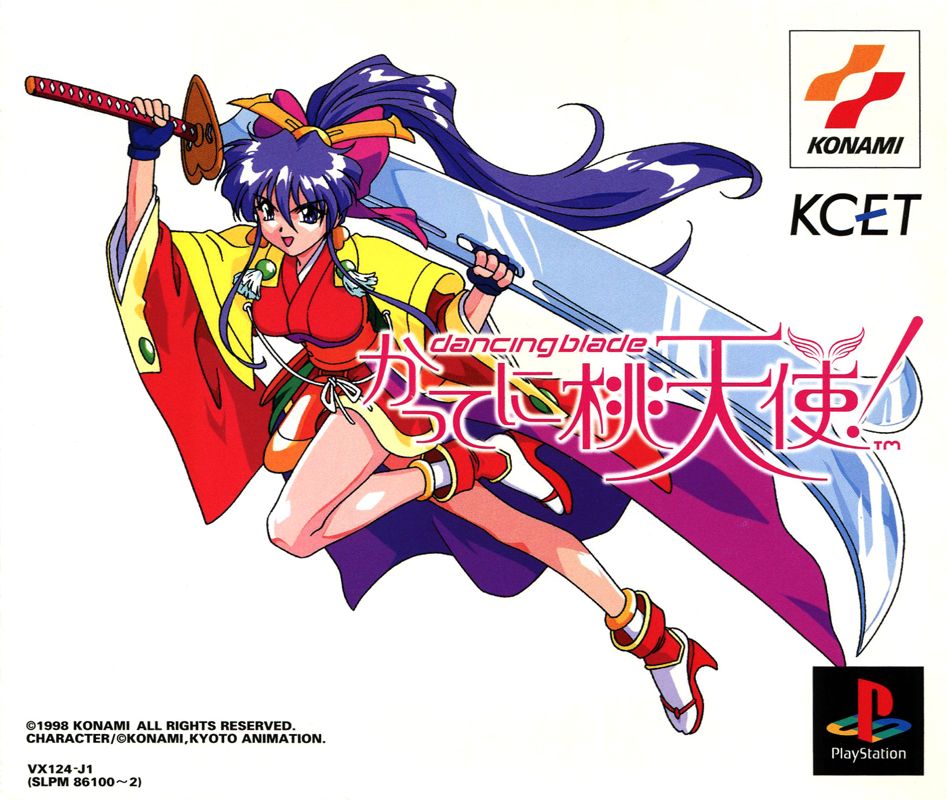
The game is built around anime FMV, with Momohime, her traveling companions, the capital, and its strange attackers carrying the action through animated scenes rather than static dialogue screens. The giant-peach origin and the creature attack give the imagery a deliberately fanciful, storybook-anime flavor.
Story
Momohime’s origin is an excellent opening question. Being found inside a giant peach is strange enough to stick in your mind, but the journey to meet Nayotake gives that mystery a clear direction: perhaps this other girl knows something about where Momohime came from. It is a simple setup, but a strong one.
Reaching the capital only to find it under attack adds immediate urgency. The strange creatures are not merely a detour; the story explicitly positions them beside the Momohime-and-Nayotake mystery, inviting you to connect the threads. That gives the dialogue choices a useful dramatic frame even when the game itself remains light on interaction.
Four endings are enough to make the story feel like it has alternate answers rather than one fixed path with a token variation. Do not come expecting a sprawling, player-driven epic. Come for a compact anime mystery where the point is to follow the characters, make a few consequential calls, and see which conclusion you earn.
Overall Experience
Dancing Blade is easiest to recommend to anime fans who want an interactive viewing experience, especially if they enjoy revisiting branches to see how a small set of decisions can reshape an ending. Its limitations are plain: you will spend far more time watching than doing, and anyone craving puzzles, exploration, or regular hands-on action may lose patience quickly.
Yet its restraint has a benefit. The game does not waste your time pretending to be a larger adventure than it is. It offers a focused mystery, distinctive fairy-tale strangeness, and an unusually convenient way to revisit scenes and routes once you finish. That is a good fit for a short, relaxed session when you want to follow a story without wrestling with a game system.
The payoff depends on whether Momohime’s unanswered past and the connection to Nayotake get their hooks into you. If they do, the four endings and scene replay make the package worth exploring. If not, the sparse choices will feel too slight to carry the long stretches of passive viewing. It is a niche game, but an honest and thoughtfully replayable one within that niche.


Reviews
There are no reviews yet.