 Retro Replay Retro Gaming History, Reviews & Emulation

Retro Replay Review
Gameplay
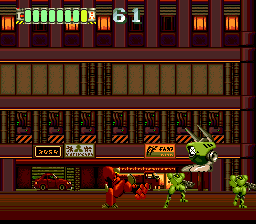
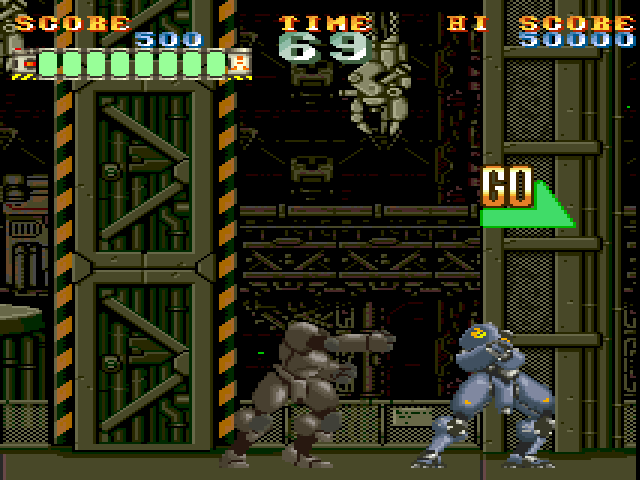
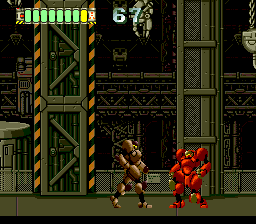
The first few minutes of Mad Stalker: Full Metal Force make a clean promise: move sideways, wipe out every enemy robot in front of you, and get ready for the boss waiting at the end. There is very little ceremony around that loop, which suits a mecha brawler. You are not managing a complicated arsenal or wandering through branching routes; you are piloting a heavy machine and trying to keep control when hostile robots start filling the screen.
What helps the fighting rise above simple button-mashing is the range of close-quarters options. Your Slave Gear can punch or kick, jump, grab an opponent, and throw it, so positioning matters more than it would in a brawler limited to basic strikes. Richard Winston’s sword-equipped machine is especially important to the lineup because it changes the flavor of a run from blunt robot-on-robot trading to a more weapon-led style. Chico Rodrigues and Eve Lurdia offer their own strength-and-speed balance, giving you a real reason to test all three instead of treating the character select as cosmetic.
The catch is that the campaign is only six linear stages, and its objective rarely changes: eliminate the screen, move on, meet a boss. That makes Mad Stalker easy to pick up, but it can also feel rigid if you need exploration, stage variety, or a long progression arc to stay engaged. The payoff is immediate rather than expansive. Pick a pilot whose balance suits you, learn how aggressively you can use throws in a crowd, and enjoy it as a focused arcade-style run.
The versus mode is a smart extra for a game this compact. One or two players can choose from the protagonists and enemy mechas for direct fights, which gives the roster another use after the main stages are done. It does not replace a deeper campaign, but it makes the different machine styles feel more worthwhile and turns an evening with the game into more than a single clear.
Graphics
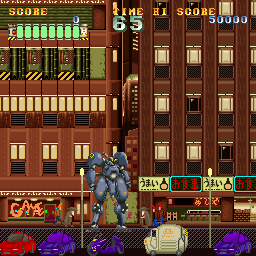
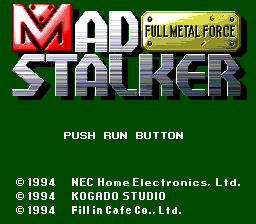
The side-scrolling action keeps the focus on big robot bodies colliding in a city under attack. The three player Slave Gears are visually distinct, and Winston’s sword gives his machine an immediately different silhouette in combat. Since every opponent is also a mecha, the screen stays firmly in that metallic giant-robot lane from the opening fight through the bosses.
Story
Mad Stalker does not ask you to untangle a dense sci-fi plot before it lets you fight. An evil mastermind has unleashed hostile robots on the city, and your chosen pilot answers by taking a Slave Gear into the streets. It is an efficient setup for a brawler: the threat is obvious, the target is obvious, and the next robot is already in your way.
The three protagonists give that premise a little personality, even though the central conflict remains the same for each of them. You choose Chico Rodrigues, Richard Winston, or Eve Lurdia, then see their particular version of the machine carry the action. The distinction is more meaningful in how the machines look and handle than in any elaborate narrative detour.
That stripped-down approach fits the game’s six-stage rhythm. Boss encounters provide the natural punctuation, while the citywide robot attack supplies enough momentum to keep moving forward. If you want character drama or a winding mystery, this will feel slight; if you want a clean excuse to pilot a giant robot and wreck the forces attacking the city, it does its job.
Overall Experience
Mad Stalker: Full Metal Force is satisfying because it understands that a mecha brawler should let you feel physical. Grabbing and throwing enemy machines is the kind of detail that gives the combat more bite than endless standing punches, and the three selectable Slave Gears prevent the short campaign from becoming a one-note run. Winston’s sword alone makes a replay feel meaningfully different.
Its limits are equally plain. Six linear stages and repeated clear-the-screen demands leave little room for the game to surprise you, so enthusiasm for the core combat matters a lot. Frustration can set in if you are waiting for the format to open up. Treat it as a concentrated action game rather than a sprawling adventure, and the directness becomes a strength.
Give it a chance if you like side-scrolling beat-’em-ups, giant robots, and games that put their full weight behind a simple fight-first loop. The versus mode is a worthwhile bonus if you have someone nearby for robot duels, while solo players still get a compact campaign with three machines to explore. It is a good fit for a quick, forceful action session, not a game built to occupy you for dozens of hours.


Reviews
There are no reviews yet.