 Retro Replay Retro Gaming History, Reviews & Emulation

Retro Replay Review
Gameplay
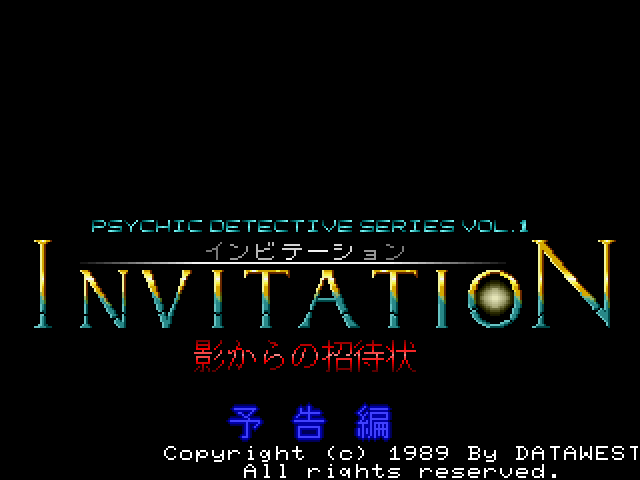
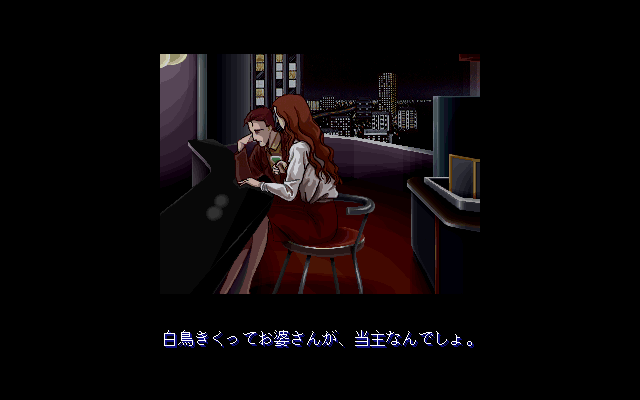
You begin as Katsuya Furuyagi, a private investigator whose unusual ability to dive into other minds immediately gives the case a different flavor from a standard detective story. The Shiratori family’s request is simple enough on the surface—wake sixteen-year-old Asami from her unexplained unconscious state—but the draw is digging into what each family member knows and what their secrets might mean. The game wants you to follow leads through conversation rather than test your reflexes or solve elaborate inventory puzzles.
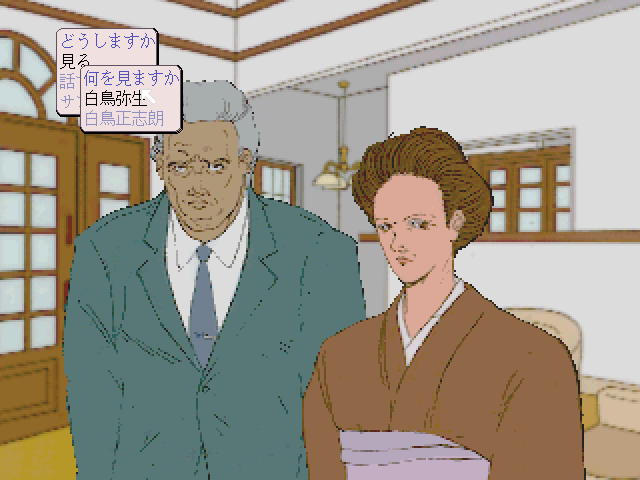
Interaction stays in first person and uses menus: choose someone to speak with, then choose the subject you want to raise. That structure makes the investigation approachable. You are rarely wrestling with an obscure interface; instead, you are thinking about whom to question and which piece of information may open the next useful exchange. Checking the case data and dossiers is part of that rhythm, and you should treat them as more than background reading when you feel the inquiry slowing down.
The trade-off is obvious. Conversations and information-gathering are the game’s main activity, so your enjoyment rests on whether you like patiently pulling at a mystery’s threads. There is little indication that brute-force puzzle solving is going to rescue a stalled player. Go in ready to read, revisit the people involved, and let the investigation unfold through accumulated context. For the right mood, that can be pleasantly focused; for someone craving action or varied adventure-game obstacles, it may become repetitive.
Graphics
The game uses a first-person viewpoint, keeping you in Furuyagi’s investigative position as you navigate interviews and case material. Its anime/manga framing suits a psychic detective story centered on characters, family suspicion, and a mysterious victim.

Story
Invitation’s best asset is its setup. A detective with a troubled past and psychic powers is invited into the private crisis of a wealthy family, where their youngest member has slipped into a state no one can explain. That is exactly the kind of premise that makes you want to ask one more question before putting the game down.
The psychic angle has a useful dramatic purpose: Furuyagi is not simply gathering testimony from the outside, but has access to minds in a way an ordinary investigator would not. It gives the case a supernatural edge without displacing the central mystery of Asami and the Shiratori family’s buried secrets.
Because the story advances through dialogue and collected information, patience matters. You are meant to piece together the family situation gradually rather than rush toward a solution. That measured structure will satisfy anyone who enjoys suspicion building one conversation at a time, though it asks you to meet it halfway by paying attention to names, subjects, and dossier details.
Overall Experience
This is a compact, specific kind of adventure: a conversation-led detective case built around a compelling supernatural premise. It does not chase broad mechanical variety. Instead, it leans into interviews, documents, and the steady feeling that the people around Asami are holding back something important.
Give it a chance if you like classic menu-driven adventures and mysteries where progress comes from listening carefully. The first stretch should tell you quickly whether its pace works for you: if selecting topics, reviewing case files, and pursuing a family secret sounds inviting, Invitation has a clear hook.
It is also an interesting starting point for the series, establishing Furuyagi’s role as a psychic investigator before the related Psychic Detective. The payoff is the act of investigation itself—the slow assembly of a strange case—not elaborate puzzles or spectacle. That makes it easy to recommend to patient mystery fans, and harder to recommend to anyone who needs an adventure game to constantly change gears.


Reviews
There are no reviews yet.