 Retro Replay Retro Gaming History, Reviews & Emulation

Retro Replay Review
Gameplay
The opening proposition is strong because it gives investigation a strange extra dimension. You are not simply following clues around a murder case: Furuyagi enters an old man’s memories and becomes involved with a dead woman seeking revenge. That is the sort of setup that can make even a screen-by-screen adventure feel purposeful, since each conversation carries the possibility of exposing another buried piece of the case.
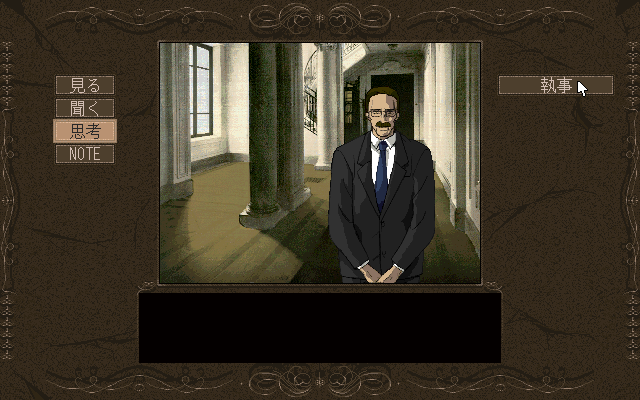
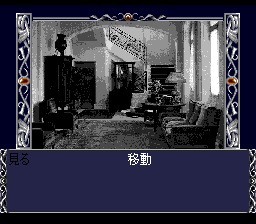
In practice, Aýa asks you to work through a classic command menu. Look, Ask, and Move are the tools you return to on most screens, and progress comes from checking locations, questioning characters, and considering what you have learned. There is a pleasing detective rhythm to exhausting a line of inquiry, moving on, then returning with a fresh reason to ask something else. If you enjoy being methodical rather than being hurried, that rhythm is the game’s main draw.
It can also be where friction sets in. Menu-driven adventures demand patience, especially when the way forward depends on using the right command or revisiting a person with the right thought in mind. Aýa is not the kind of mystery that lets you coast on reflexes. Go in willing to inspect scenes carefully and talk things through; if you want constant mechanical variety, its narrow interaction model may wear thin.
Graphics
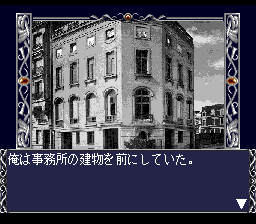
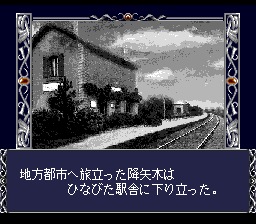
Aýa uses a first-person viewpoint, putting the focus on the places you investigate and the people you question rather than on an on-screen protagonist. Its anime and manga classification suits a story built around psychic memories, a ghost, and a melodramatic murder mystery.

Story
The story has a clean, compelling engine: a psychic analyst is pointed toward a mysterious old man, enters his memories, and finds a murdered woman’s ghost bent on vengeance. It is an immediately more evocative hook than a routine detective assignment, and it gives the case a personal, uneasy tone before the investigation has even had time to settle.
Furuyagi’s profession matters to the premise rather than serving as a throwaway label. Reading hearts and entering memories make the mystery inherently subjective, which is a good fit for a tale about murder, recollection, and revenge. You are encouraged to treat conversations and contemplation as central parts of the investigation, not mere breaks between puzzles.
As the third entry in the series, Aýa has the confidence of a continuing format: another case for its psychic analyst, built around interrogation and deduction. You do not need an appetite for action to get something from it, but you do need to enjoy mysteries that linger over people’s thoughts. If the series has caught your attention, the related Psychic Detective is also worth a look.
Overall Experience
Aýa is a focused recommendation for a particular kind of adventure fan: someone who likes sitting with a case, trying every sensible question, and letting a supernatural premise deepen a detective story. The first hour’s promise is easy to understand—a psychic investigator, a strange old man, and a ghost demanding justice—and the game stays rooted in that investigative pull.
The trade-off is equally clear. Its first-person, menu-based structure asks you to supply the momentum through curiosity and persistence. When you are in the mood to examine, ask, move, and think, the format makes you feel involved in following leads. When you want immediate feedback or a brisk pace, the same routine can feel restrictive.
For patient fans of Japanese-style mystery adventures, the payoff is the chance to inhabit an unusual case rather than merely watch it unfold. Aýa does not need a sprawling rulebook to make its premise work; it leans on a solid loop of investigation and conversation. Give it a chance if you want a supernatural detective story that rewards careful attention, and pass if command-menu adventure pacing sounds like homework.


Reviews
There are no reviews yet.