 Retro Replay Retro Gaming History, Reviews & Emulation

Retro Replay Review
Gameplay
The first hour’s pull comes from the central question rather than from clever systems. You are dropped onto an impossible Titanic in the sky with Silent Möbius heroines at your side, then set loose to poke around. It is an immediately effective setup for a point-and-click-style investigation, even though the actual interaction is pared down to Look, Talk, and Move.
That simplicity is both the game’s virtue and its limit. There is no inventory to organize and no puzzle chain to untangle, so you can focus on inspecting the ship and pursuing conversations. Progress instead comes from visiting the right areas and triggering the events that open restricted parts of the vessel. Once that rhythm clicks, Case: Titanic plays like a guided mystery tour with some freedom over the route you take.
Frustration can set in if you expect the usual adventure-game payoff of solving a difficult problem. When a new area remains unavailable, the answer is not an inspired item combination; it is usually more investigation and more dialogue. That makes the game approachable, but it also means the moment-to-moment play can feel thin. Give it a chance if the prospect of inhabiting this odd crossover of futuristic Tokyo and the Titanic is enough to carry you through a deliberately light adventure.
Graphics
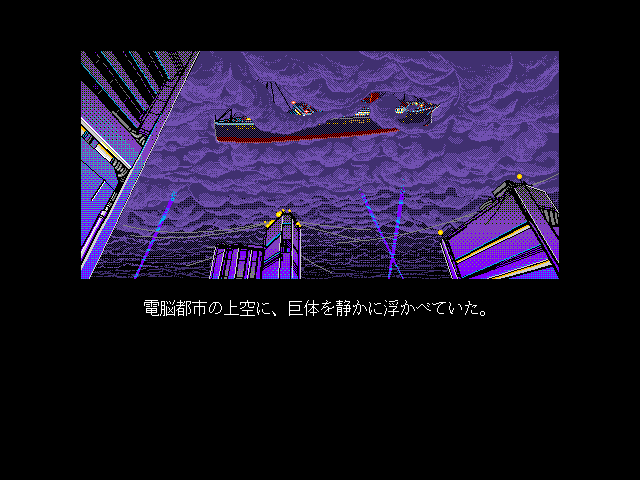
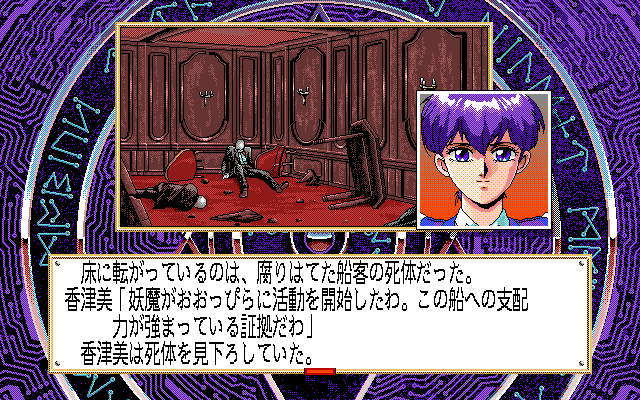
The game uses a first-person adventure viewpoint, keeping your attention on the ship’s different locations and the characters you meet there. A Titanic floating above Tokyo is a strong image on its own, and the enclosed ship setting gives the investigation a consistent visual place to return to as new areas become accessible.

Story
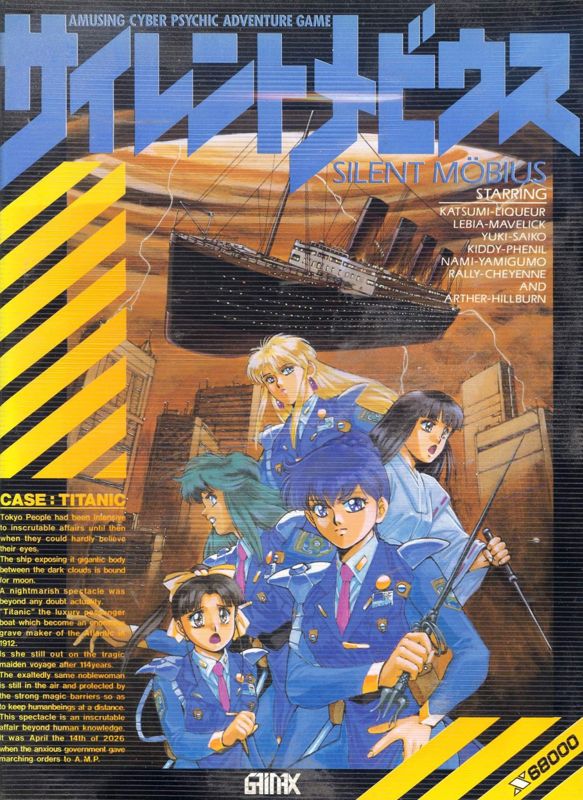
Case: Titanic understands that its premise is its sharpest tool. The Titanic did not merely reappear—it appears in the clouds above Tokyo, in a world already dealing with Lucifer Hawk and the fallout from a magical portal to Nemesis. It is the kind of unapologetically heightened science-fiction setup that fits Silent Möbius naturally.
The game’s original episode gives Rally, Kiddy, Nami, and the other familiar heroines a chance to investigate rather than simply reenact material from the manga and anime. The nameless male protagonist joins them aboard the ship, placing you close to the case while the established cast supplies the connection to the larger Silent Möbius world.
For fans, the main reward is spending time inside a standalone mystery built around the series’ strange mix of occult danger, future-Earth anxiety, and police-team investigation. Newcomers can still follow the basic hook, but the game is more inviting when the prospect of accompanying this cast matters to you. The story’s bizarre central image does much of the heavy lifting, and thankfully it is bizarre enough to be memorable.
Overall Experience
Silent Möbius: Case: Titanic is a compact curiosity with a better premise than interaction model. Wandering an airborne Titanic while an all-female supernatural police unit investigates is an easy fantasy to buy into. The game earns goodwill by staying focused on that one location and that one mystery instead of bloating the outing with systems it cannot support.
Still, this is not the adventure to choose for intricate puzzles, inventory experimentation, or a constant sense of discovery through mechanics. Its freedom is modest, its commands are basic, and its gated progression asks for patience. You need to enjoy searching spaces and exhausting conversations for their own sake.
That makes the recommendation specific but sincere. Silent Möbius fans and enthusiasts of early Japanese adventure games can find a pleasantly peculiar side story here, especially if they want a low-pressure investigation rather than a punishing challenge. Everyone else may admire the airborne-Titanic idea more than they enjoy the slow work of moving through it.


Reviews
There are no reviews yet.