 Retro Replay Retro Gaming History, Reviews & Emulation
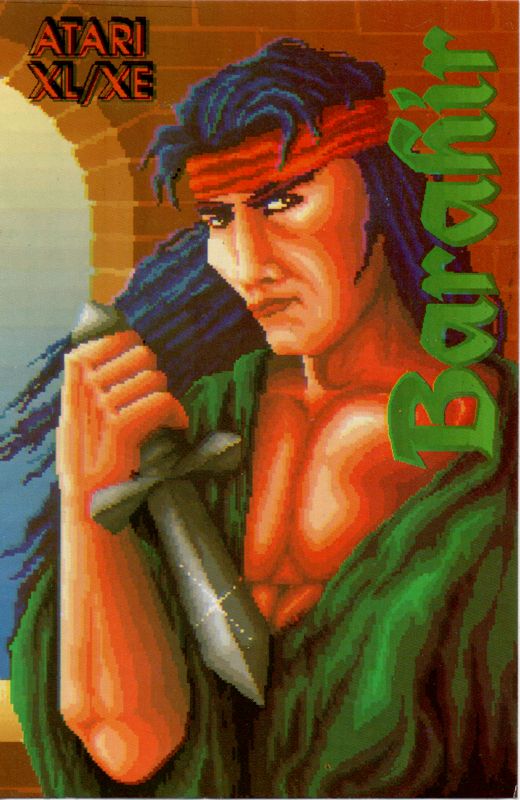


Retro Replay Review
Gameplay
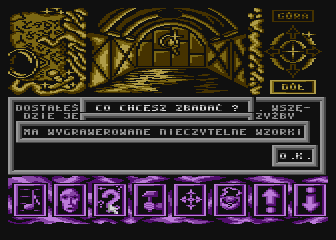
Barahir starts by asking you to think like someone working their way into hostile territory, not like someone being ushered through an adventure. Your goal is straightforward—enter a fortress and rescue the wizard Daeron—but the route there is filtered through a row of action icons: talk, bribe, fight, examine, use, move, manage inventory, and pick up or drop items. In the first hour, that interface is the main obstacle. You will spend time remembering which symbol does what and choosing actions more deliberately than in a more direct point-and-click game.
Once that routine clicks, there is a satisfying little rhythm to it. You inspect the environment, decide whether an item is worth committing one of your six inventory slots to, and consider how to handle the people you meet. The compass-style movement selector reinforces the sense that you are navigating a place rather than simply hopping between obvious hotspots. Barahir is not interested in rushing you; it wants you to be careful, observant, and economical.
Its harshest rule is combat. You can fight encountered people, but every fight takes some of Barahir’s energy, and running out ends the game. That gives violence weight and makes bribery or conversation feel like meaningful alternatives rather than decorative commands. It can also be frustrating when you are still learning which approach is appropriate, because combat is not a consequence-free way to test a situation. Treat energy as a limited resource, not a meter you can casually spend.
The six-item carrying limit is similarly useful and irritating in equal measure. It prevents you from sweeping up every object and forces some real prioritizing, which suits a fortress infiltration. But it also adds a layer of inventory housekeeping to a game already controlled through a fairly demanding icon system. If you like compact adventures where progress comes from careful choices, that tension is part of the appeal; if you want quick experimentation, it may feel more like resistance than challenge.
Graphics
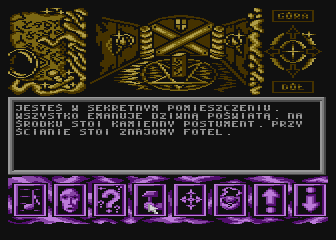
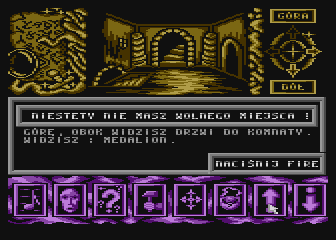
Barahir uses a first-person, fixed/flip-screen view, with movement chosen through a compass-like direction selector. The bottom row of icons remains central to what you see and do, while messages arrive in layered text windows that can make important feedback feel crowded.
Story
The premise is lean: Daeron has been imprisoned in a fortress, and Barahir has to get inside and free him. That is enough to give the game a clear forward pull. You are not wandering for a vague excuse to solve puzzles; every detour sits beneath the pressure of a rescue mission.
Barahir’s warrior role matters most in the way the game frames your choices. Talking, bribing, and fighting are all available when dealing with people, so the rescue is not presented as a purely peaceful errand. The story leaves room for the player’s practical judgment: getting Daeron out matters more than acting like a hero in every encounter.
Do not come here expecting a sprawling fantasy tale. The narrative is a focused frame for infiltration, resource management, and puzzle-solving. That economy works when the mechanics are clicking, because each cautious step feels tied to the same immediate purpose: reach Daeron before Barahir’s own limits stop him.
Overall Experience
Barahir is a demanding little adventure whose best moments arrive after you stop wrestling with the commands. The icon-driven interface, limited inventory, and energy-draining combat make it feel more deliberate than welcoming, yet they also give its fortress rescue a pleasingly tense, constrained shape. You are always weighing an action against what it might cost.
The game will test your tolerance for old-school interface friction. Layered text windows and many context-sensitive commands can slow the pace, especially early on, and failure through lost energy can sting. Still, the rules are pointed in the same direction: look closely, carry only what matters, and avoid treating every obstacle as an invitation to fight.
For Atari 8-bit adventure fans, Barahir is worth trying as a compact fantasy puzzle game with real consequences. It is less likely to win over anyone who needs smooth controls or forgiving trial and error. Stick with it long enough for its commands to become familiar, though, and its rescue mission has a stern, satisfying sense of purpose.



Reviews
There are no reviews yet.