 Retro Replay Retro Gaming History, Reviews & Emulation
Retro Replay Review
Gameplay
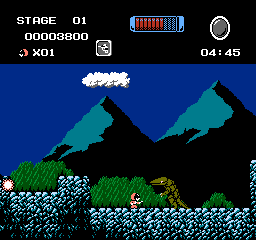
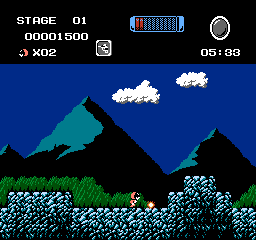
The first few stages ask you to accept that Hayate is not the main event, but the work required to reach it. You shoot enemies and search for beta capsules to fill a transformation meter, knowing the stage’s large monster cannot be beaten until Ultraman arrives. That makes every capsule matter more than a routine pickup: you are building toward the part of the fantasy the game is really here to deliver.
Once the meter is full, the mood flips hard. Transforming into Ultraman gives you only three minutes to finish the current stage, so the reward immediately becomes pressure. It is a clean, fitting hook for an Ultraman game—earn the hero form, then make the limited time count—but it can also be unforgiving. The stages are already timed, and the transformation deadline means you need to play with purpose rather than drift around looking for enemies or capsules.
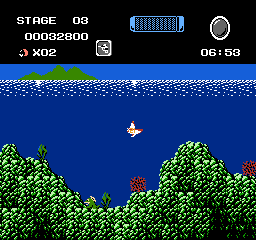
Eleven stages is a compact run, and the occasional horizontal-scrolling shooter sections help break up the usual side-view action. They do not change the game’s central loop, but they give the campaign a little movement before it returns to Hayate’s capsule hunt and Ultraman’s boss fights. Beating the game unlocks Dan Moroboshi and Ultra-Seven, with enemies that take more hits; that is a solid extra challenge for anyone who wants a harsher second pass rather than a completely different campaign.

Graphics
This is 2D, side-view action built around enemies, capsule pickups, and the oversized boss monsters that demand an Ultraman transformation. The change from side-scrolling stages to horizontal shooter sequences gives the game more than one camera view, while the large kaijū bosses provide the clearest visual payoff for surviving the buildup.
Story
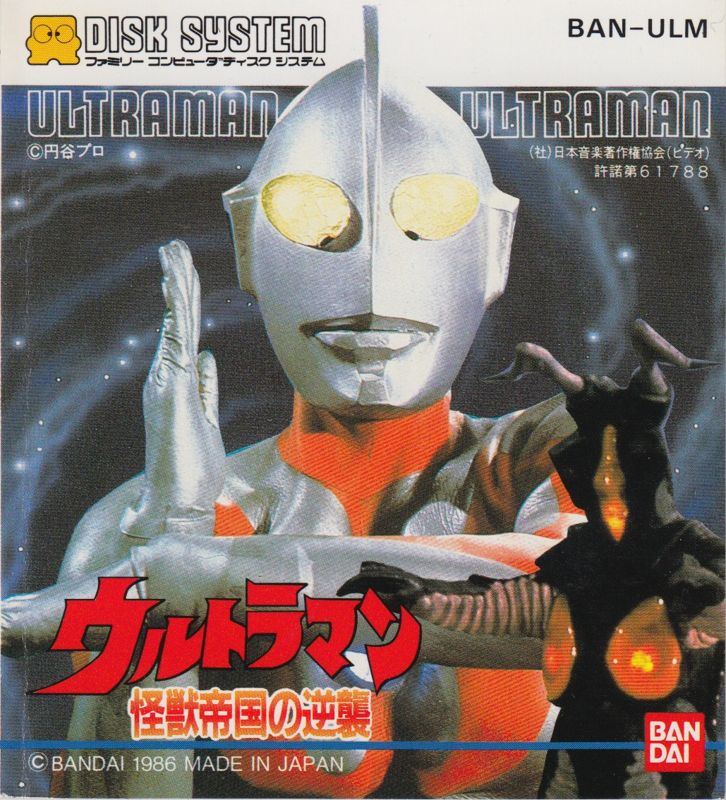
There is no complicated mystery to untangle here. Science Patrol officer Hayate belongs to the Science Special Search Party, Earth is under attack by hostile alien monsters, and he must become Ultraman to stop them. It is direct Saturday-morning superhero material, and that directness suits a game that is built around short timed stages.
The story’s strongest contribution is giving the transformation rule some weight. Hayate has to do the groundwork before Ultraman can handle the huge threat, so the game’s progression mirrors its hero setup rather than treating the alter ego as a free button.
Dan Moroboshi and Ultra-Seven’s appearance after a clear adds a welcome nod for fans, even if it is framed as a more difficult replay rather than a new story branch. Come for the familiar Ultraman-versus-kaijū setup, not for an elaborate narrative.
Overall Experience
Ultraman: Kaijū Teikoku no Gyakushū has a better central idea than many straightforward licensed action games: its hero transformation is something you prepare for, then spend under pressure. The capsule meter turns the ordinary shooting into a means to an end, and the three-minute Ultraman limit gives each boss encounter a real deadline.
That same structure will be the dividing line. If you enjoy old action games that make you learn a stage’s priorities and punish wasted time, the tension is part of the charm. If a timer stacked on top of a limited hero form sounds more stressful than exciting, the game’s short campaign may feel more restrictive than thrilling.
Give it a chance if you want a concise NES Ultraman game with a clear transformation-driven loop and a tougher unlockable replay. It is not a sprawling adventure, but it understands that becoming Ultraman should feel like a payoff—and then makes you prove you can use that payoff before the clock runs out.


Reviews
There are no reviews yet.