 Retro Replay Retro Replay gaming reviews, news, emulation, geek stuff and more!
Retro Replay Review
Gameplay
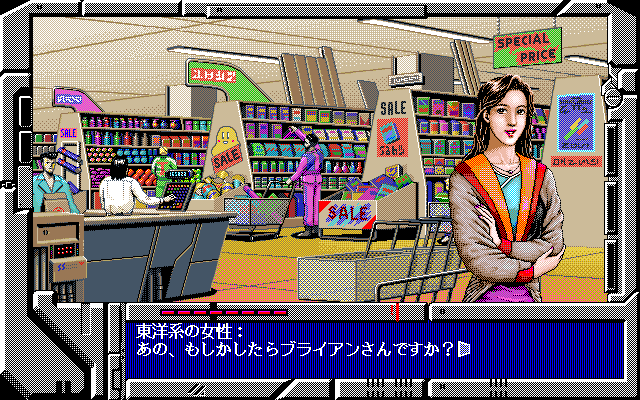
The first thing that grabs you in Star Cruiser II is how little interest it has in being only a shooter. You begin with first-person action, but the rhythm soon expands into exploring planet surfaces, moving through populated and hostile zones, finding equipment, and deciding what to buy. That extra layer gives every encounter more weight than a simple run-and-gun game; weapons, armor, gadgets, and other items all feed into the feeling that you are building a capable hunter rather than just grabbing the next gun.
The action is real-time by default, which suits the game’s first-person viewpoint and keeps danger immediate. Yet the option to shift into menu-based combat is an unusually generous alternative. If you enjoy thinking through a fight rather than relying entirely on fast reactions, it gives the game a more deliberate, light-RPG flavor. That split is also a clue to what Star Cruiser II wants to be: a hybrid, not a pure test of shooting skill.
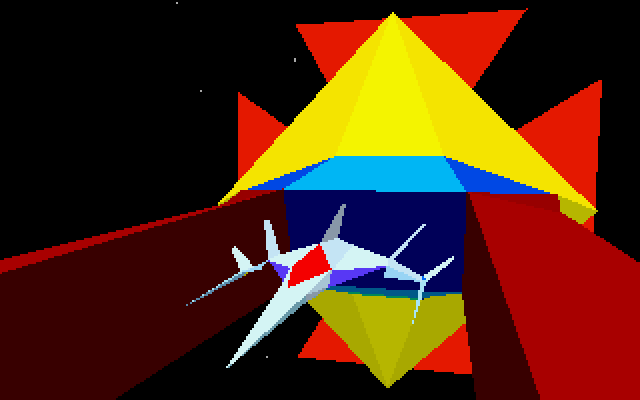
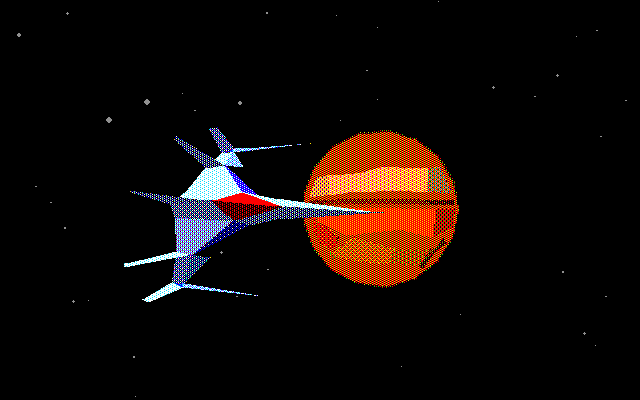
Flying your own spaceship is the feature that pushes the adventure beyond its on-foot sections. Space combat follows the same basic action-oriented approach, while a freely rotatable camera lets you look around the battlefield rather than treating space as a flat backdrop. The varied structure is the real reward here. You need some patience for a game that moves between exploration, equipment management, ground fights, and ship combat, but that willingness to change gears is exactly why it remains interesting.

Graphics
The game uses a first-person 3D view for both planetary action and space battles. Planet surfaces shift between inhabited and dangerous areas, while the spaceship camera can rotate freely during combat, giving the space sequences a broader field of view than a fixed forward-facing chase.

Story
The Odysseus Project begins with a galaxy already crowded with tensions. Humanity’s expansion has brought it into conflict with the Galaxy Alliance, human factions and aliens are at odds, and the mysterious VOID is attacking civilians. It is a busy setup, but the scale works because you enter it as a hunter: a mercenary-explorer with a treaty of your own and a practical reason to travel, fight, and get involved.
The VOID gives the story its clearest direction. You are not simply wandering a space frontier for treasure; the objective is to confront the group and help restore peace. That straightforward mission is useful in a game with so many different activities, keeping the exploration and customization tied to a wider crisis.
As a follow-up, it deliberately returns to the formula of Star Cruiser: first-person sci-fi action with exploration and character-building touches. If you liked the idea of that earlier game but wanted another expedition through the same kind of universe, this sequel’s story gives the familiar structure a new conflict to pursue.
Overall Experience
Star Cruiser II is compelling because it keeps opening side doors. A planetary skirmish can lead back to gear choices; gear choices matter when you move into another hostile area; then the game lets you climb into a ship and take the conflict into space. You are constantly being reminded that this is a larger adventure than its shooter label suggests.
That breadth can also be where friction sets in. If you want a tightly focused first-person shooter, the exploration, shopping, and role-playing elements may feel like interruptions rather than rewards. The optional menu combat further underlines its preference for flexibility over purity. It asks you to meet it halfway and enjoy the blend.
For the right gamer, that request is easy to accept. This is a worthwhile sci-fi curiosity for anyone drawn to ambitious genre mixtures, especially games where a mercenary’s equipment, destinations, and vehicle all matter. Its individual parts may be familiar, but their combination gives Star Cruiser II a distinct, satisfying sense of scope.


Reviews
There are no reviews yet.