 Retro Replay Retro Gaming History, Reviews & Emulation

Retro Replay Review
Gameplay
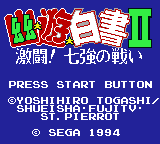
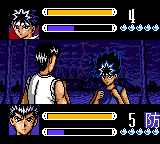
The first few rounds can feel oddly hands-off if you come in expecting Street Fighter-style footsies. Both combatants remain in place, so there is no dancing around an opponent, managing jump arcs, or slowly forcing them into a corner. Instead, Yū Yū Hakusho II asks you to watch two moving meters and a crosshair while entering the combination for the attack you want. It is closer to picking the right moment for a committed strike than freely piloting a fighter across an arena.
That strange structure has real tension once it clicks. The crosshair determines where your attack lands, while the move gauge determines how effective it is, so firing off an input at the first possible second is not necessarily smart. You are constantly weighing whether to act now or wait for a stronger opening. Ki gives the match another layer: spend it on a special attack and you lose access to that option until the meter regenerates; conserve it and you are restricted to normal attacks in the meantime.
The downside is clear: this is a fighter that asks you to meet it on its own terms. If your favorite part of the genre is direct movement and immediate control over spacing, the fixed positions may feel like a limitation rather than a clever twist. But if you enjoy timing systems and the small mind games created by meters, the unusual rules make matches more thoughtful than their simple setup initially suggests.
Single-player offers a tournament and individual fights, with the roster opening up as you progress. Seven fighters—Yusuke, Kuwabara, Kurama, Hiei, Itsuki, Toguro, and Sensui Shinobu—give fans recognizable choices, while passwords preserve that progress. Two Game Gears can also be linked for head-to-head play, which is where the game’s careful decisions have the best chance to become a real contest rather than a puzzle against the computer.

Graphics
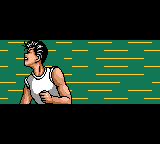
The key visual payoff comes after an attack is triggered: the game cuts to anime-style animation sequences showing both combatants carrying out their moves. That is a smart fit for a fighting system where the decisive action is chosen through inputs and gauges rather than controlled movement across the screen.
Story
The game draws on Yū Yū Hakusho’s central setup: teenage delinquent Yusuke Urameshi dies while saving a child and becomes an Underworld Detective investigating ghost and demon cases in the human world. It is a strong foundation for a supernatural fighting game, since conflict with demons is already part of the series’ world.
Yusuke is not the only reason to play, though. The selectable cast brings Kuwabara, Kurama, Hiei, Itsuki, Toguro, and Sensui Shinobu into the ring, giving fans a roster built from familiar names rather than anonymous opponents.
In practice, the story serves mainly as the reason these confrontations carry some extra weight. You should come for the characters and the source material’s supernatural flavor, not expecting the fighting format itself to deliver a sprawling detective adventure.
Overall Experience
Yū Yū Hakusho II is memorable because it refuses to be a standard portable fighter. Its stationary battles, moving target cursor, charging move gauge, and regenerating Ki make the outcome depend on patience and timing as much as knowing button combinations. That can be genuinely satisfying once you stop trying to play it like a conventional arcade fighter.
It is also easy to see where frustration can set in. The game puts several decisions between you and the flashy attack animation, and its lack of free movement is a major adjustment rather than a minor quirk. A fan looking for quick, instinctive brawls may bounce off before the deeper timing game has a chance to register.
For Yū Yū Hakusho fans and curious fighting-game historians, though, this is worth a look precisely because it is so specific. The seven-character roster, unlockable progression, and linked two-player mode give the system room to breathe. It is not the easiest fighter to recommend blindly, but its unusual combat ideas earn patience from anyone willing to learn their rhythm.


Reviews
There are no reviews yet.