 Retro Replay Retro Gaming History, Reviews & Emulation
Retro Replay Review
Gameplay
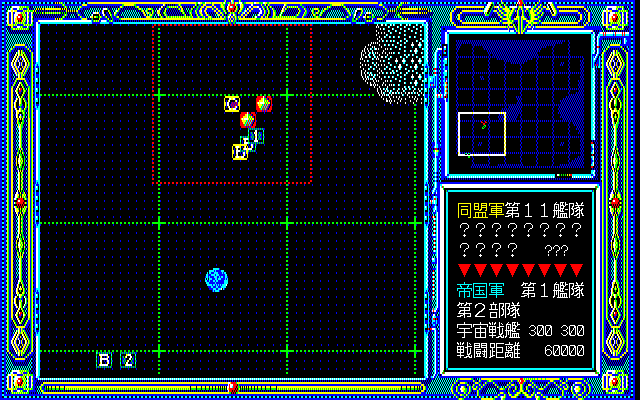
The first hour asks you to meet Ginga Eiyū Densetsu on its own terms. You select one of five historical scenarios, take either the Galactic Empire or Free Planets Alliance, and begin from a home planet with only a limited number of ships available to deploy. There is no long ramp into role-playing or a character-driven campaign. You are quickly looking at a top-down space map, deciding where a fleet should go and what objective matters most.
That stripped-down structure has a real pull if you enjoy turn-based strategy built around positioning. Enemy forces tend to arrive after a few turns, so early moves are about anticipation: hold ships back to stop an invasion, advance toward a target planet, or try to put enemy fleets in a bad position. Victory conditions change from scenario to scenario, and that matters. A mission about defending planets calls for a different temperament than one demanding an invasion or enemy destruction.
The ship roster gives those decisions some texture. Fast battleships, cruisers, and supply ships do not simply fill the same slot with different names; mobility, attack range, weapons, and defenses push you to consider what each unit is for. This is where the game starts to click. You are not merely moving icons toward one another, but trying to make the limits of your fleet line up with the map and the scenario goal.
Combat is the sticking point. Battles move to a separate screen and resolve automatically, though you can normally choose among weapons such as cannons and missiles. That means the satisfying part is the setup rather than a moment-to-moment tactical duel. If you want to personally direct every exchange, the hands-off resolution can be frustrating. If you like making the larger decisions and accepting the consequences, it keeps the focus on fleet command.
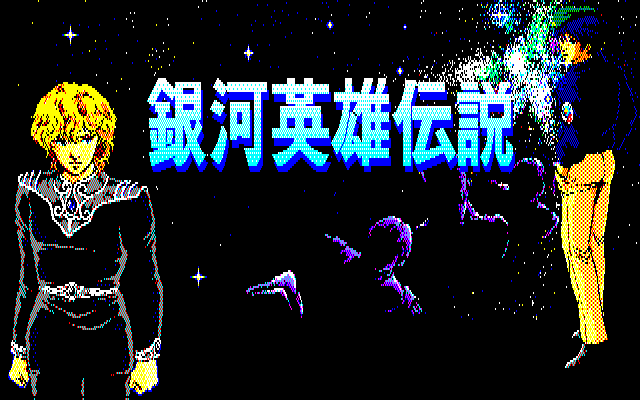
Graphics
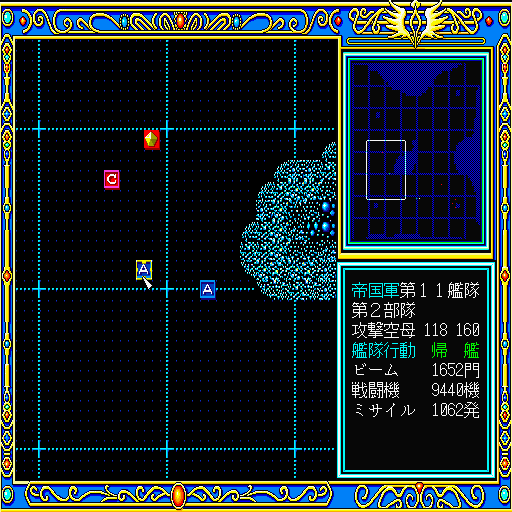
The view is split between top-down outer-space maps for fleet movement and separate battle screens for engagements. Ships are the center of attention throughout, with planets serving as crucial points to defend or invade rather than destinations for exploration.
Story
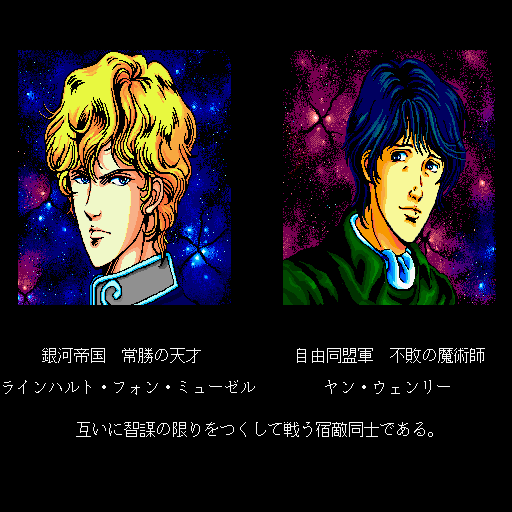
Despite its famous source material, this is not a story-heavy adaptation. The backdrop is the long war between the Galactic Empire and the Free Planets Alliance, with Reinhard von Müsel and Yang Wenli leading their respective sides, but the game concentrates on the conflict’s military record rather than dramatizing the larger novel cycle.
The scenarios are framed as historical battles with exact dates and explicit win conditions. That is a smart fit for the material’s grand-scale warfare, even if it means you should not come in expecting a rich narrative tour of the anime or novels. The lore gives each side context; the scenarios ask you to do the work.
Choosing either faction is more than a cosmetic label because it places you in a different command role within that central war. Still, the storytelling payoff comes from the premise and the scenario framing, not from a stream of plot scenes. Familiarity with Legend of the Galactic Heroes will make the setting more meaningful, while newcomers can treat it as a clean two-faction space-war setup.
Overall Experience
Ginga Eiyū Densetsu is a focused piece of space strategy: five scenarios, two opposing powers, planet-based objectives, and fleets whose strengths demand some forethought. It does not wander from that lane. The result feels purposeful when you want a concise strategic problem instead of a sprawling campaign full of narrative detours.
Its main compromise is clear from the first serious clash. You command movement and make weapon choices, but you do not directly run the battle once it begins. That can make a carefully built plan feel rewarding when it works, yet it can also leave defeat feeling one step removed from your control. Patience with that structure is the deciding factor.
Give it a chance if the idea of reenacting dated Galactic Empire-versus-Alliance engagements sounds more exciting than being led through the source material’s plot. The payoff is a tactical exercise in deployment, timing, and objective management. Fans hoping for an expansive narrative adaptation, or for fully hands-on combat, will find its scope narrower than the name suggests.

Reviews
There are no reviews yet.