 Retro Replay Retro Gaming History, Reviews & Emulation
Retro Replay Review
Gameplay
The first hour is about learning to think in terms of systems rather than single battles. Each scenario sets its own victory conditions, and you choose whether to command the Imperial or Alliance side before taking charge of allied planets and their fleets. That choice immediately gives the game more replay value than a one-sided campaign structure: you are not merely watching the war from one political perch, but testing how each force handles the same broad conflict.
The strongest idea is the tension between concentration and coverage. A planet can send its entire fleet into a fight, or supply separate units instead. Committing everything promises a powerful strike, but it can also leave a position exposed; splitting forces buys flexibility, though each group is less imposing. On the top-down, turn-based map, moving ships to attack or defend becomes a measured contest of placement and timing. If you enjoy taking a minute to inspect the board before ending a turn, this is where the game starts to click.
Combat itself is hands-off. Ship encounters resolve automatically and appear in small animated scenes, so your responsibility is the decision that led to the clash, not minute-to-minute command during it. That makes Ginga Eiyū Densetsu II more of a strategic planner than a tactical simulator. It can frustrate you if you want direct control over every exchange, especially when an engagement does not go the way you hoped. But the format keeps attention on fleet deployment, planetary control, and meeting the scenario objective.
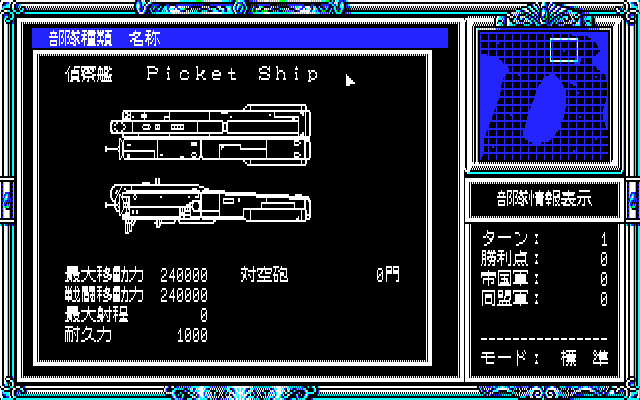
The sequel’s extra ship types add welcome room for consideration, while the generals’ detailed characteristics make the opposing forces feel less anonymous. This is not a game about improvising your way through flashy combat. It rewards patience, repeat attempts, and a willingness to treat a bad engagement as evidence that your earlier positioning needs work.
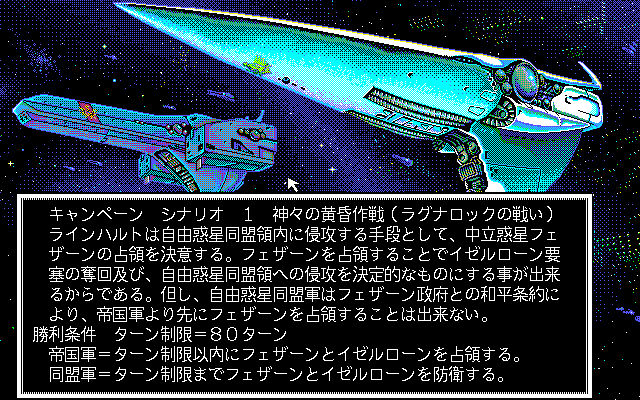
Graphics
The main view is a top-down space map, where your fleets move between planets and enemy forces. Battles cut away to small animated encounters, giving automatic combat at least a little motion instead of reducing every result to text.
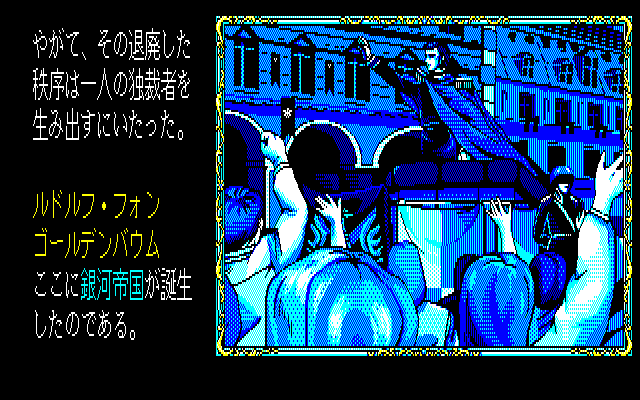
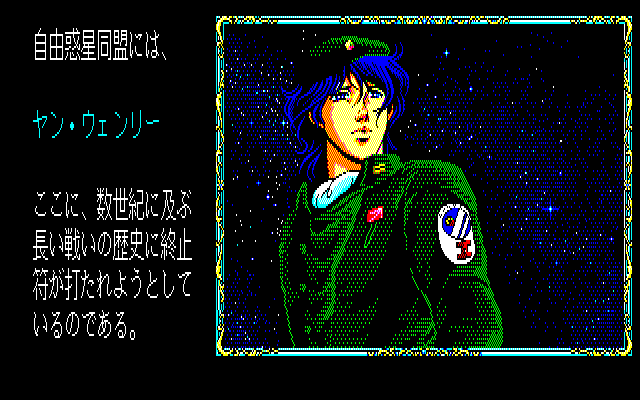
Portraits and detailed information for the opposing generals add faces to the Imperial and Alliance command structures. Alongside the expanded battle animations, they give this MSX strategy game more character than its map view alone could provide.
Story
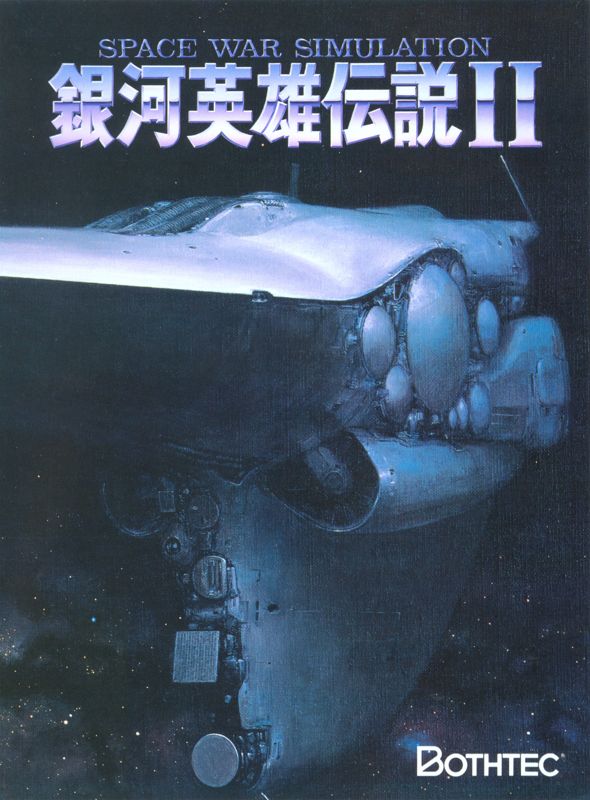
Ginga Eiyū Densetsu II draws on the anime adaptation of Yoshiki Tanaka’s Legend of the Galactic Heroes novels, and its central conflict is a strong fit for scenario-based strategy. Humanity has spread across the Milky Way, only to divide itself between the Galactic Empire and the democratic Free Planets Alliance. You are commanding fleets inside a war large enough to span systems and planets, not fighting over a single isolated frontier.
The contrast between the two states gives the conflict a useful dramatic shape. The Empire is modeled after Bismarck-era Prussia, while the Alliance stands as its democratic rival. Choosing a side for each scenario lets you approach that struggle from either command room, which is more engaging than being locked to one faction’s view of the war.
Do not expect the scenarios to turn this into a sprawling interactive novel. Its storytelling strength comes from the scale and political framing behind the objectives: each victory requirement sits within a galaxy-wide war between two entrenched powers. The generals’ portraits and characteristics help that framework land, giving some human weight to the fleets you send into danger.
Overall Experience
Ginga Eiyū Densetsu II is a solid choice if you want a compact, turn-based space strategy game with a serious military-political backdrop. Its five scenarios are the core of the package, and the ability to select either the Empire or Alliance gives them more life than their number first suggests. The game asks you to plan with fleets, planets, and objectives in mind rather than chase constant action.
The automatic battles will divide you. They are a good match for anyone who wants the tension to come from force placement and commitment, but they deny you the chance to rescue a poor matchup through direct combat skill. Go in wanting to be a commander, not a pilot. When you accept that role, the game’s decisions carry satisfying weight.
Compared with its predecessor, the additional ship types, battle animations, and more detailed generals make this a more rounded return to the same formula. The payoff is not spectacle; it is the quiet satisfaction of seeing a fleet plan hold together across a scenario. Strategy fans with patience for an older, methodical pace should give it a chance, particularly if the Empire-versus-Alliance setting already appeals to you.


Reviews
There are no reviews yet.