 Retro Replay Retro Gaming History, Reviews & Emulation

Retro Replay Review
Gameplay
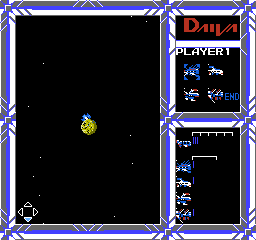
The first hour has a real sense of scale. You leave the homebase with a limited fleet, watch resources accumulate, and choose which hostile planet to pressure next. That strategic map is not just a route selector: enemy ships can appear while you travel, and ignoring them has consequences when they move against planets you already control. The campaign makes you think about expansion and defense at the same time, which is a stronger hook than simply clearing stages one after another.
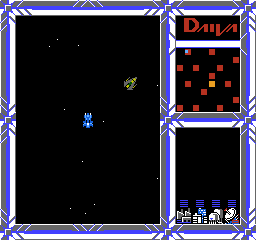
Space combat slows things down into turn-based fleet battles on a square grid. You place your ships, then trade volleys until one side has nothing left. There is a welcome element of choice in whether to engage ships you encounter, but it is never a carefree choice; losing ships directly weakens your ability to keep taking territory. The battles sound straightforward, yet their place in the larger campaign gives them tension. Every fleet you add with homebase resources feels like an investment you would rather not throw away.
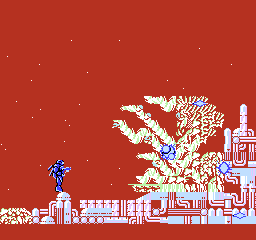
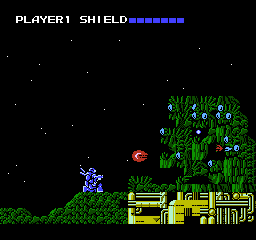
Taking a planet asks for a different skill set. After landing, you pilot a mobile attack suit through a side-scrolling action section, shooting and avoiding hostile enemies before facing the boss. The pre-mission enemy and gravity bars are especially smart touches: one warns how crowded and difficult the stage will be, while the other tells you how much your jumping ability will be restricted. You can also decide where to deploy useful support items, including missile strikes, a screen-clearing bomb, and a shield refill. That preparation gives the action stages more bite than a blind run forward.
Frustration is likely to set in when the game makes you juggle so many fronts at once. Claiming a planet is not the end of the problem if enemy ships can attack it later, and a rough action mission can halt your momentum after you have already committed resources. Still, that pressure is the point. With four difficulty settings, you have room to find out whether the mix of long-term planning and immediate combat suits you.
Graphics
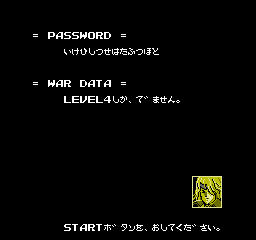
The game shifts its view to match the task: a map screen marks the homebase and surrounding planets, battles play out on square grids, and planetary assaults move into 2D side-scrolling screens with the mobile attack suit at the center. The planet-surface silhouette shown before a landing is a particularly useful visual, since it lets you choose item drop locations before the fighting starts.
Story
This chapter retells the wider DAIVA saga through Mahtari Shuban’s point of view. Rather than treating that perspective as a separate side story, the game ties it directly to the campaign: Mahtari is charged with extracting resources from fifteen hostile planets and defeating their inhabitants.
The story is most effective as a reason for the conquest structure. Each planet is a contested objective, and the need to retain ownership after victory makes Mahtari’s assignment feel more like an ongoing military push than a sequence of disconnected missions.
Do not come here expecting the narrative to carry the experience on its own. The real drama comes from what you do with Mahtari’s campaign: deciding when to risk the fleet, when to defend a claimed world, and when to commit to another hostile landing. For fans following the DAIVA saga, the changed viewpoint is the clearest reason to seek out this installment.
Overall Experience
DAIVA Story 6 is compelling because it refuses to stay in one lane. It wants you to manage resources, make tactical decisions in fleet combat, and then execute under pressure in action stages. That can make it feel demanding, but the variety also means a successful planetary takeover carries more satisfaction than it would in a purely strategic or purely action-focused game.
The payoff is worth it if you enjoy games that make every layer feed into the next. Fleet losses matter because they affect the campaign; campaign choices matter because they determine the action missions you must survive. It is a game for patient, systems-minded gamers who also like having to perform when the plan reaches the battlefield.
Recommended for anyone curious about an early sci-fi hybrid with real strategic stakes, especially if the challenge of holding territory sounds as appealing as taking it. If you want one clean genre and instant progress, its constant switching between map, grid combat, and side-scrolling assault may feel more like work than adventure. For the right gamer, though, that busy structure is exactly what gives DAIVA Story 6 its staying power.


Reviews
There are no reviews yet.