 Retro Replay Retro Gaming History, Reviews & Emulation
Retro Replay Review
Gameplay
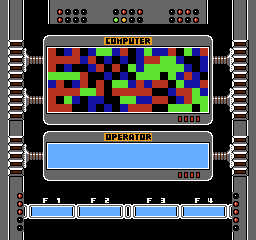
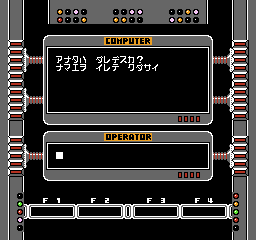
The first hour with Family BASIC is defined by a very different kind of anticipation: you are not mastering a jump arc or learning enemy patterns, you are facing a keyboard and asking what you can make this Famicom do. NS-HUBASIC gives the cartridge its real reason to exist. There is a genuine thrill in treating a console as a place to program rather than a sealed box built only to run finished games.
That thrill comes with friction. Saving your work requires the Famicom Data Recorder, so creating anything worth keeping was tied to extra hardware and a more deliberate workflow than a standard cartridge experience. Family BASIC asks for patience, curiosity, and at least some willingness to learn BASIC; if you want immediate arcade action, it can feel like homework before it feels like play.
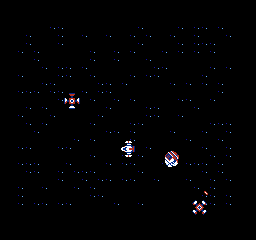
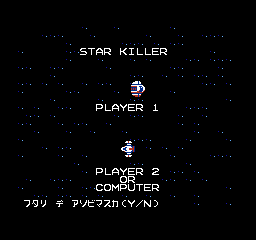
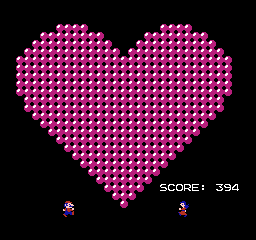
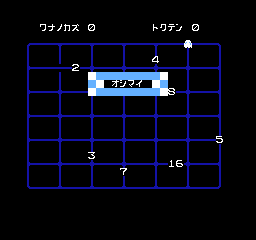
The built-in software is best taken as a set of small demonstrations rather than a full compilation. The Heart Game lets you fill a heart as Mario and Pauline meet, while Number Game has you guide a penguin through a grid, gathering numbers in sequence and avoiding Sidesteppers. Mario Game is the most intriguing of the bunch because it lets you control Mario in levels you make yourself. Star Killer gives one or two people a straightforward spaceship shooting contest against waves of enemies.
None of these diversions carries Family BASIC on its own. Their value is in getting something moving quickly, then suggesting that you could go further with the programming tools. The V3 release’s added memory and preloaded games make it the more inviting version, but the fundamental bargain stays the same: put in the effort, and the cartridge becomes more personal than a conventional game can be.
Graphics
The included games lean on familiar Nintendo characters and simple, easy-to-read scenes: Mario and Pauline sit inside the Heart Game’s romantic little goal, Number Game puts a penguin and Sidesteppers on a grid, and Star Killer centers on a player spaceship and enemy targets. These are small-scale Famicom images built for clarity, not detail.
Story
There is no campaign tying Family BASIC together. Its closest thing to a narrative is the playful image at the center of Heart Game, where Mario and Pauline move toward a kiss as you fill the heart.
That lack of authored story fits the cartridge. Family BASIC’s more interesting promise is that you can make your own scenarios through programming, rather than follow somebody else’s long adventure.
The other included games are similarly direct: collect numbers in order, build Mario levels, or shoot enemies from a spaceship. They give you premises, not plots, and that is enough for their role as quick starting points.
Overall Experience
Family BASIC is fascinating because it turns an early home console into a creative machine. The payoff is not a polished package of games; it is the moment you stop seeing the cartridge as a novelty and start seeing it as an entry point to programming on the hardware itself.
It can also be a demanding artifact. The keyboard-based BASIC work and recorder-dependent saving make this a poor fit for a casual session, and the included games are too slight to recommend as stand-alone attractions. You need to enjoy tinkering for the experience to click.
Give it a chance if the thought of writing programs for a Famicom sounds more exciting than another round of action stages. For retro programming fans, that unusual ambition is the payoff. For everyone else, Family BASIC is still worth respecting as an early, endearingly hands-on piece of Nintendo history, even if you are more likely to admire it than return to it regularly.



Reviews
There are no reviews yet.