 Retro Replay Retro Gaming History, Reviews & Emulation
Retro Replay Review
Gameplay
Monster Hunter 3: Ultimate begins by asking you to slow down. You gather herbs, honey, seeds, mushrooms, and ore, take Guild assignments, then head out with a clear purpose: hunt, gather, or capture. That opening can feel workmanlike if you want immediate fireworks, but it establishes the rhythm that makes the game stick. You are not simply clearing missions; you are building the supplies and equipment needed to make the next dangerous hunt less intimidating.
The central loop has real teeth. A successful hunt can end in a kill, a capture, or forcing a monster to flee, and kills leave parts that can be carved off and brought to the blacksmith for new weapons. That turns progress into something tangible. The more you put into the cycle of preparation, hunting, and crafting, the more satisfying each upgrade becomes. Urgent Quests give the climb structure by unlocking the next tier, so there is usually a solid reason to keep pushing rather than merely repeating the same task.
Co-op is where Ultimate has its strongest pull. Online groups of up to four can tackle monsters together, and the lobby system lets you choose a game to join rather than throwing you into a drop-in match. That is a better fit for a game built around preparation and coordinated hunts, though it also means you need to be comfortable seeking out the room you want. Hunter Rank progression adds another long-term goal by opening further items and weapons. If you enjoy committing to a hunt and improving through earned materials, this has a much deeper payoff than its basic quest list first suggests.
Graphics
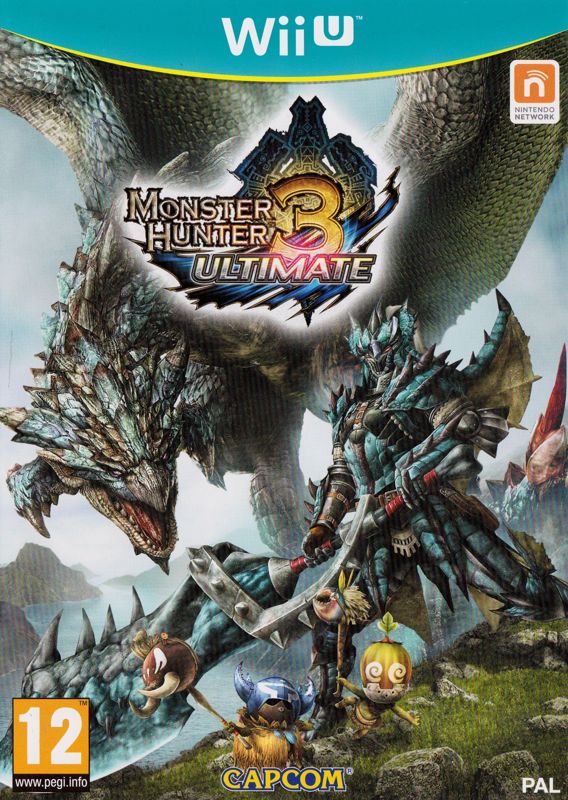
The action uses a behind-the-character view, keeping your hunter, the monster, and the terrain of the deserted island in the same frame. Monsters are the visual focus of each quest, while the island’s forageable herbs, mushrooms, and ore give the hunting grounds more to look at than a simple combat arena.
Story
The story is a straightforward reason to get you onto the island: an earthquake is believed to have been caused by a monster, and the Guild sends you into the area to deal with its creatures and gather what you need. It is a practical setup rather than a dramatic centerpiece, which suits a game more interested in the work of hunting than in long narrative detours.
The Guild’s assignments give the adventure its momentum. Hunting, gathering, and capturing quests all feed into Urgent Quests, making advancement feel tied to your standing as a hunter instead of to a separate story track. The result is simple, but it keeps your objectives clear.
Do not come in expecting the island mystery to carry the experience on its own. The story mainly earns its place by giving context to your repeated expeditions and your pursuit of larger challenges. For this series, that restraint works: the memorable moments are the hunts you survive and the gear you make afterward.
Overall Experience
Monster Hunter 3: Ultimate is rewarding precisely because it does not rush to flatter you. The early gathering and preparation can feel like friction, especially if you only want to jump from one boss fight to another. Give it enough time for the crafting loop and quest tiers to connect, though, and that friction becomes investment. You know why you are collecting materials, and you feel the difference when better equipment helps you face a tougher target.
The split between offline single-player and the more substantial online side is important. Solo play lets you gather and prepare, but multiplayer is where the larger monster-hunting focus takes over. Coordinating with a four-person group gives the game its biggest moments, while the lobby structure favors deliberate sessions over casual drop-in play.
This is an easy recommendation for patient action-RPG fans who like progression they can touch: parts become weapons, quests unlock tougher tiers, and Hunter Rank expands your options. If you have history with its predecessor, the related Monster Hunter Tri: Limited Edition Ultimate Hunter Pack is worth a look for context. For everyone else, Ultimate is worth the learning curve when you want a demanding co-op hunt game rather than a breezy one-and-done adventure.


Reviews
There are no reviews yet.