 Retro Replay Retro Gaming History, Reviews & Emulation
Retro Replay Review
Gameplay
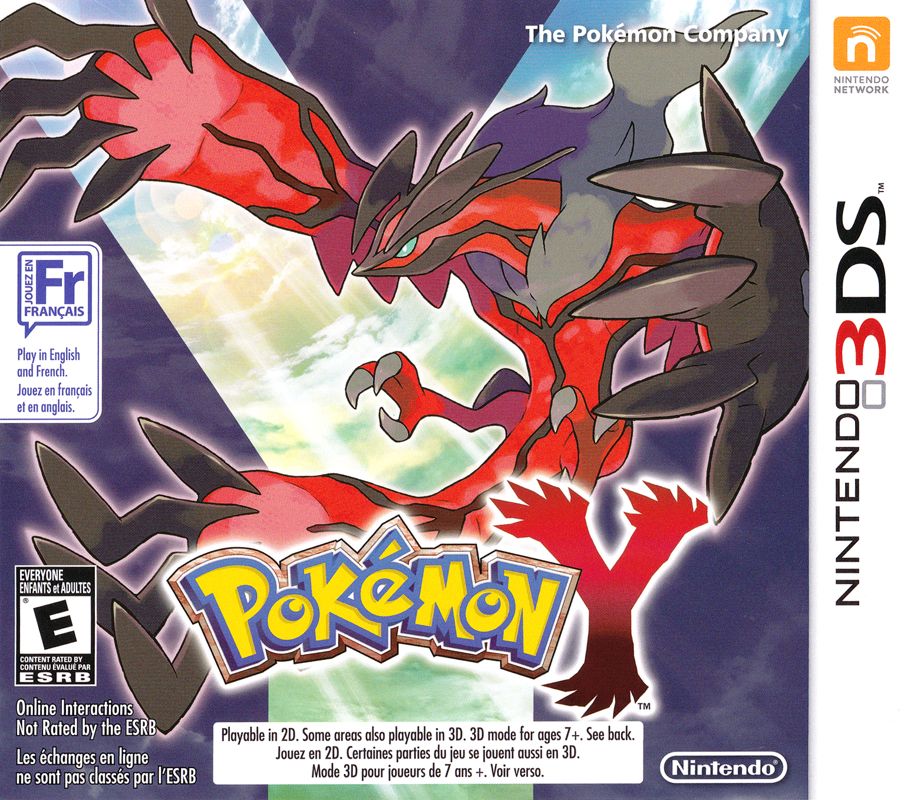
Pokémon Y hooks you with an old routine that still works: pick a starter, start catching whatever looks interesting, and slowly realize you have more possible team combinations than you can sensibly fit into six slots. The shift to full 3D helps the trip feel more immediate, but the real pull is the same satisfying rhythm of discovery and turn-based battles. Kalos gives you a new place to fill out the Pokédex, now split across three sections, and that structure makes collecting feel pleasantly substantial rather than like a side errand.
The new battle ideas are uneven in importance, but they do freshen up a formula that had become extremely familiar. Horde battles change the shape of an encounter by putting multiple opponents in front of you, while Sky Battles add another specialized format. The Fairy type matters more over the long haul, because it changes how you assess matchups and gives team building another useful wrinkle. If you have played a lot of Pokémon, that extra layer is welcome without making the fundamentals harder to grasp.
Mega Evolution is Pokémon Y’s standout addition. Triggering a temporary transformation with a Mega Stone can raise a Pokémon’s stats, alter its typing or ability, and give it a new form. It is the sort of feature that makes you reconsider an established favorite, not merely chase the newest creature. Because the boost is temporary, it adds a nice moment of decision-making to battles rather than replacing the basic strengths and weaknesses that define the series.
Outside battle, Super Training and Pokémon-amie make the team feel a little less like a set of menu entries. Super Training lets you improve stats, while Pokémon-amie has you play minigames, interact with Pokémon, and feed them Poképuffs to build their bond with you. Neither system is required to understand why Pokémon works, but both reward the urge to fuss over a favorite partner. If you only want to move from battle to battle, you can; if you enjoy raising a party with some personality, these diversions land well.
Graphics
Pokémon Y was the first mainline entry rendered fully in 3D, and that alone changes the feel of wandering Kalos and facing opponents in battle. The camera’s diagonal-down view remains rooted in the series’ traditional layout, but Pokémon and trainers now occupy a more dimensional space instead of a purely sprite-based one.
Mega Evolutions get the clearest visual payoff: transformed Pokémon take on distinct new looks alongside their changed battle properties. Character customization also lets your protagonist look less like a fixed default hero and more like your own trainer.
Story
This is a Pokémon journey first and foremost: you set out in Kalos after choosing one of three starter Pokémon, collect information for the Pokédex, and build a team through exploration and battle. That familiar framework is not trying to overturn the series, and Pokémon Y is stronger for understanding the comfort in it. You know why you are heading out, and the game quickly gives you the freedom to become attached to creatures beyond that initial starter.
The three-part Pokédex is a small but meaningful touch because it makes the region’s collecting goal feel broader. Filling entries is not separate from the adventure; it naturally feeds the same curiosity that gets you checking out another encounter or making room for one more capture. You may begin with a practical team plan and end up carrying an unexpected Pokémon simply because you want to see it develop.
Customization also helps the journey feel more personal. Choosing how your protagonist looks and spending time with party members through Pokémon-amie give a familiar role-playing setup a bit more ownership. The emotional payoff is modest but real: your final party can feel like a group you raised, not just the statistically correct answer to a string of battles.
Overall Experience
Pokémon Y earns its reputation as a strong 3DS entry because it modernizes the main-series routine without losing its relaxed, compulsive core. You still get the pleasure of catching something new, testing it in turn-based fights, and continually adjusting a six-member party. Full 3D, protagonist customization, Fairy-type matchups, and Mega Evolution give that loop enough new energy to make Kalos feel like more than a cosmetic change.
Its best feature is how comfortably it accommodates different kinds of investment. You can focus on filling the Pokédex, experiment with type coverage, put time into stat growth through Super Training, or simply spoil a few favorites in Pokémon-amie. The optional activities do not replace battling, but they make the downtime between major encounters feel less empty.
If you want a Pokémon game that respects the series’ familiar structure while adding several lasting ideas, Pokémon Y is easy to recommend. Mega Evolution in particular gives battles a satisfying burst of drama, and the Fairy type makes even experienced trainers pause and rethink old habits. For the companion version, see Pokémon X; Pokémon Y remains an excellent reason to revisit the point where the mainline series stepped into full 3D.


Reviews
There are no reviews yet.