 Retro Replay Retro Gaming History, Reviews & Emulation



Retro Replay Review
Gameplay
The hook is clean and effective: you arrive at Bell Garden school looking to escape a painful breakup, hear a scream during a walk, and immediately have a reason to start poking into other people’s lives. Akagawa Jirō Mystery: Tsuki no Hikari – Shizumeru Kane no Satsujin is built like a mystery novel rather than an action game, so its opening asks you to settle in, absorb the situation, and accept that the reward is in untangling the case.
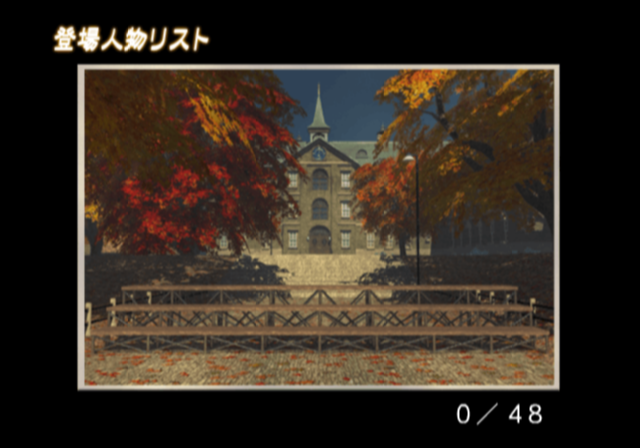
Investigation moves through visits to different locations around the school and its surroundings, with a map helping you decide where to go next. The key interaction is the character-correlation diagram, where you connect people to the matters under investigation and can mark relationships between them, including romances. That gives your deductions a concrete form. Instead of simply waiting for the script to announce a revelation, you are asked to organize the social web yourself.
That structure should click with you if you enjoy slowing down to test who knows whom, why a connection matters, and what it might say about motive. It can become frustrating if you prefer detective games that constantly push you forward, because the point here is to work through the clues and let the case gradually become clear. Your deductions affect which ending you receive, and solving a case can open another scenario, so careful attention has a meaningful payoff beyond reaching the credits once.

Graphics
The first-person adventure framing keeps the focus close to the investigation, placing you in the teacher’s role as you move through Bell Garden and follow its mystery. The game’s most distinctive on-screen element is its character-focused investigation structure, which emphasizes people and their links over action-heavy set pieces.

Story
Bell Garden is a strong setting for this kind of closed-circle suspicion. A new teacher arrives wounded from a breakup, far from his old workplace, and finds that a supposedly fresh start comes with a scream and a crime. It is an immediately human setup: you are entering an unfamiliar community at the same time you are trying to determine which member of it may be dangerous.
The choice to play as a man or a woman is more than a cosmetic opening decision. It slightly changes the scenario by changing the protagonist’s partner to a character of the opposite sex. That is a modest variation, but it fits a story so concerned with interpersonal links and makes a repeat investigation feel like more than a simple replay of identical conversations.
Because the plot branches toward multiple endings based on your deductions, the mystery has room for consequences. This is not just about identifying a culprit in the abstract; it is about whether you have read the people around Bell Garden well enough to reach the right conclusion. Fans of Akagawa Jirō’s novelistic mysteries should find that emphasis especially welcome.
Overall Experience
This is an easy recommendation for a patient mystery fan who likes participating in the reasoning process. The correlation diagram is the idea that separates it from a straightforward visual novel: it asks you to turn observations into a working theory of the cast, their connections, and their possible motives.
Do not come to Bell Garden looking for a fast, combat-driven adventure. Its momentum comes from suspicion, location visits, and the gradual satisfaction of seeing scattered details form a case. When you are in the mood for that deliberate rhythm, the central investigation has a clear pull.
The multiple endings, protagonist choice, and additional scenarios unlocked after successful cases give the game welcome replay value. Its payoff is strongest when you treat it like an interactive detective novel: take notes mentally, question every relationship, and enjoy the moment your own deductions finally line up with the truth.



Reviews
There are no reviews yet.