 Retro Replay Retro Gaming History, Reviews & Emulation
Retro Replay Review
Gameplay
Dark Dawn quickly settles into the rhythm that made Golden Sun satisfying: travel with a party, push through a fantasy world, solve puzzle-flavored obstacles, and enter turn-based fights where elemental choices matter. The hook is not speed or novelty. It is the steady pleasure of working within a familiar RPG framework, then finding that fire, water, wind, and earth can be combined into different spells instead of treated as four interchangeable damage colors.
Combat earns its keep because encounters often put multiple monsters in front of you at once. That gives elemental spell selection a practical purpose: you are managing a group fight, not merely trading blows with one target. Players returning from the earlier games will feel at home almost immediately, while newcomers should expect an older-school pace built around methodical decisions rather than constant action.
The downside of that faithfulness is clear. Dark Dawn is not trying to overhaul the series formula, so its strongest moments depend on whether you already enjoy this particular blend of party-based RPG combat and puzzle elements. If the prior games’ structure felt too deliberate, this sequel is unlikely to change your mind. But when the elements start clicking together and a crowded battle asks for more than the basic command, the familiar design still has real pull.
Graphics
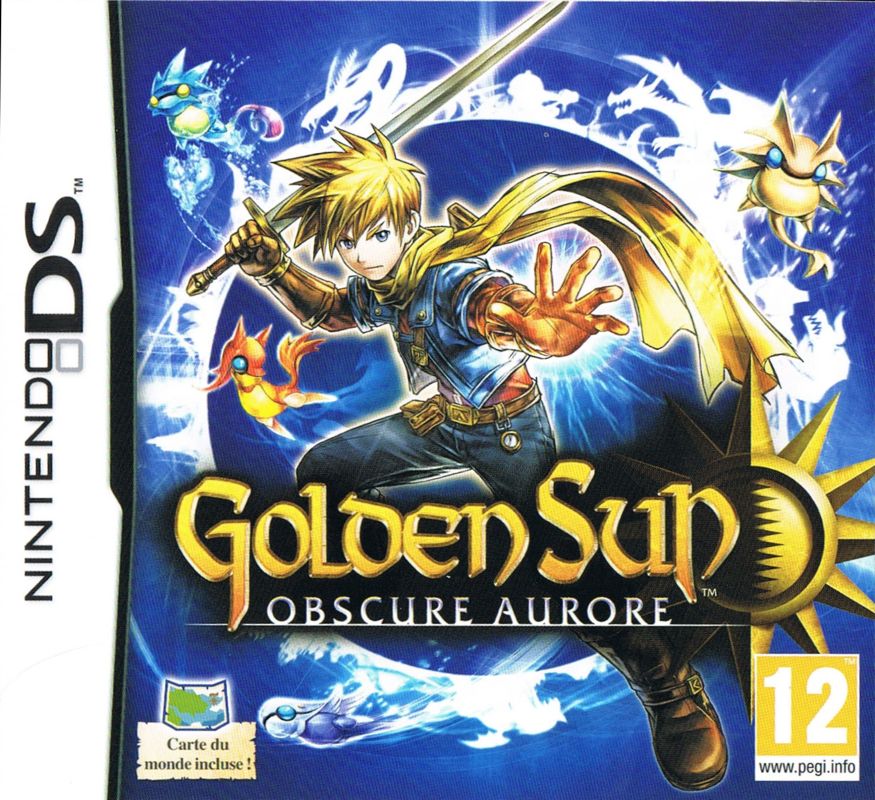
The Nintendo DS game moves Weyard into 3D, with a diagonal-down view suited to roaming its fantasy locations and entering battles. Its anime-inspired cast, magical elemental spells, and monster groups fit the series’ colorful adventure tone, while the shift to 3D helps distinguish this later version of a world altered by Alchemy.
Story
Set 30 years after Golden Sun and Golden Sun: The Lost Age, Dark Dawn follows the children of the earlier heroes as they set out to find a magical feather. That premise gives the game a welcoming adventure-story shape, but the more interesting hook is what happened to Weyard in the years between games.
Alchemy’s restoration has changed the continent, bringing not only transformation but conflict and natural disasters. That is a stronger backdrop than a simple “next generation takes over” setup: the young party is moving through the consequences of their parents’ era rather than just repeating it.
Returning fans will get the most from that connection, since the passage of time is central to the setting’s appeal. Even so, the quest has a clear enough immediate goal to give newcomers something to hold onto. Do not come expecting the story to abandon the series’ fantasy-adventure roots; come for a continuation that lets a changed Weyard carry much of the intrigue.
Overall Experience
Golden Sun: Dark Dawn is a comforting sequel rather than a disruptive one. Camelot returns to the elemental RPG systems that defined the earlier games and pairs them with a new cast exploring a Weyard that has not stood still. The first hour’s pull comes from that combination of a simple quest and a bigger world history waiting behind it.
Its 7.5 score feels right. The game has a dependable combat foundation, a setting with meaningful continuity, and enough puzzle-minded RPG structure to reward a patient player. Yet its loyalty to the old formula also caps the surprise factor. You will likely know early on whether its cadence is for you.
Give it a chance if you want a Nintendo DS fantasy RPG where elemental combinations and multi-enemy battles remain central, especially if the first two Golden Sun games left you wanting one more journey through Weyard. Skip it only if you need a sequel to aggressively reinvent its predecessor; Dark Dawn’s payoff is in revisiting a familiar system and seeing what thirty years have done to its world.



Reviews
There are no reviews yet.