 Retro Replay Retro Gaming History, Reviews & Emulation

Retro Replay Review
Gameplay
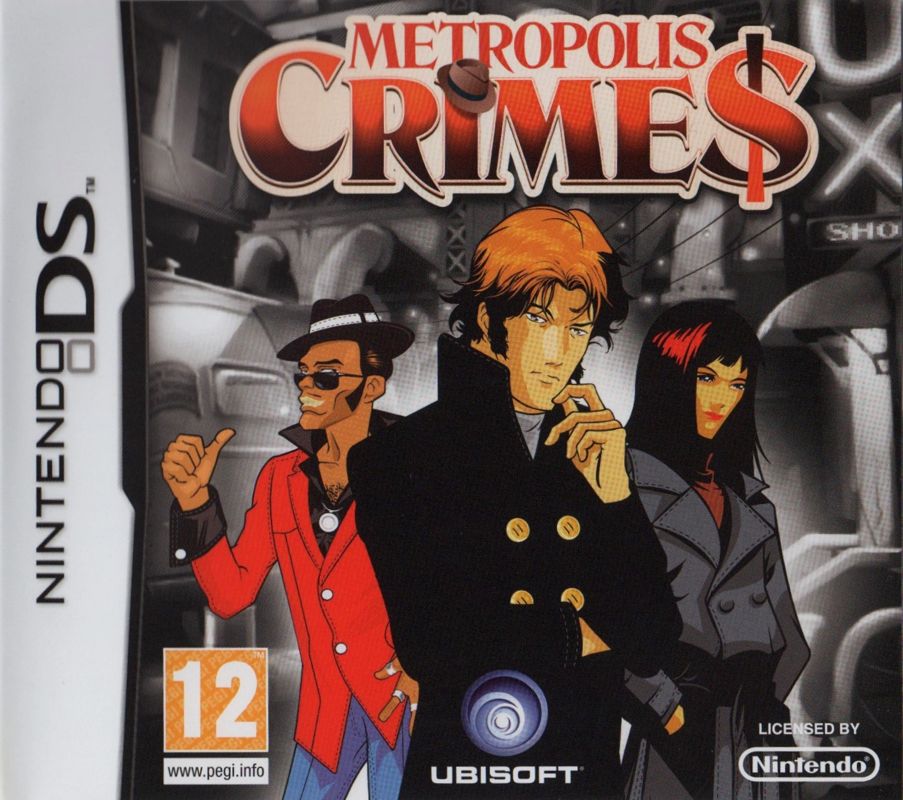
Metropolis Crimes starts from a strong fantasy: you are detective Red Johnson, working cases in a city rotten enough that every crime scene and witness feels like it might hide another angle. You move through four separate investigations by examining scenes, studying clues, and interrogating witnesses. That basic loop is easy to understand, and it gives the game a welcome sense of purpose from the outset. You are not simply wandering around looking for the next interaction; you are trying to identify a culprit.
The important thing to know before you start is that its detective work is closely tied to self-contained puzzles. Clues do not just build an open-ended case board in your head; they feed into discrete challenges that need solving before the investigation can advance. When you are in the right mindset, this structure works well. A solved puzzle feels like you have earned another piece of the case rather than merely ticked off an arbitrary task.
That same structure can also create friction. If you want the freedom to pursue leads in several directions or reach conclusions through broad deduction, the puzzle-first design may feel restrictive. Progress depends on meeting the game on its terms. Go in ready for a compact mystery adventure where your detective instincts share equal billing with your patience for puzzles, and the four cases have a better chance of landing.

Graphics
The game uses a first-person viewpoint for its investigations, keeping your attention on the places Red Johnson examines and the people he questions. On Nintendo DS, that intimate perspective suits the crime-scene and witness-focused format: the important details are kept close, rather than buried in a distant overview of Metropolis.

Story
Red Johnson is investigating crime in Metropolis, a city explicitly defined by corruption, and that is a fitting foundation for a detective game. The setting gives the cases some bite: you are not just solving abstract riddles, but working through crimes in a place where trust is already in short supply.
The story is divided into four scenarios, each with its own culprit to uncover. That episodic approach keeps the game moving and gives you clear short-term goals. Each new case offers a fresh reason to examine evidence and press witnesses, rather than stretching one mystery beyond its natural length.
Still, the storytelling is most effective when you treat it as the frame around the investigations rather than expecting an expansive crime epic. The draw is the process of getting from scene to clue to interrogation to answer. If that chain clicks for you, Metropolis and Red Johnson provide a solid mystery-game backdrop.
Overall Experience
Metropolis Crimes is a modest but worthwhile detective puzzler for someone who wants a focused Nintendo DS mystery. Its strongest moments come when a clue, a witness conversation, and a puzzle all point you toward the same conclusion. The game understands that solving a case needs more than an answer; it needs the feeling that you worked your way there.
The limitation is also clear: the investigations are not a wide-open simulation of detective work. The self-contained puzzles set the pace, and anyone who dislikes being held to a particular solution path may find the cases more rigid than engrossing. A stalled puzzle can interrupt the momentum that a good mystery normally builds.
At a 6.2, this is an easy recommendation for puzzle-minded mystery fans who like short, distinct cases and do not need much freedom outside the designed challenges. If your ideal detective game is about methodically examining a scene, weighing a clue, and pushing toward a culprit, Red Johnson’s four cases are worth taking on. If you mainly want sprawling investigation freedom, Metropolis Crimes may leave you wanting a little more room to think like your own detective.



Reviews
There are no reviews yet.