 Retro Replay Retro Replay gaming reviews, news, emulation, geek stuff and more!
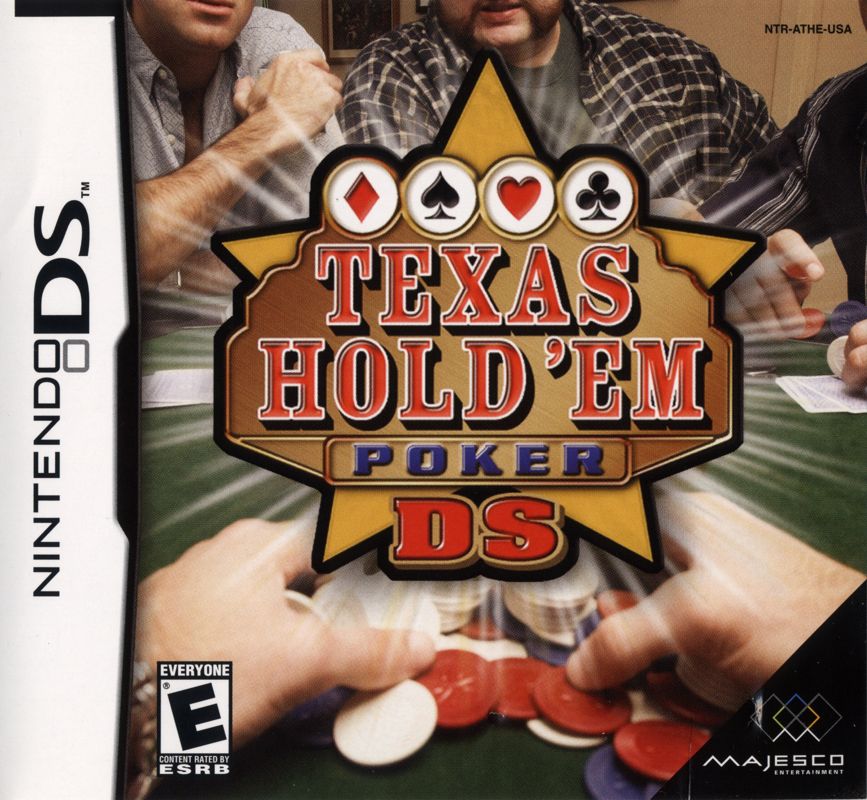
Retro Replay Review
Gameplay
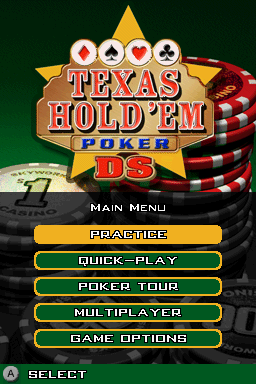
Texas Hold’Em Poker DS gets to the point quickly: pick a table, choose a poker variant, and start reading the hand. That directness is its best quality. Practice mode is a sensible place to begin if Hold’Em odds and betting rounds are still fuzzy, because the help text can get you through the early uncertainty without making you feel like you are studying a rulebook.
Quick Play is where the package starts to click. Texas Hold’Em is the natural draw, but the selection has enough variety to prevent every session from becoming the same familiar routine. Omaha and Tahoe Hold’Em change the texture of community-card poker, while 5-card stud, 5-card draw, 7-card stud, and 7-card baseball give you reasons to learn how different information changes a hand. The option to play limit or no-limit games matters, too: limit keeps your decisions contained, while no-limit makes every bet feel more consequential.
The table sizes are appropriately compact, with two to six participants, so hands should move at a good clip when you only have a few minutes. There are also several locations to choose from, which at least gives your games a little change of scene. The useful wrinkle is the tells menu, letting you look at your cards or scratch your nose. It is a playful attempt to bring bluffing behavior into a handheld format, even if poker still lives or dies on your actual betting decisions.
Poker Tour supplies the clearest long-term challenge. Seven games with increasing difficulty is enough of a ladder to make a run feel like more than a disconnected set of hands. Frustration can set in if you expect the tour to become something radically different from the standard games, because its core is still disciplined poker. If you enjoy adjusting to tougher opposition and surviving the swingy nature of card games, that simplicity is the point.
Graphics
The first-person card-table viewpoint keeps the focus on the cards and the people seated in the game. With several locations available, the game at least lets you vary the backdrop around the same basic table action.

Story
There is no grand tale pulling you from hand to hand; the closest thing to a story is your own climb through Poker Tour. Each of its seven games raises the difficulty, turning a series of poker sessions into a modest progression.
That makes the stakes personal rather than scripted. A strong run feels like you are earning your way forward through better judgment, while a bad beat or poor read becomes the kind of setback every poker player recognizes immediately.
It is a thin framework, but it suits the subject. Poker does not need a pile of plot to create tension when a risky bet can make the next decision matter.
Overall Experience
This is a solid fit if you want a portable poker collection with enough rulesets to keep your habits from hardening around Hold’Em alone. The practice help makes it approachable, and the tour gives you a reason to return after the novelty of a single quick game wears off.
Its limits are also easy to understand. The multiplayer mode mirrors Practice mode with human opponents, so its value depends on having other people ready to sit down and play. Solo, you are buying into a straightforward poker simulation, not a dramatic campaign or an elaborate social game.
For a little extra context, you can compare it with the related Texas Hold ‘Em Poker on Windows. On DS, the stronger reason to play is the broad menu of variants and the convenience of fitting a few hands into spare time. It is worth a seat at the table for poker fans who value options and clear rules over bells and whistles.


Reviews
There are no reviews yet.