 Retro Replay Retro Gaming History, Reviews & Emulation


Retro Replay Review
Gameplay
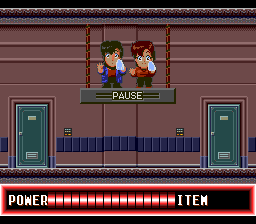
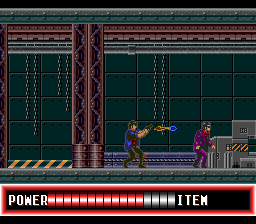
The first hour of City Hunter is easy to understand: Ryo Saeba moves through side-scrolling indoor stages and shoots the enemies that keep appearing in his path. There is a pleasing directness to that setup. You are not juggling a pile of combat systems or building elaborate loadouts; you are navigating rooms, keeping threats under control, and trying to find the way forward.
What gives the game some character is the mild detective-adventure layer wrapped around the shooting. A blocked room may send you back to speak with somebody, pick up a key or another required item, and return to an earlier area. The stages are large enough for this backtracking to matter, so progress has a small investigative rhythm rather than feeling like one uninterrupted march to the right.
That same structure can become the sticking point. Carrying multiple mission items is useful, but there are no alternate weapons or power-ups to change how you deal with enemies. Once the novelty of searching rooms and opening routes starts to fade, the repeated gunplay has little new to offer. Go in expecting a compact action game with adventure detours, not a shooter that continually escalates its combat.
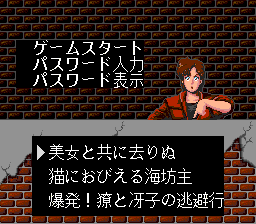
The three cases being unrelated and selectable in any order is a genuine strength. You can choose a case, see whether the blend works for you, and move on without needing to commit to a long linear campaign. For a licensed game built around an underground detective, that structure feels fitting: each mission is its own dangerous job.
Graphics
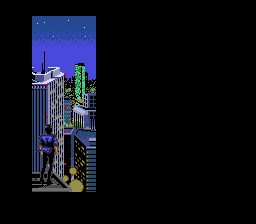
City Hunter uses a 2D side view, with Ryo moving through vast indoor locations divided into rooms. The frequent enemies and room-to-room layout suit the game’s straightforward action, while the anime and manga license gives the game a natural home for fans who want to see its lead in this older arcade-style format.
Story
Ryo Saeba is a young man with a mysterious past who has founded the City Hunter team in Shinjuku, Tokyo. The team operates as an underground private detective agency, taking on cases dangerous enough to sit outside ordinary work. It is a strong setup for an action game because it immediately explains why each job sends Ryo into hostile territory.
Rather than telling one connected game-long tale, City Hunter offers three unrelated cases. That episodic choice helps the missions feel like assignments from the agency, and the any-order selection gives you some control over where to begin. Do not expect the cases to build toward a single shared storyline; the focus is on self-contained trouble.
The story also does useful work in the stages themselves. Speaking with characters and receiving items makes the detective premise more than just a label on the box. You are still primarily shooting your way through danger, but the conversations and keys give the missions a little of the legwork that a private-detective game needs.
Overall Experience
City Hunter is at its best when you enjoy the push and pull between immediate shooting and practical investigation. Clearing a room feels good, then the game asks you to pay attention to who you have met, what you are carrying, and which earlier door may now be worth revisiting. That is a modest but effective variation on a familiar side-scrolling formula.
The trade-off is simplicity. Without different weapons or power-ups, the fighting can start to feel samey, especially if you want every new area to introduce a major new wrinkle. The exploration is not deep enough to transform the game into a full adventure either. It is a middle-ground design, and your patience with repeated enemy encounters will decide how much you get from it.
Still, the three-case format keeps City Hunter from overstaying its welcome, and its detective angle is more than decorative. Give it a chance if you like older 2D shooters that make you earn progress with a bit of conversation, item hunting, and backtracking. If you mainly want combat variety, this is a competent licensed detour rather than a must-play.


Reviews
There are no reviews yet.