 Retro Replay Retro Gaming History, Reviews & Emulation


Retro Replay Review
Gameplay
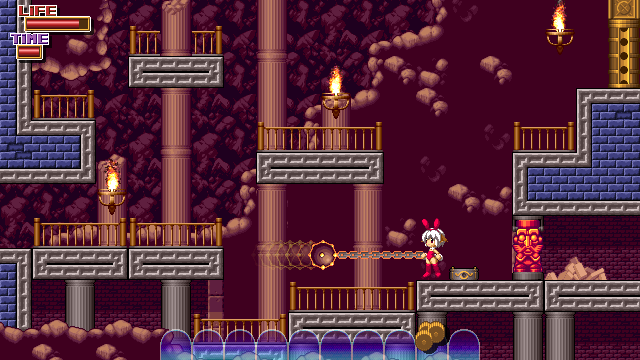
The first stretch of Bunny Must Die! Chelsea and the 7 Devils. feels like a scrappy action-platformer with a strange sense of humor, but it quickly opens into a more demanding exploration game. Bunny can jump and dash, fight through enemies, and roam a non-linear 2D labyrinth. That familiar Metroidvania loop works because progress is tied to tools that change how you read the world, not merely to pushing ahead through the next room.
Combat has welcome variety. Bunny can pick up options including the sylph shooter sword, giant katana, and chain ball, while defeated foes leave diamonds behind. More importantly, time items let you slow, stop, or reverse time. These powers are not a decorative gimmick: they are part of navigating traps, so the best moments come when a route that looked impossible becomes manageable once you reconsider it through a new time ability.
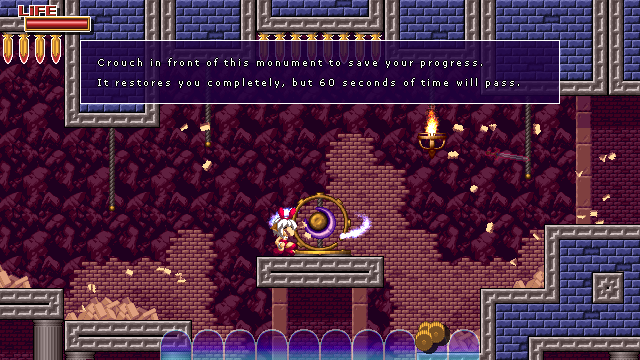
Expect the labyrinth to ask for patience. Checkpoints save your progress and refill the time meter, which makes them meaningful pauses rather than just routine markers. If you enjoy mapping paths in your head, testing an ability against an obstacle, and circling back with better options, this structure is satisfying. If you want a platformer that constantly points you toward the next objective, the non-linear layout can become frustrating before its logic clicks.

Graphics
The game uses anime-styled, side-scrolling 2D visuals, and you can choose between the original classic look and a smoother modern remix. That choice is a nice fit for a game with roots in an earlier era: go classic for the rougher old-school character, or use the remix if you prefer a cleaner image while navigating Bunny, enemies, and the labyrinth’s hazards.

Story
The setup is gleefully nonsensical. Cat weapons have taken over the world, an explosion at a thermomewclear power plant changes Bunny into a half-rabbit, half-cat, and a portly divine messenger sends her toward the Devils’ Labyrinth. It is the kind of anime-game premise that commits to its own odd terminology rather than stopping to make it sensible.
Bunny’s goal is simple enough to hold the adventure together: cross the labyrinth and find a way to break the curse. That clarity helps, because the game spends its energy on exploration and abilities rather than on a complicated dramatic setup.
The seven devils and the labyrinth give the journey a suitably mischievous frame. Come for an absurd supernatural quest, not for restrained fantasy world-building; the charm lies in how confidently it stacks rabbits, cats, divine messengers, and time manipulation into one strange adventure.
Overall Experience
Bunny Must Die! earns its name as a peculiar, hands-on Metroidvania rather than a standard platformer wearing genre labels. The weapon selection gives fights some texture, but time control is the key idea: slowing, stopping, and reversing time turns traversal into the main event. When you use it to overcome a trap that had been blocking you, the game delivers the satisfying “now I understand” moment this genre lives on.
Its best audience is the gamer who likes being trusted to explore. You need to be comfortable with revisiting routes, accepting that an obstacle may be meant for later, and treating checkpoints as valuable resources because they restore the meter behind your time powers. The payoff is a more deliberate adventure than a straight dash from stage to stage.
The later console versions add widescreen support, an in-game shop for improving Bunny’s abilities, three additional time-power stages, a new boss character, and other adjustments. Whichever version you play, the core reason to try it remains the same: this is an eccentric labyrinth platformer whose weird fiction and time-based problem solving give its exploration a character of its own.


Reviews
There are no reviews yet.