 Retro Replay Retro Gaming History, Reviews & Emulation
Retro Replay Review
Gameplay
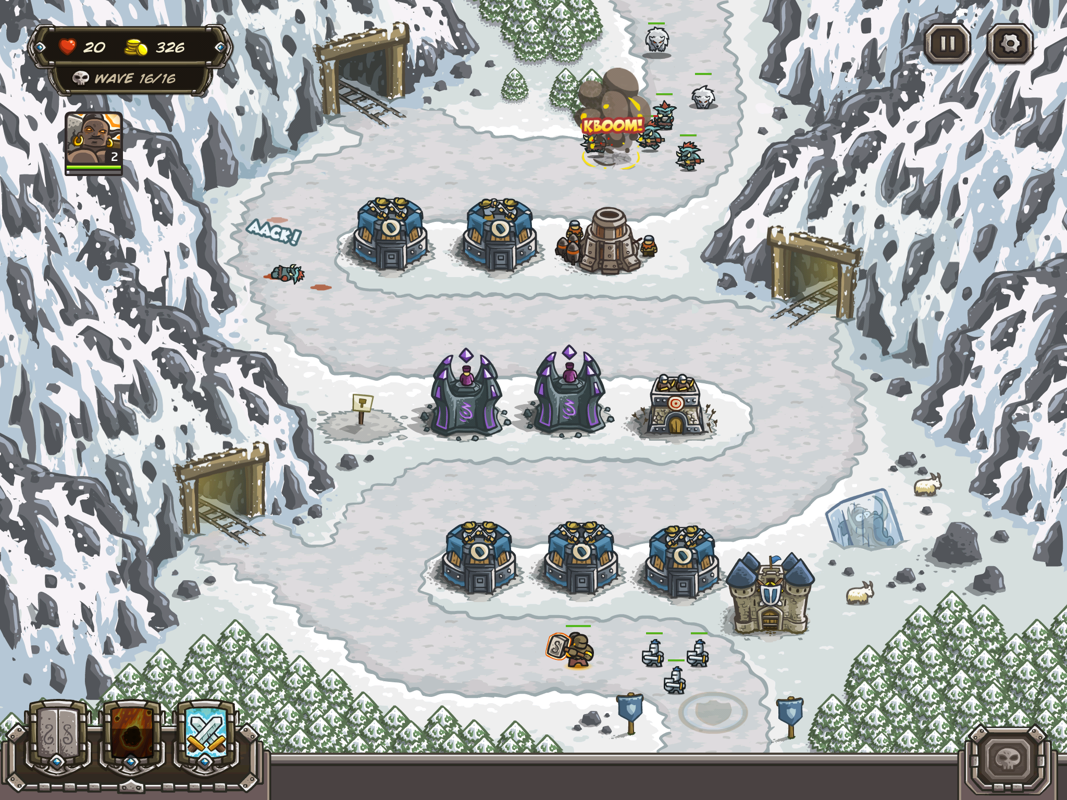
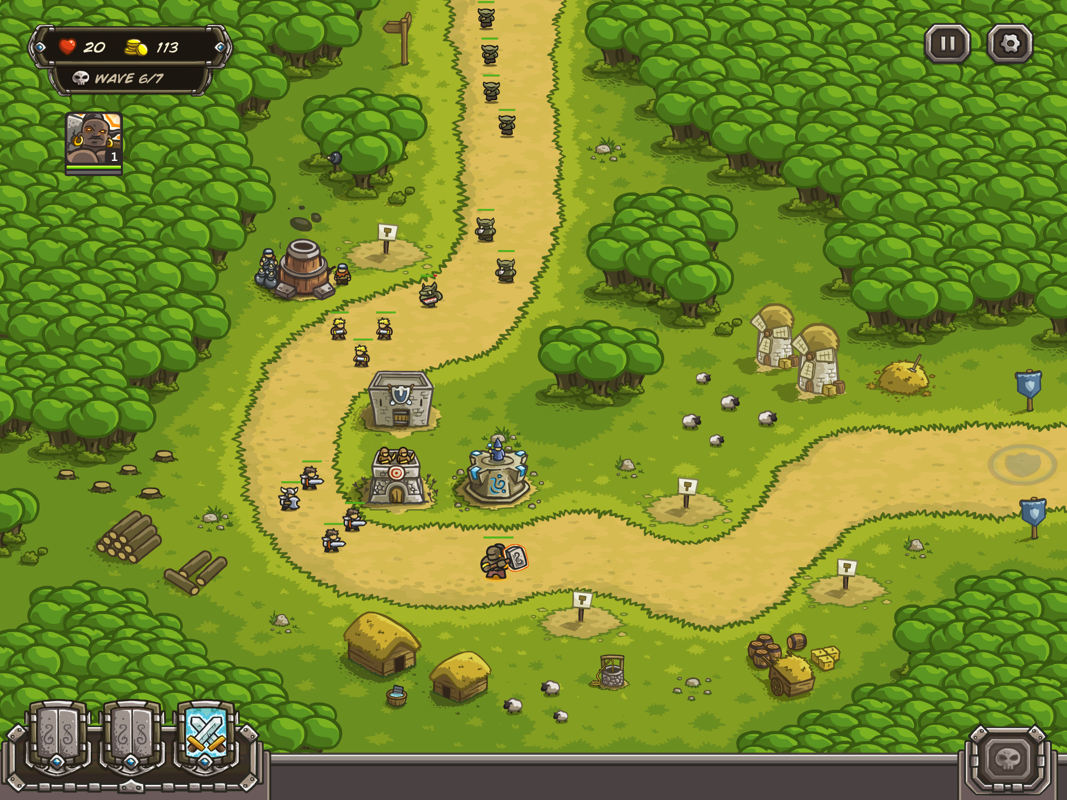
Kingdom Rush makes a terrific first impression because you can understand a battlefield at a glance, then immediately find yourself second-guessing every decision. Enemies pour down established routes, gold arrives through kills, and a limited set of building plots prevents the lazy answer of covering everything in towers. You are not building an endless fortress; you are trying to make a few crucial positions do several jobs at once.
The four basic towers give the game its satisfying tactical backbone. Barracks put soldiers in the road to stall enemies, rangers cover long distances with physical damage, mages answer targets that need magical damage, and artillery punishes grouped-up foes. None is a universal fix. A well-placed barracks can buy artillery the seconds it needs, while a mage may be the difference between stopping a hard target and watching it walk straight through your line. The two spells add another layer of intervention when a carefully built defense needs a rescue.
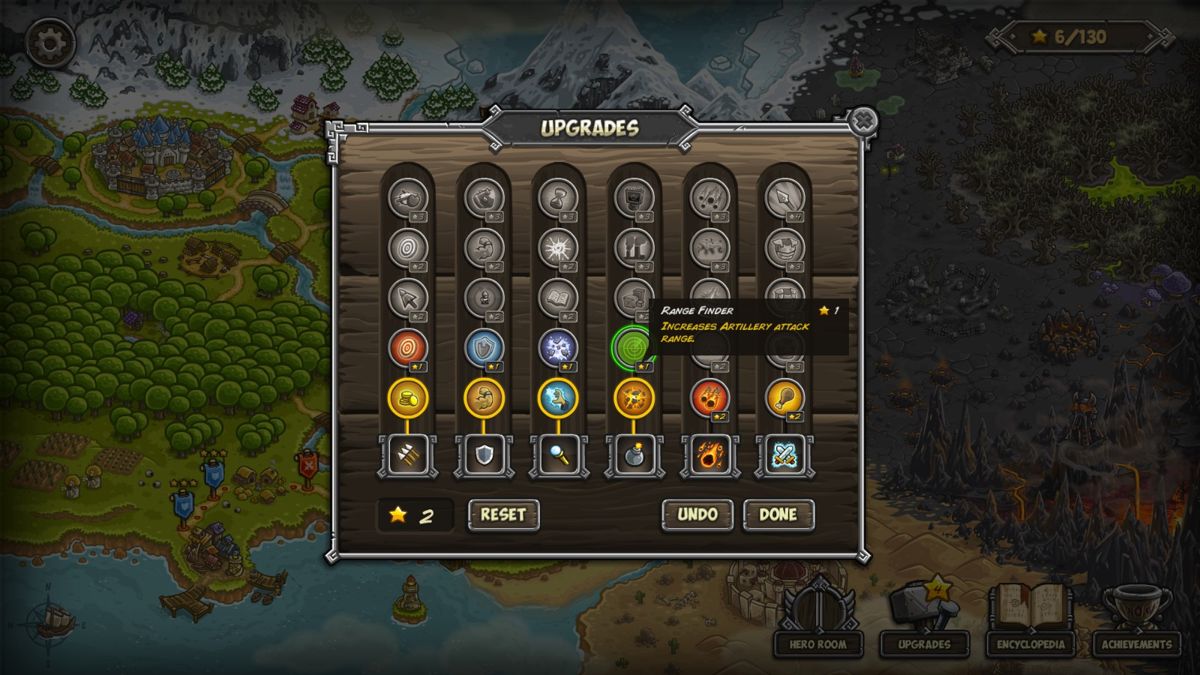
What starts to click is the relationship between placement, upgrades, and timing. Each tower has its own upgrade path and special abilities, so your decisions do not end once you choose a plot. Gold is always finite, and spending it on one strong position means accepting a weak spot somewhere else. That tension keeps even familiar waves engaging: you are constantly deciding whether to reinforce what already works or prepare for what might break it.
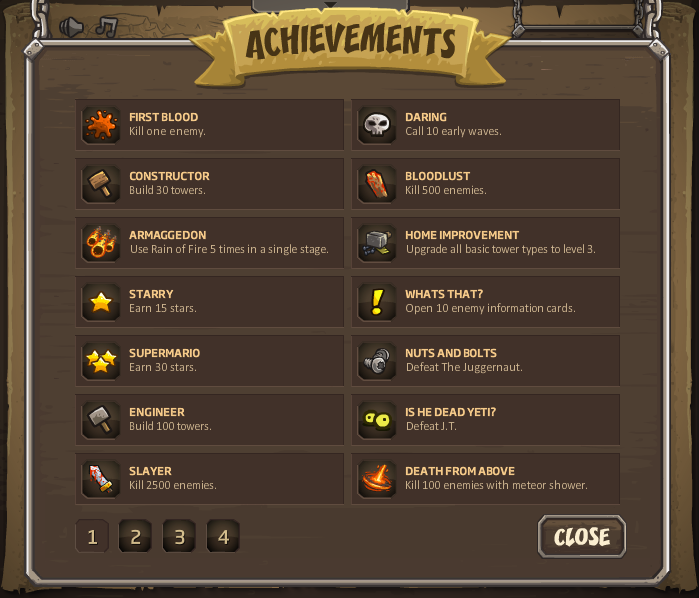
The campaign also has more staying power than a straightforward run through its maps. Each of the dozen maps has three modes, escalating from normal play to difficult variants with their own restrictions. Completing them while preserving enough lives earns points for enhancing towers and spells, giving repeated attempts a useful sense of progress. The large achievement list and detailed encyclopedia suit anyone who enjoys mastering enemy behavior and pursuing optional goals, though the tougher modes will naturally demand more patience than the opening missions.

Graphics
Kingdom Rush uses a diagonal-down battlefield view that keeps the roads, tower plots, and advancing waves easy to track. You fight across a classical fantasy journey that begins around a small city under goblin attack and reaches blasted territory crowded by demons and undead, so the maps gain a darker flavor as the campaign moves on.
Story
The story is a clean fantasy-defense framework rather than the reason to play. A kingdom of humans, elves, and dwarfs is under pressure from goblins, orcs, trolls, and other monsters, and your role is to hold the line as the threat grows. That is enough to give the battles a sense of forward movement without getting in the way of the strategy.
Its strongest narrative touch is escalation. Starting with a freak goblin raid in a small city and eventually reaching blasted wastes full of demons and undead gives the campaign a broader journey than a collection of disconnected tower-defense boards. You can feel the stakes rising even when the moment-to-moment focus remains on road coverage and gold management.
Do not come in expecting a dense character drama. Kingdom Rush uses its fantasy setting to frame a sequence of increasingly dangerous defenses, and that restraint works. The enemy roster and changing locations keep the march toward the final areas from feeling static, while the encyclopedia offers extra context for anyone who enjoys digging into the army of foes and the tools used against them.
Overall Experience
Kingdom Rush earns its 8.1 through clarity, discipline, and a remarkably durable tactical loop. It is welcoming enough that you can enjoy the early maps without treating every placement like a thesis, yet it becomes far more rewarding once you understand how tower roles overlap and where they absolutely do not. The best moments come when a defense that looked doomed stabilizes because you used the right stall, damage type, or spell at the right point on the road.
Frustration can set in when limited plots and limited gold expose a bad early investment. But that is productive frustration: failure usually points back to a weak lane, an ill-matched tower, or an upgrade bought too soon. Rather than burying you under an enormous construction menu, the game asks you to get sharper with a focused set of options.
Give it a chance if you want tower defense that values placement and smart combinations over sheer quantity. The varied map modes, score-based enhancements, achievements, and encyclopedia make it easy to stay after the main campaign starts to feel familiar. For more game history and release information, see the Kingdom Rush overview.


Reviews
There are no reviews yet.