 Retro Replay Retro Gaming History, Reviews & Emulation
Retro Replay Review
Gameplay
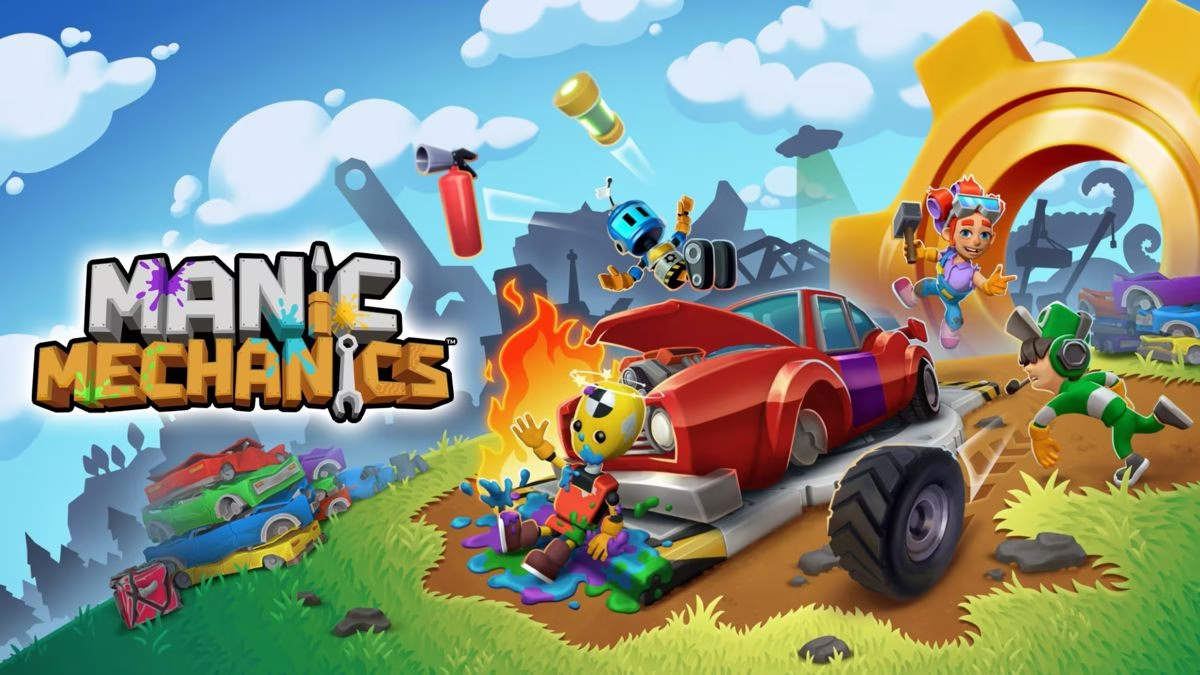
The fun begins the moment a garage becomes too busy for one person to handle. Cars arrive with several needs, parts roll in on conveyor belts, and each piece has to reach its proper station before it can be fitted. At first, you can simply grab what is nearest and hustle. Soon, that approach collapses under multiple repairs, a growing collection of stations, and teammates crossing paths with parts in their hands.
That escalation is Manic Mechanics’ best quality. A successful run feels less like pure button mashing and more like a group gradually building a working shop floor. One person can focus on fetching and delivering, another can stay near a high-demand station, and someone else can watch the cars for their next requirements. The game gives you enough simultaneous chores to make basic communication matter, without losing the immediate joy of getting a finished vehicle out the door.
Hazards are where the good-natured panic turns genuinely hectic. Oil fires, electrified water, molten lead, and thick paint can interrupt a clean routine at exactly the wrong moment. Golden parts offer the opposite feeling: they can be attached right away for bonus points, so spotting one in the pile creates a small, valuable shortcut. Chasing the higher Manic Mechanic scores gives practiced groups a reason to replay stages, although teams that dislike time pressure may find the constant triage more stressful than funny.

Graphics
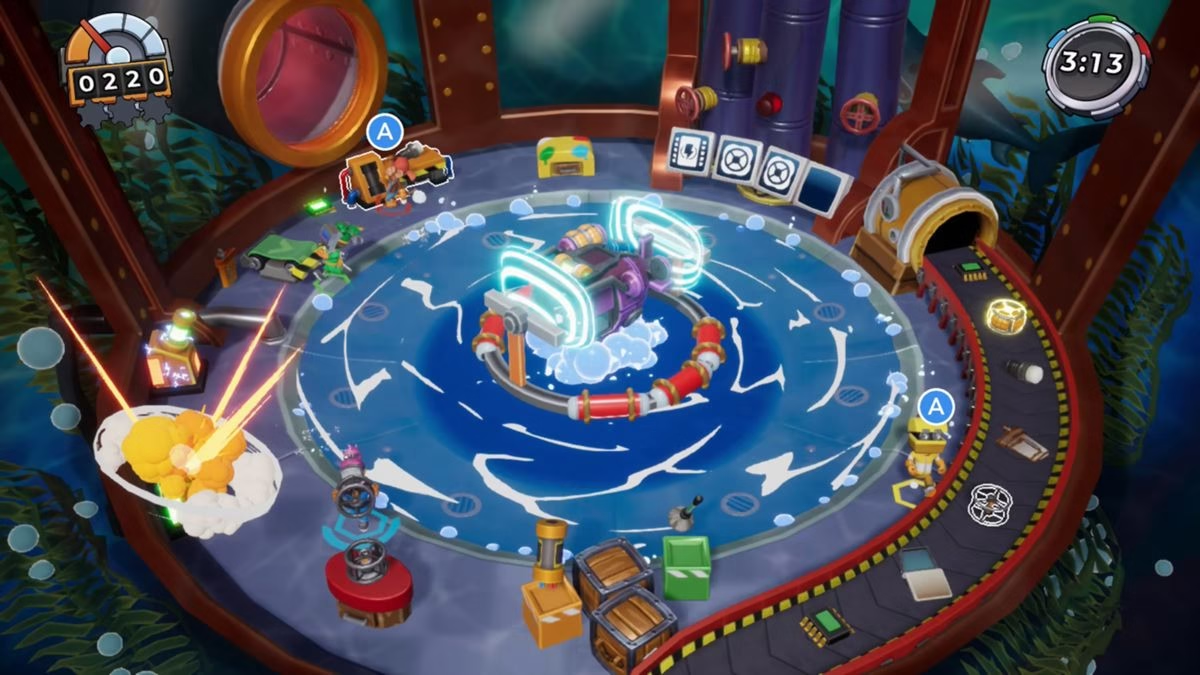
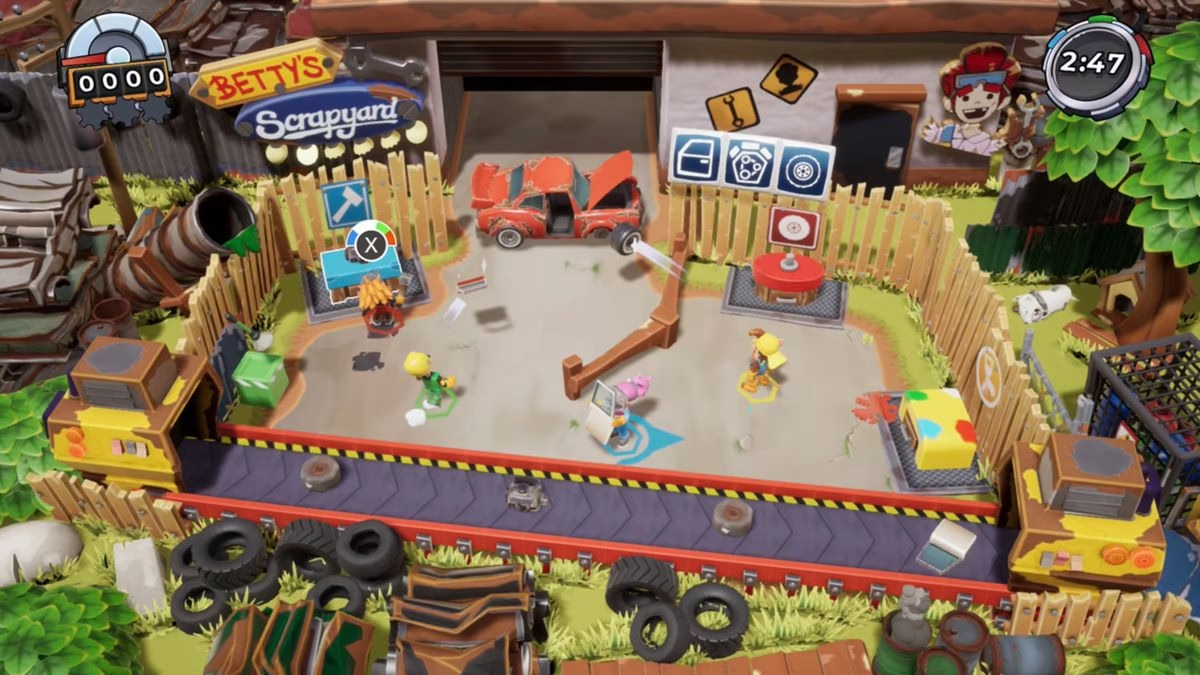
The isometric garage view makes the bustle easy to follow. Surge Saloon glows with pink-red neon around a wet, blue-gray workshop floor, while Current Crisis centers its action on a circular pool of swirling water and bright electrical arcs. The stages have a chunky, toy-box look that suits the comedy, with tiny mechanics darting between oversized cars, crates, and machinery.
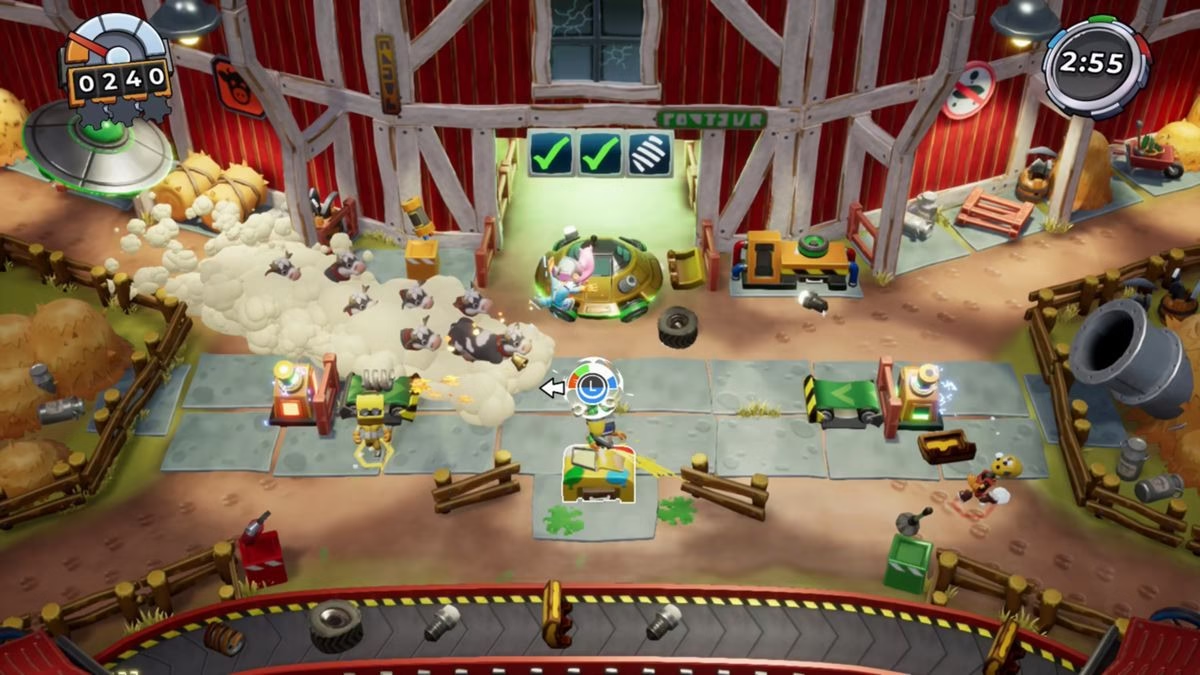
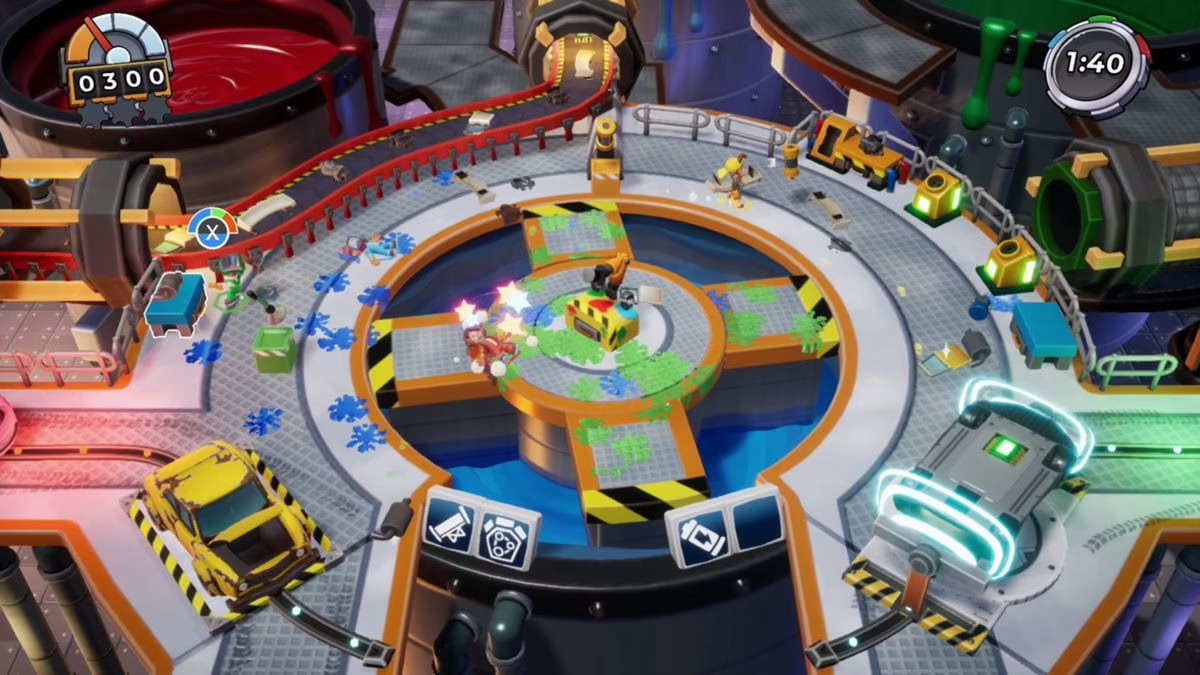
The locations do a good job of avoiding one-note garage scenery. A cluttered scrapyard is packed with tires, fencing, weeds, and rusted wrecks, while Udder Mayhem moves the action into a bright red barn surrounded by sheep and muddy farm equipment. Prime Time goes in the other direction, using clean metal platforms, conveyor loops, and colorful spills for a more futuristic factory feel.
Story
There is not much narrative weight here, and that is the right call. You are amateur mechanics traveling across Octane Isle to prove you deserve the Manic Mechanics name. It is a simple excuse to move from garage to garage, but it gives the score-chasing a little forward momentum beyond repeating disconnected jobs.
Octane Isle is divided into five regions, each overseen by a Manic Mechanic boss character. Clearing four regular levels in a region leads to that character’s challenge stage, so progression has a clear cadence: learn the local problems, earn enough cogs, then take on a bigger test.
The overworld lets you drive between levels and interact with parts of the island, making the campaign feel more connected than a bare stage list. Still, the story is flavor rather than a reason to play. The memorable moments come from a teammate discovering too late that the car is still missing one crucial part.
Overall Experience
Manic Mechanics is a solid cooperative party game because it understands that chaos needs structure. Each round gives your group a clear shared problem, then steadily adds complications until coordination either clicks or everyone starts running in circles. When it clicks, the final seconds of a close run can be wonderfully tense.
It works best on a couch with friends who are comfortable calling out jobs and forgiving mistakes. Online play also suits its teamwork-first design, but this is not a game built for quietly optimizing alone. Even when you can play without a full crew, the busiest stages are clearly made to create conversations, arguments, and recoveries between several people.
The campaign’s cog requirements and score thresholds may occasionally make progress feel tied to replaying a stage until the group cleans up its act. For the right crowd, that is exactly the point. If you enjoy cooperative games where a simple task becomes a frantic assembly line under a timer, Manic Mechanics is worth bringing into the rotation. Its ideas are not radically new, but its repair-shop setting, varied garages, and well-aimed hazards give the formula enough personality to earn the wrench work.



Reviews
There are no reviews yet.