 Retro Replay Retro Gaming History, Reviews & Emulation
Retro Replay Review
Gameplay
The Thousand-Year Door understands that turn-based combat can feel sleepy when you only select a command and wait. Here, even a basic attack asks for your attention. Well-timed button presses strengthen Mario and his current partner’s moves, while defensive timing can soften enemy hits. That simple demand to stay engaged gives routine battles a welcome pulse, especially once you start facing foes that punish careless turns.
The audience is more than a cute bit of theater. A strong performance earns cheers, Stylish moves build that enthusiasm further, and Star Power returns faster when the crowd is on your side. Spectators can also throw items into the fight, sometimes helping and sometimes creating a nuisance. It is a lively system because it rewards playing cleanly without turning every battle into a complicated minigame.
Character growth is also more flexible than many Mario RPGs. Each level-up lets you choose health, Flower Points for special moves, or Badge Points, and badges can substantially change Mario’s available attacks and techniques. If you like experimenting, the badge setup is where the game starts to open up. You can lean into durability, special moves, or a more customized set of combat tricks rather than following a single obvious build.
Outside battle, the adventure keeps you moving with environmental puzzles and paper transformations. Folding into a plane to glide and turning sideways to squeeze through cracks are exactly the sort of cheerful nonsense this series does well. The chapter structure gives each stretch of the journey its own location, events, puzzles, and boss, so the game avoids feeling like one long march through interchangeable dungeons.
Graphics
The Switch release updates the game’s visuals while retaining its paper-based look. Mario’s ability to fold and slip through narrow spaces remains central to the imagery, so the world’s paper logic feels tied to what you actually do rather than pasted over a standard RPG.
Story
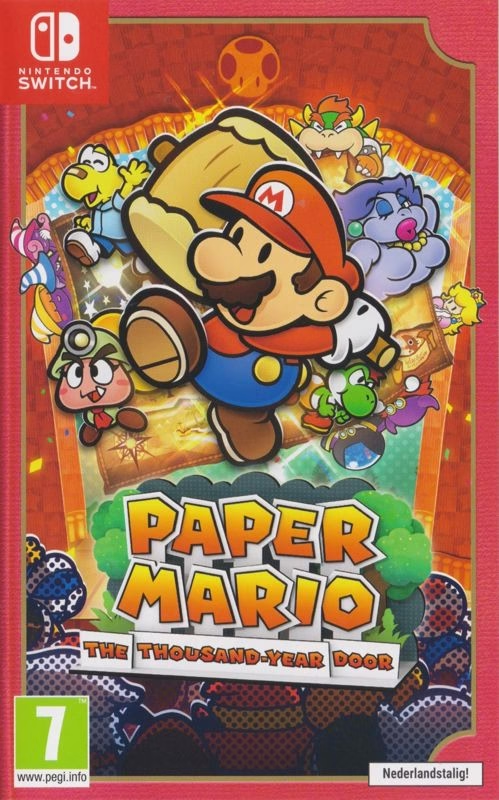
The story begins with a good hook: Princess Peach disappears after finding a magical map, and Mario heads to Rogueport to investigate. From there, the search for the Crystal Stars gives the adventure a clear purpose, while the Thousand-Year Door itself supplies the central mystery. It is an easy premise to grasp, but it has enough unanswered questions to carry a long RPG.
Rogueport is a fitting launch point because the game is not aiming for a squeaky-clean fairy tale. The town’s name alone suggests a rougher edge than Mario’s usual starting villages, which helps the quest feel a little stranger from the outset. That offbeat tone is a big part of why the game has endured.
The chapter-based structure is especially helpful for pacing. Each new area brings its own story events and boss rather than asking you to chase the same goal through a string of similar locations. The larger Crystal Star hunt remains in view, but the journey has room for detours and surprises along the way.
Overall Experience
This is one of those RPGs that makes a strong case for active turn-based combat. You are still choosing attacks, managing resources, and planning around enemy behavior, but the action commands ensure that attention and timing matter too. That balance makes it easy to recommend if traditional menu-driven battles usually leave you cold.
The main frustration is likely to land on anyone who dislikes being asked to solve environmental puzzles between fights. Progress relies on Mario’s expanding paper transformations, so you need to enjoy poking at the surroundings and figuring out how a new form changes the route ahead. For everyone else, that rhythm is a strength: battles test your execution, while exploration asks you to think differently.
The Switch edition is a confident way to play a beloved Mario RPG. The original structure, combat, and progression remain intact, while the updated visuals, remastered music, and quality-of-life improvements make the return feel worthwhile. Give it a chance if you want an RPG with genuine mechanical personality, a playful mystery, and enough build freedom to make Mario feel like your version of Mario.


Reviews
There are no reviews yet.