 Retro Replay Retro Gaming History, Reviews & Emulation

Retro Replay Review
Gameplay
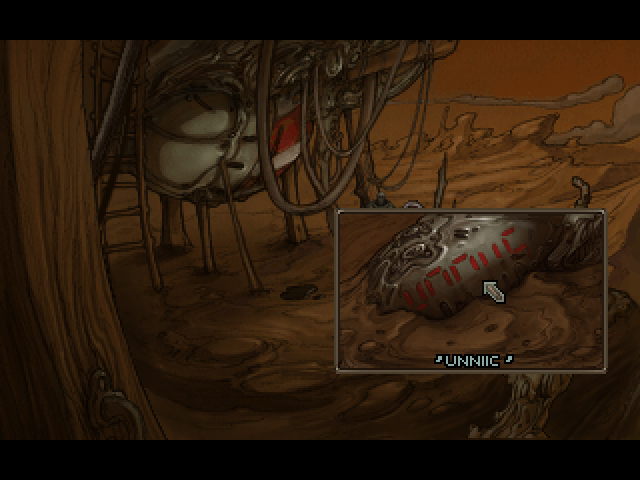
The first hour has a pleasingly grounded kind of urgency. Horatio needs power, his home is vulnerable, and the hunt begins with the simple logic of a point-and-click adventure: inspect the broken world, collect what is useful, and figure out how the pieces fit. Left-click interaction and right-click examination make the basic language immediately familiar if you have spent time with the genre, and newcomers are not buried under a complicated control scheme.
Primordia earns much of its momentum from how it reduces the tedious parts without flattening the puzzles. The bottomless inventory invites experimentation, but the datapad quietly records codes, passwords, and bits of world information, so you do not need a real-world notebook just to retain a number. Once locations are known, the map’s one-click fast travel also spares you the routine backtracking that can drain the life from older adventures.
Crispin is more than a commentary machine: you can direct him to interact with objects, which gives puzzle solving another angle beyond simply applying Horatio’s inventory to every hotspot. That said, this is still a game built around examining scenes, talking through multiple-choice conversations, and trying connections until the answer clicks. If you want constant action, it will feel slow. If you enjoy the satisfying moment when a strange object finally finds its purpose, Primordia knows exactly how to feed that urge.

Graphics
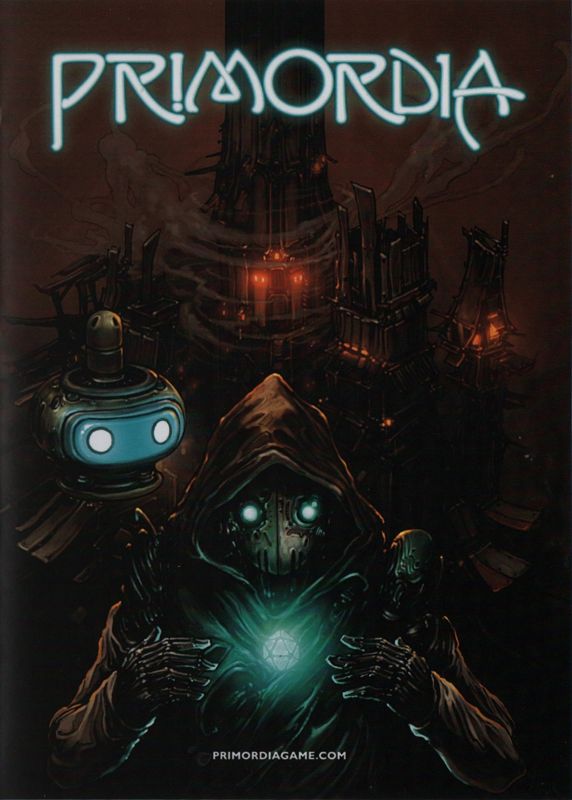
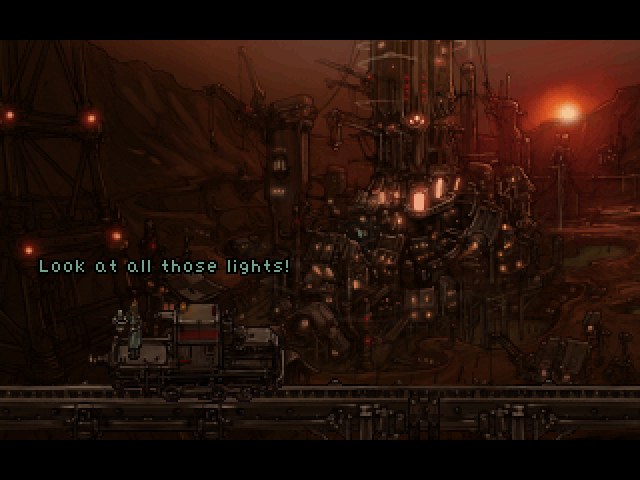
The game puts you in a desolate post-human landscape of cast-off machines and long-defunct technology, with Horatio’s derelict airship serving as a particularly fitting home base. The robot cast carries the world’s personality: Horatio reads as the earnest tinkerer, while Crispin’s presence brings a sharper, more comic edge to the same bleak surroundings.

Story
What begins as a search for stolen energy has more weight than a simple retrieval job because Horatio and Crispin need that power core to survive. The absence of humanity is not just background dressing, either. Horatio studies the Holy Book of Man, turning the lost human world into something machines interpret, preserve, and argue over rather than a civilization they can simply return to.
The central pairing does a lot of heavy lifting. Horatio is spiritual and fiercely independent; Crispin is the sarcastic droid he built. That contrast gives the conversations a useful rhythm, with one character inclined toward conviction and the other ready to puncture it. You are not merely dragging an inventory through ruined machinery—there is a relationship at the center that can make the journey feel warmer than the setting initially suggests.
Multiple-choice dialogue lets you take part in the encounters with other robots, while the datapad’s accumulating notes help the world feel pieced together through travel and investigation. Primordia is especially inviting if you like science fiction that treats ruins as questions: what humanity left behind, what its creations remember, and what meaning survives when the creators are gone.
Overall Experience
Primordia is a strong recommendation for anyone who misses compact, thoughtful graphic adventures and is willing to meet one on its own deliberate pace. Its best qualities are not novelty for novelty’s sake; they are the confidence of its setting, the rapport between Horatio and Crispin, and a puzzle structure that respects your time with automatic saves, manual saves, recorded clues, and fast travel.
Frustration can still set in when your current idea is wrong and the answer lies in another object, conversation, or interaction you have not connected yet. That is the familiar bargain of the genre. Here, though, the interface stays out of the way and the world gives you reasons to keep investigating instead of making every stalled moment feel like busywork.
At its best, Primordia makes a barren machine world feel oddly human without needing humans in it at all. The developer commentary is a welcome extra once you have seen the adventure through, especially if you enjoy hearing how a carefully constructed puzzle game came together. It is not for gamers looking for fast reflexes, but for a curious, atmospheric sci-fi mystery with a sharp companion at your side, the payoff is well worth the patient clicking.


Reviews
There are no reviews yet.