 Retro Replay Retro Gaming History, Reviews & Emulation
Retro Replay Review
Gameplay
Play Tag gets to the point immediately: one character is the catcher, the other needs to stay untagged, and a tag swaps those roles. It is a tiny ruleset, yet it creates the right kind of pressure. You spend your time trying to preserve a score measured in seconds, knowing one bad move turns your escape attempt into a chase.
The first hour is likely to be about finding the matchup that feels fair. Fifteen variations sounds generous for such a straightforward game because they are built around a useful question: how much of an edge should either side have? Two people can choose anything from a heavily favored left player to an equally balanced contest, with matching options for the right player. That makes it more flexible than a single fixed game of tag, even if the underlying goal never changes.
Solo play has the same practical strength. Beginner, advanced, equal-strength, stronger-than-computer, master, and variable-computer settings let you decide whether you want a confidence-building run or a tougher score chase. The frustration is also plain: there is no deeper objective waiting beyond avoiding tags and improving your time. If that stripped-down pursuit does not grab you, the variations will feel like adjustments to a game you have already exhausted.
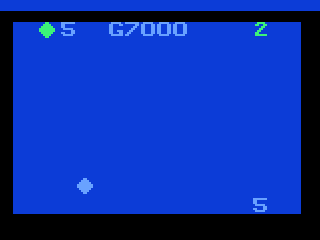
The score display is the key to its staying power. Current survival time sits at the upper right, while the game tracks each side’s best score and identifies the best result in the current game. That turns a brief round into a direct challenge: can you stay free longer than before, or can you deny your opponent the chance to do so?

Graphics
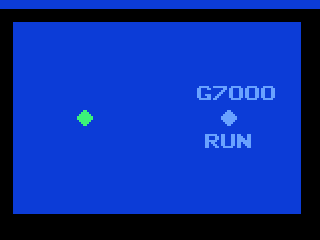
Play Tag uses a top-down, fixed or flip-screen view suited to watching a chase unfold. Score information occupies the corners: the current time at upper right, the current game’s best score and player at upper left, and each side’s high score along the bottom corners.

Story
There is no story to carry Play Tag along. Its entire drama comes from the immediate situation: one side is safe for the moment, one side is chasing, and the next tag changes both jobs.
That lack of narrative fits the game’s arcade-like focus. You are not working toward a finale or uncovering a setting; you are making a survival time matter through repeated attempts.
For a quick competitive game, that is enough. The score becomes the anecdote: who lasted longest, who was forced into chasing, and whether the next round can top the last one.
Overall Experience
Play Tag is a lean competitive diversion whose value rests almost entirely on how much you enjoy simple head-to-head pressure. With a friend, the instant role swap gives the match a pleasingly petty rhythm: you want distance when you are being chased and revenge when you take over. Its short-form nature works in its favor when you want a quick contest rather than a game demanding a long session.
The strength options are the feature that keeps it from being a one-note novelty. They let you correct for different skill levels, make a two-player game less lopsided, or tune the computer challenge to your mood. Variable computer strength is especially suited to repeat play because it prevents every solo attempt from feeling like the same matchup.
Do not expect variety beyond that central chase. Play Tag earns its place if you enjoy score attacks, direct competition, and mastering a rule set you can explain in one sentence. For anyone wanting more elaborate action or a progression-driven game, its payoff will arrive quickly and likely run out just as quickly.


Reviews
There are no reviews yet.