 Retro Replay Retro Gaming History, Reviews & Emulation
Retro Replay Review
Gameplay
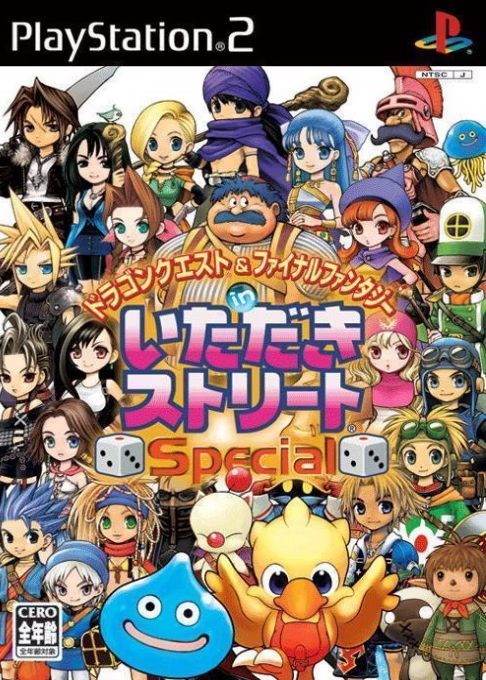
Itadaki Street Special gets its hooks into you with a simple promise: buy the useful spaces before someone else does, then make them regret walking through your neighborhood. Early turns feel approachable because the board-game basics are easy to read. Move around the board, pick up shops, collect suits, return to the bank, and build toward the asset target. Then the sharper decisions arrive. Do you spend money improving a district now, or hold onto it for a better purchase? Do you put cash into stocks and hope another player’s investment raises their value?
What starts to click is how many ways a single lap can change your position. Collecting suits and reaching the bank earns experience, and leveling up increases the income you receive there. That is a smart adjustment to the usual race around a board, since progress feels tied to more than merely completing laps. The more forgiving balance also gives newcomers room to learn why a cheap shop, a well-placed investment, or a stock purchase can matter several turns later.
Sphere Battle is the welcome wild card. You choose and set spheres, but the Sphere Dice determines when their effects activate, so you can prepare a nuisance without being able to dictate the result. That uncertainty can be frustrating when a careful financial plan gets knocked sideways, especially for anyone who wants a nearly pure strategy contest. Still, it keeps matches from becoming too predictable and gives the game a livelier party-game streak. If you know the later Fortune Street, you will recognize the same property-and-stock board-game family here, but this PS2 entry has its own Dragon Quest and Final Fantasy flavor.
Graphics
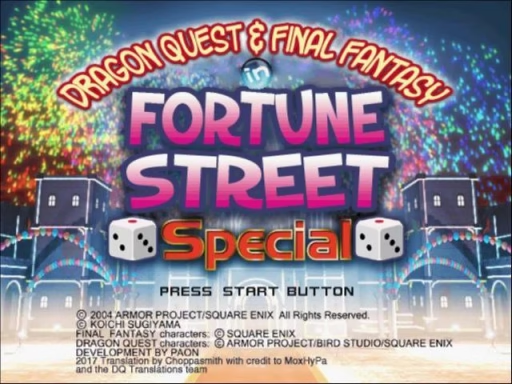
The boards have a cheerful miniature-storybook look. A small, bright, purple-clad swordsman stands out against gray castle stairs, pale stone walls, red pointed roofs, and green raised gardens populated by colorful little figures. The castle courtyards and carved architectural details are charming, although some of the stonework looks coarse and flat. Characters read like toy pieces on a tabletop, which suits a game built around watching fortunes rise and fall one space at a time.
Story
There is no save-the-world crossover plot trying to force Dragon Quest and Final Fantasy into one dramatic story. This is a competition first, and that is the right call. The crossover works as a playful gathering of characters and boards from both series, not as an excuse for lore-heavy scenes between matches.
That framing makes the fan service easier to enjoy. You are not waiting for a complicated narrative payoff that never arrives. Instead, the reward is the novelty of seeing two landmark role-playing series share the same board-game table, with arranged music helping each match feel like a celebration of both catalogs.
If you need a campaign with character arcs and plot twists, this will feel light. If you want the recognizable Dragon Quest and Final Fantasy atmosphere to add personality to a competitive board game, it does exactly enough. The lack of a grand narrative leaves the match itself, and the grudges it creates, as the real story.
Overall Experience
Dragon Quest & Final Fantasy in Itadaki Street Special is at its best when a relaxed opening suddenly becomes a financial knife fight. A few investments can turn an ordinary district into a threat, a stock decision can pay off at just the right moment, and the bank income from leveling gives you a meaningful reason to keep pushing around the board. It asks you to think ahead without burying its core loop under complicated rules.
Its biggest strength is that it welcomes you in before revealing how mean it can become. Newer players get a more forgiving path into the series, while experienced board-game fans still have plenty to chew on in shop placement, district investment, and stock timing. Sphere Battle will divide tastes because luck can interrupt strong planning, but it also makes a match more memorable when everyone has to adapt.
The payoff is worth it if you enjoy turn-based board games that let smart money decisions matter as much as a fortunate roll. The crossover theme sweetens the deal rather than carrying it, and the game remains satisfying even when you are focused purely on making the board expensive for everyone else. Give it a chance if you want a strategic party-game rhythm with enough randomness to keep a lead from ever feeling completely safe.


Reviews
There are no reviews yet.