 Retro Replay Retro Gaming History, Reviews & Emulation
Retro Replay Review
Gameplay
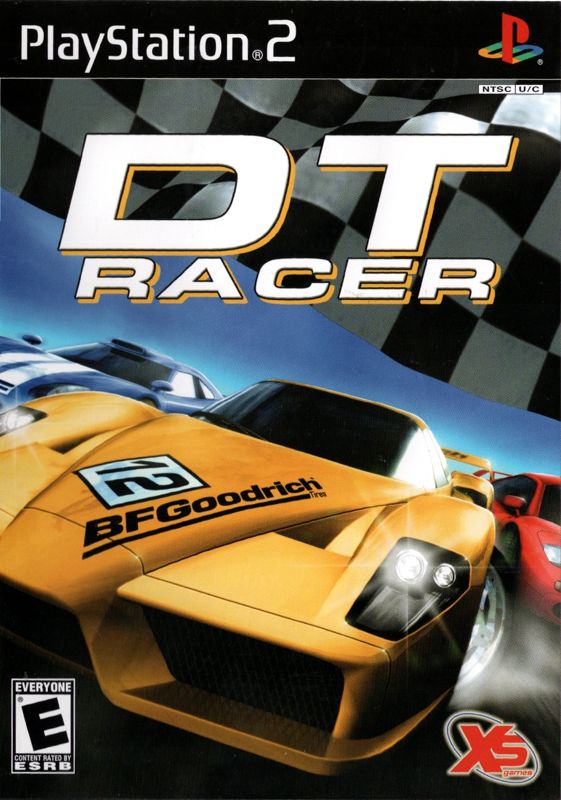
DT Racer starts with an invitingly familiar promise: race a selection of 21 real-world-inspired cars across grand prix events and work your way toward quicker tiers. Arcade mode is the cleanest expression of that idea. You clear increasingly difficult series, unlock more powerful cars, and feel a tangible reason to return to the next event rather than treating every race as an isolated exhibition.
GT mode adds the better long-term carrot. Finishing races earns credits, credits buy cars, and higher-level events demand higher-tier machinery. That gate can be frustrating if you only want to sample everything immediately, but it also gives the garage a purpose. You are not simply selecting a car from a list; you are building toward the right car for the races ahead.
The pre-race setup options give the driving a welcome bit of ownership. Tires, downforce, and suspension can all be adjusted before the lights go out, so there is room to experiment instead of assuming every car should be driven exactly the same way. The tuning is especially meaningful because collisions are not harmless. Impacts can damage the car, break parts off, and hurt performance, turning reckless racing into a problem you carry to the finish.
That damage is DT Racer’s sharpest idea. It makes traffic and barriers more than scenery and asks you to balance aggression against survival. A clean run has value, while a clumsy one can leave you nursing a compromised car. If you want a racer where every scrape has a cost, that tension is the reason to try it.
Graphics
You race facsimiles of real competition cars on a mix of oval circuits and city courses, including a course based on Circuit de Monaco. First-person and third-person driving views give you different ways to take in the track and your car, while the damaged bodywork and falling parts make contact visible during a race.
Story
DT Racer does not lean on a character-driven tale; its momentum comes from your rise through the racing ranks. In Arcade, that means tougher grand prix events and access to more powerful tiers of cars. In GT mode, it means converting finishes into credits and gradually buying your way into higher-level competition.
That structure gives the game a practical, sports-minded sense of progression. Your personal story is the garage filling out, the eligible events expanding, and the point where the car you have earned finally lets you enter the next rung of races.
It is a lean framework, but it suits the game. You are here to chase results, manage the condition of the car, and move up, not to sit through detours from the racing.
Overall Experience
DT Racer is most compelling when its systems overlap: a race pays out credits, credits move you toward a better car, setup changes let you tailor that car, and damage makes it important not to throw the whole effort away with careless contact. That is a sturdier loop than a bare sequence of quick races.
The tradeoff is that the progression is deliberately restrictive. Arcade keeps stronger machinery behind harder grand prix events, and GT locks higher-level races behind higher-tier cars. If you hate earning access or would rather have every event open from the start, the structure may feel more like a barrier than motivation.
For the right mood, though, it has a distinct old-school pull. The track list moves between ovals and city racing, the garage has a clear role, and damaged performance makes a clean finish feel earned. Give DT Racer a chance if you want a PS2 racer with a modest simulation streak and a progression loop that makes each new car feel like progress rather than a free handout.


Reviews
There are no reviews yet.