 Retro Replay Retro Replay gaming reviews, news, emulation, geek stuff and more!
Retro Replay Review
Gameplay
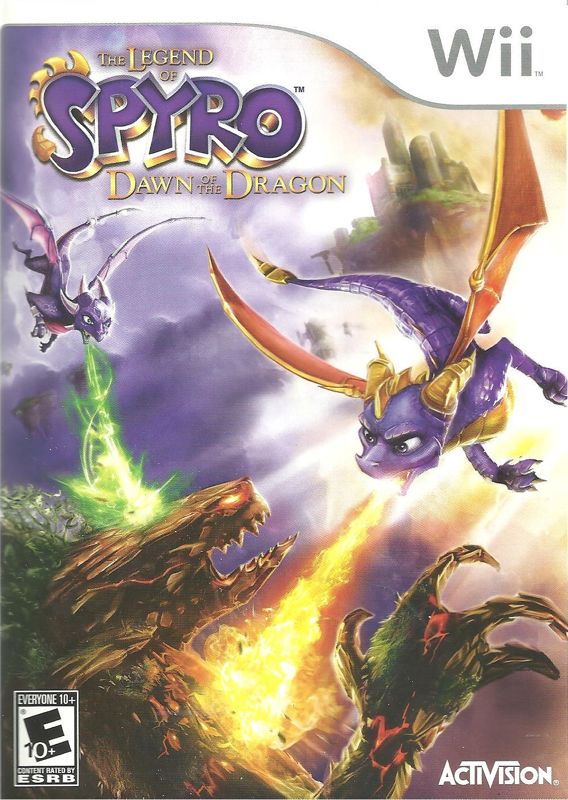
The first hour has a good, uncomplicated pull: break out, learn how Spyro and Cynder differ, and start tearing through enemies together. This is a third-person brawler at heart, built around fighting and exploration along a firmly linear path. The big change is that you can fly whenever you want. That freedom is more than a novelty; it makes moving through Dragon City, the Burned Lands, and the Floating Islands feel far less boxed in than the game’s actual progression is.
Switching dragons gives solo play some welcome variety. Spyro brings fire, electricity, earth, and ice, while Cynder works with poison, fear, wind, and shadow. Their different elemental toolkits encourage you to alternate rather than treating one dragon as the obvious default, and co-op is the natural way to lean into that split. With another person controlling the other dragon, the game’s constant combat has a more immediate, communal energy.
The upgrade loop is clear and useful without becoming complicated. Blue gems improve moves and arrive through melee combos, red gems restore health, and green gems let you use elemental dragon magic. Armour pieces add another reason to search around, while the Fury meter rewards staying aggressive in a fight. Dark crystals deserve your attention because they drain magic, so they are not merely scenery to smash.
Combat’s main irritation is the elite enemy system. Enemies wearing coloured masks require a particular attack to strip the mask before ordinary hits matter. It adds a small tactical check, but it can also feel like the game is stopping a combo to ask whether you brought the right answer. If you enjoy switching elements and reacting on the fly, it breaks up the button-mashing. If you mainly want a smooth brawl, these encounters are where frustration is most likely to creep in.
Graphics
The camera keeps Spyro and Cynder in a cinematic third-person view, with the pair’s green energy chains making their connection easy to read as they move through the world. The journey has a strong range of locations on paper and on screen: Dragon City, scorched terrain in the Burned Lands, and the airy Floating Islands give the adventure more visual change than a single ruin-bound quest.
Story
This is explicitly the final chapter of the Legend of Spyro trilogy, and it starts in the aftermath of a bad situation rather than taking its time with a fresh introduction. Spyro and Cynder begin as former enemies released from a crystalline prison, only to find that the Dark Master has physically bound them together. It is a clean way to make their partnership central to both the plot and the play.
The larger threat is Malefor, the Dark Master, who escaped the Well of Souls during the Night of Eternal Darkness and has already left damage behind. Sparx and Hunter join the early escape, then the story pushes the dragons across several major regions toward Malefor’s lair. That direct structure suits the game: you always know the destination, and the question is whether the two leads can work as a unit on the way there.
Returning fans will get the most from the finale’s sense of continuation, particularly after The Eternal Night. Newcomers can still follow the basic conflict, but they are arriving at the point where the trilogy expects its characters and looming villain to carry accumulated weight. For game history and release details, the game’s reference page is useful background.
Overall Experience
Dawn of the Dragon is a better fit for someone who wants an energetic fantasy action game than for someone looking for a dense exploration game. Its routes are linear, even when flight makes the spaces feel more open, and the core rhythm stays consistent: travel, fight, gather gems, improve your dragons, then press onward. That consistency can become repetitive, but it also makes the game easy to settle into.
Free flight is the feature that gives this finale its lift. It makes Spyro and Cynder feel like dragons rather than ground-bound brawlers with wings, and it helps the travelling sections breathe between enemy encounters. Pair that with instant character switching or local co-op, and the game has enough flexibility to keep its straightforward campaign from feeling one-note.
The payoff is worth it if you have affection for this version of Spyro and can accept some combat friction. The elemental variety, combo-fed upgrades, armour collecting, and two-dragon co-op give you plenty to engage with beyond basic attacks. It does not hide its linear bones, yet it closes the trilogy with a larger sense of movement and a satisfying focus on Spyro and Cynder as a team.


Reviews
There are no reviews yet.