 Retro Replay Retro Gaming History, Reviews & Emulation

Retro Replay Review
Gameplay
The clever thing about Harmony of Despair is how quickly a familiar side-scrolling Castlevania run becomes a group problem. You begin spread across a huge stage, with half an hour to reach and beat the boss, and the instinct to explore every corridor immediately clashes with the clock. In the first hour, that can feel like being dropped into a castle without a plan. Once you learn to use the wider zoom levels to study the route, however, the game starts rewarding quick decisions: chase a chest, head for a switch, or make a clean run toward the boss room.
Co-op is where the structure earns its name. Characters can work independently, yet their abilities let a team solve small practical obstacles together, such as putting out fire or raising a platform with a lever. That makes a good run feel less like six people simply attacking the same monsters and more like a scramble in which everyone has a job. A fallen hunter remaining on the field as a limited skeleton also keeps a bad situation lively, while Water of Life revives create genuinely useful reasons to stick close when the boss fight gets dangerous.
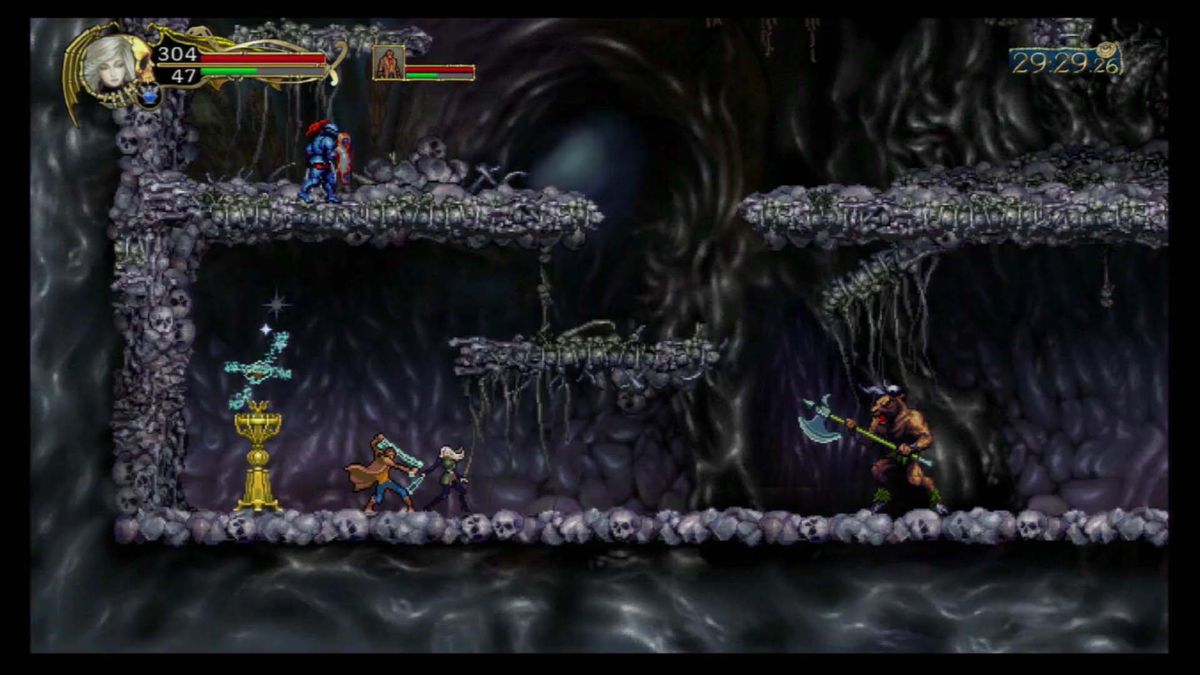
The character selection gives the repeated maps real variety. Alucard’s forms, Shanoa’s magnet-based movement, Soma’s collected souls, Charlotte’s spell binding, and Jonathan’s martial arts options are meaningful differences rather than cosmetic picks. You can settle into one favorite, but trying another hunter changes how you move through a stage and contribute to a group. The initial roster is already varied, while the additional characters broaden that pool further.
Loot progression is simple but effective: there are no experience levels to grind, so stronger weapons, armor, and skill bonuses do the heavy lifting. Repeated weapon use improving proficiency gives you a reason to commit to a tool, and chest raids create a steady temptation to detour. The catch is that gear changes often hinge on finding The Grimoire mid-stage, which can turn a great drop into an item you cannot immediately use. Shared chest rewards in multiplayer are a smart antidote to party resentment; nobody has to watch a teammate claim all the useful finds.
Graphics
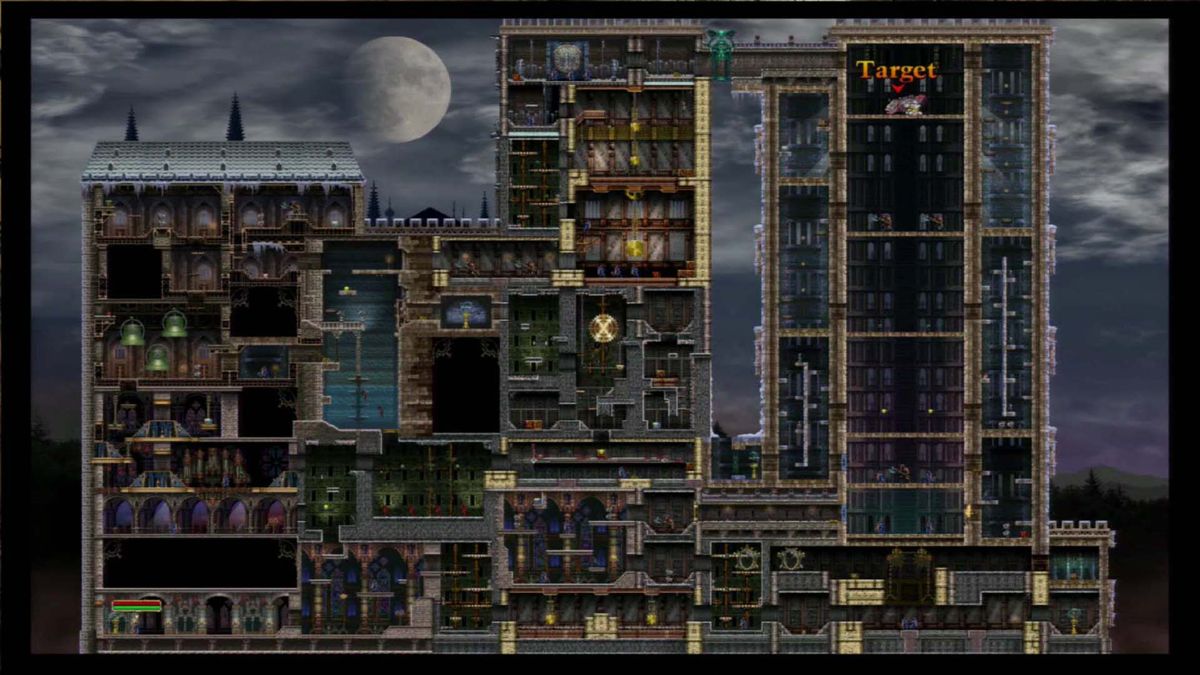
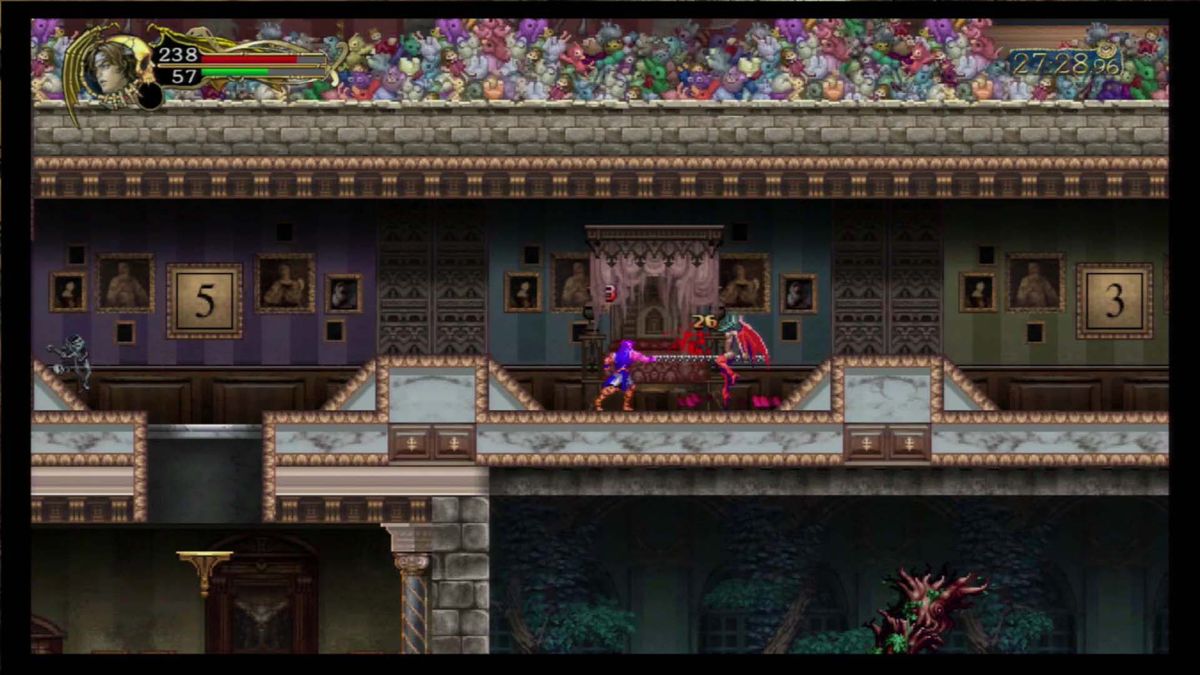
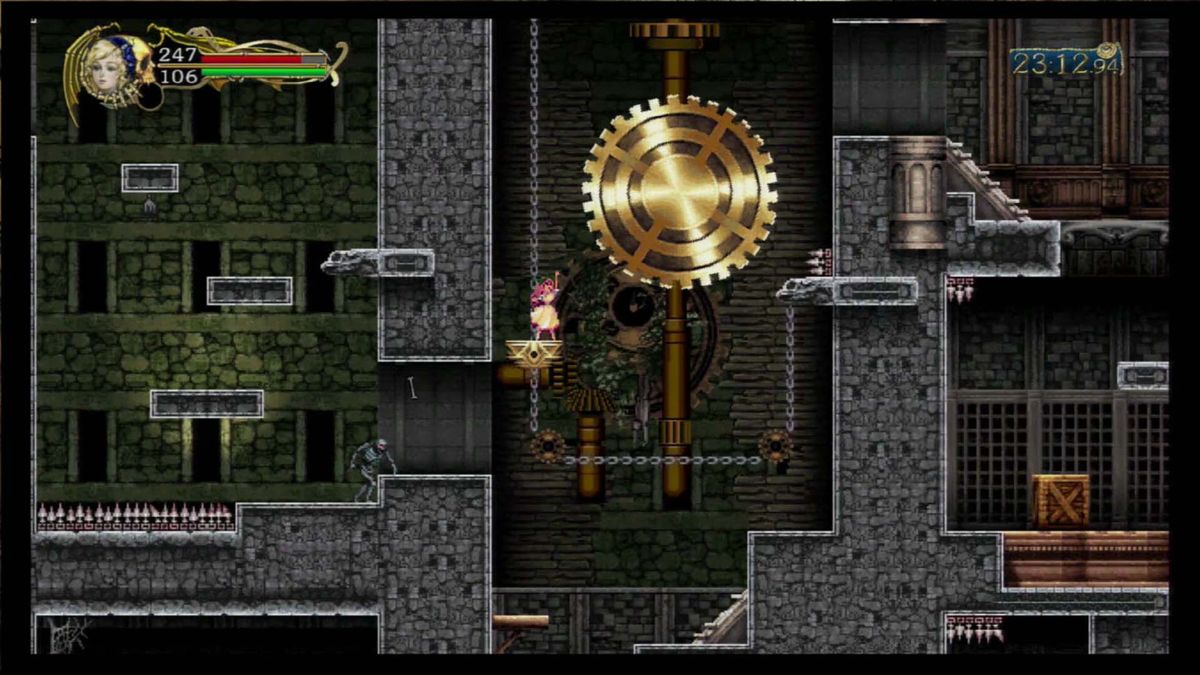
The game uses 2D side-scrolling castle maps, but its standout visual trick is the live zoom. Close view is where you handle jumps and fights, while the wider views pull back far enough to show an entire level layout on one screen. Watching hunters occupy different corners of the same map makes route planning unusually clear for a Castlevania game.
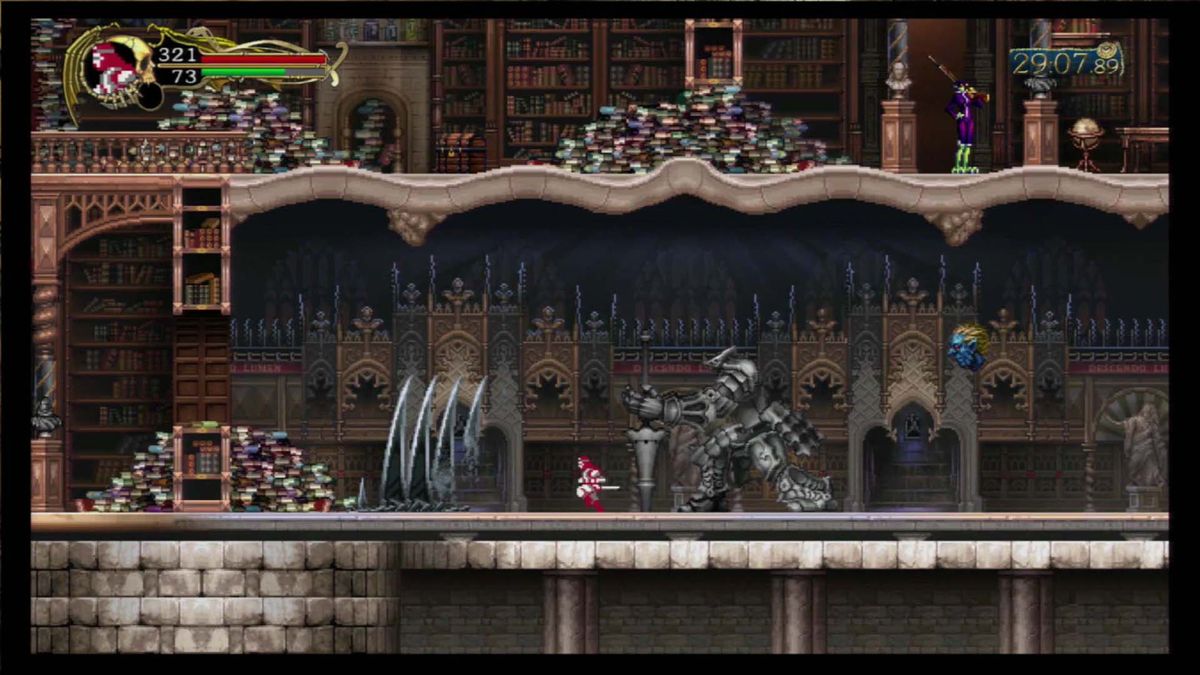
The returning heroes and bosses give the battles recognizable series flavor, from Alucard and Soma to foes including Death, Dullahan, Gergoth, Puppet Master, and Menace. Floating damage numbers make the RPG-style combat feedback easy to read amid a crowded fight.
Story
Story is deliberately light here. The central drive is straightforward: a group of vampire hunters is working toward the destruction of Castlevania, with each map functioning as another push deeper into that goal. It is a premise built to get you into a stage quickly, not to carry a dramatic campaign.
The real narrative pleasure comes from the crossover cast. Bringing together heroes from Castlevania: Symphony of the Night, Portrait of Ruin, Order of Ecclesia, and the Soma Cruz games creates a satisfying series-celebration energy, especially if you already have affection for their different fighting styles. You are not asked to untangle a dense continuity before playing.
That stripped-down approach suits the boss-rush-like format. Each run creates its own little story: a team splits up, someone discovers a useful route or item, another player goes down, and the survivors either pull off the revive or reach the boss without them. The supplied phrases for communicating with teammates are a small but welcome way to coordinate those moments.
Overall Experience
Harmony of Despair is a strange but worthwhile Castlevania experiment: less a traditional exploration adventure than a compact action-RPG built for repeated castle raids. Its six large maps are not enormous in number, so the lasting value comes from learning faster routes, improving equipment, testing hunters, and making cleaner boss clears. If you expect a fresh sprawling solo quest, the format may feel slight; if you enjoy refining runs, it has a strong pull.
Solo play works through the story mode, but the game’s best ideas are clearest with other people. Cooperation turns the separate starting positions and character-specific tools into a real tactical layer, and the constant possibility of a rescue prevents a death from becoming dead air. Versus mode offers a points-based alternative when you would rather compete than coordinate, though the cooperative race through the citadel is the stronger hook.
The 30-minute limit can be frustrating when you want to poke through every branch for treasure, and The Grimoire requirement adds another layer of planning that will not suit anyone looking for frictionless loot management. Still, that pressure is why victories feel good. Harmony of Despair asks you to become efficient without stripping away the pleasure of detouring for a better weapon or helping a teammate reach a blocked path. It is an easy recommendation for Castlevania fans who want a replayable co-op spin on the series, and a qualified one for solo-focused adventurers.


Reviews
There are no reviews yet.