 Retro Replay Retro Gaming History, Reviews & Emulation

Retro Replay Review
Gameplay
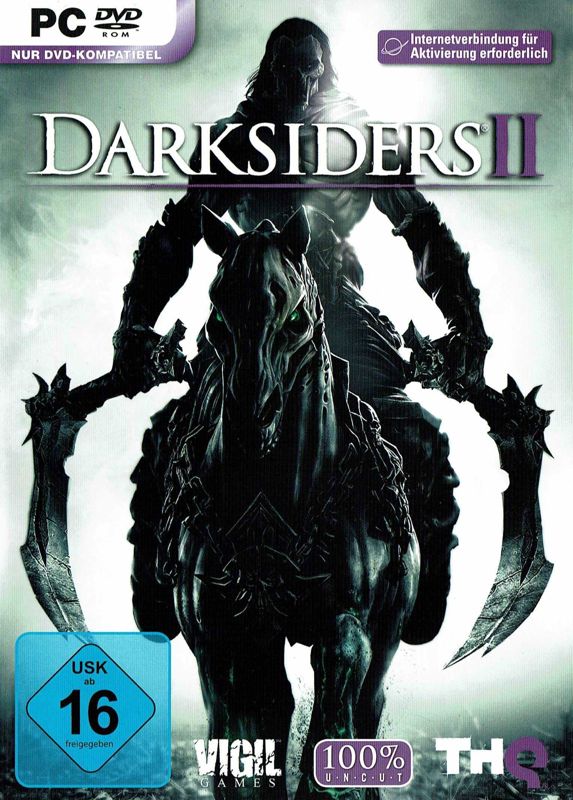
Darksiders II feels best when you stop treating it like a straight hack-and-slash and settle into its restless rhythm. Death tears through enemies with dual scythes, slips away from danger with quick dodges, then spends the next few minutes climbing across a ruin, chasing a locked route, or figuring out how a lever and pressure plate fit together. That constant switching gives the opening hours a real pull. You are not just clearing rooms; you are pushing through a large adventure full of things that look deliberately out of reach.
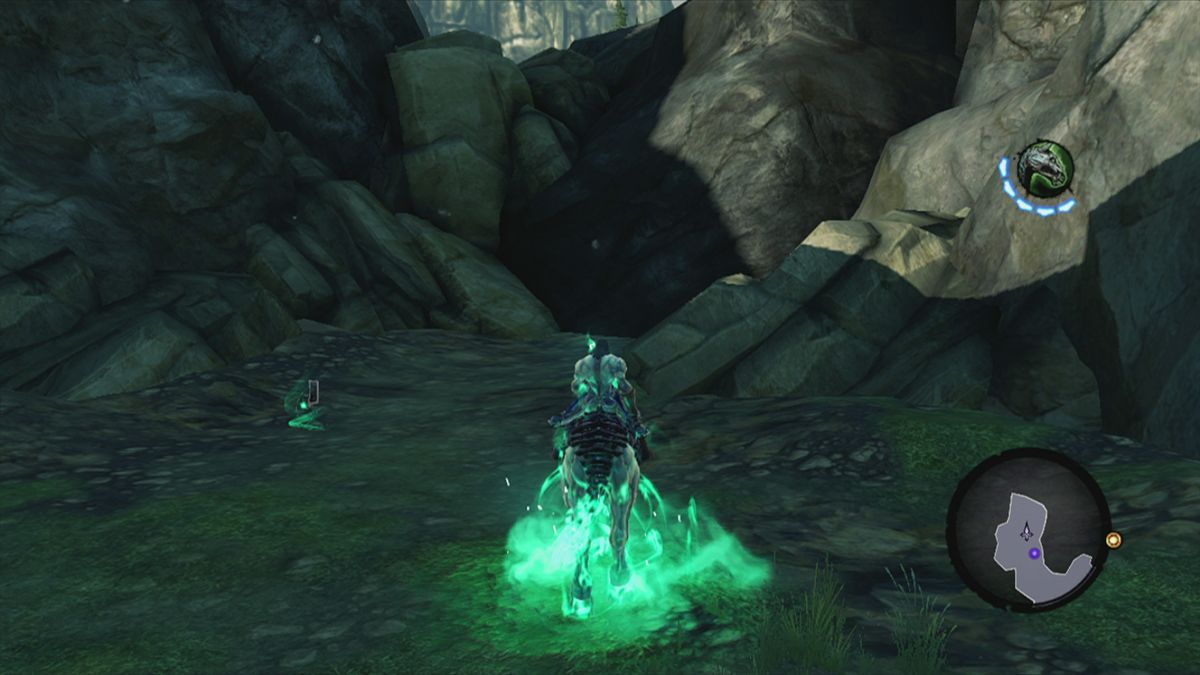
Death is a much more agile lead than War, and that matters. Wall-running, fixed climbing points, swimming, mounted travel on Despair, and fast travel keep the world from feeling like a string of combat arenas. Dust is a useful little nudge when your next objective is hiding in a busy space. The dungeon structure also makes returning later less painful: you can leave a dungeon for the overworld, save your progress, and come back without abandoning the thread.
The combat has enough flexibility to carry its share of the journey. Scythes are fast and natural in a crowd, while secondary weapons let you trade speed for harder hits. Lock-on, dodging, blocking, wrath abilities, ranged options, ghouls, and the powerful Reaper form give you several ways to handle a fight. Large bosses add a burst of spectacle with QTE finishing moves, though the real satisfaction comes from learning when to press an attack and when to get out of the way.
Its biggest strength is also where fatigue can creep in. Darksiders II keeps adding systems: levels, two skill trees, purchasable moves, loot drops, gear slots, possessed weapons fed with lesser gear, and collectible bluestones that become permanent upgrades through Blackroot. There is plenty to dig into if you enjoy tuning a build, but the volume can make the game feel busier than it needs to be. Still, the upgrades pair well with the gradual arrival of tools such as Death Grip, Voidwalker, Soul Splitter, and Interdiction. New abilities do not merely boost damage; they reopen the world and make later puzzles more involved.
Graphics
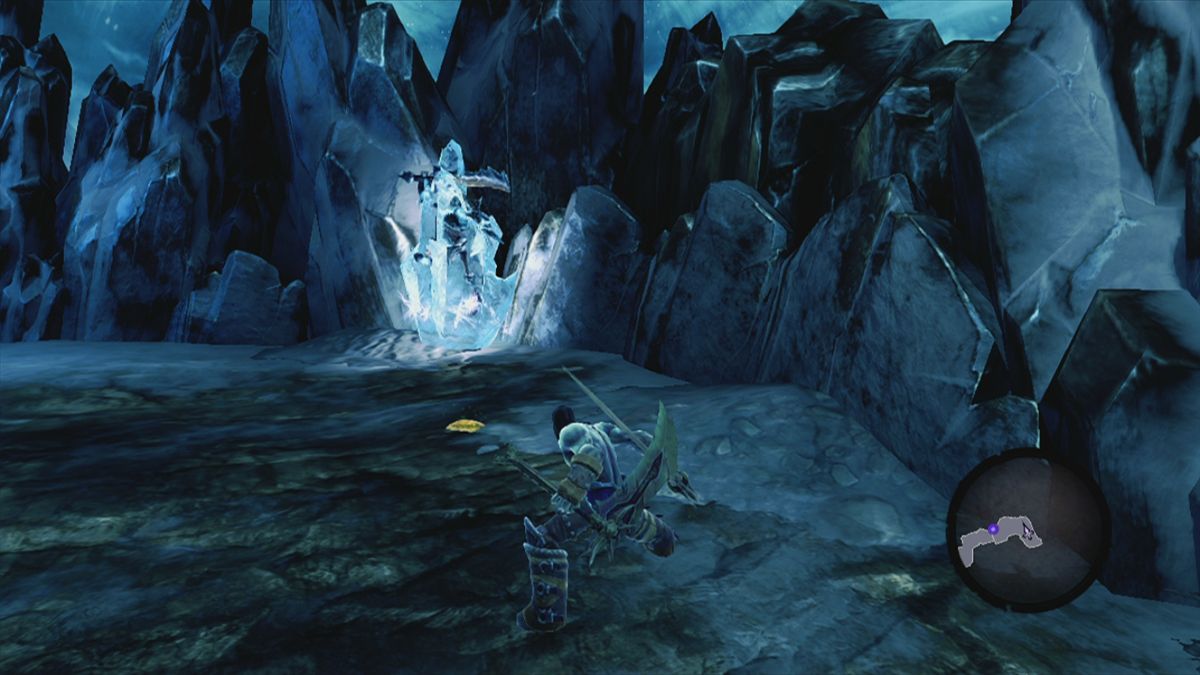
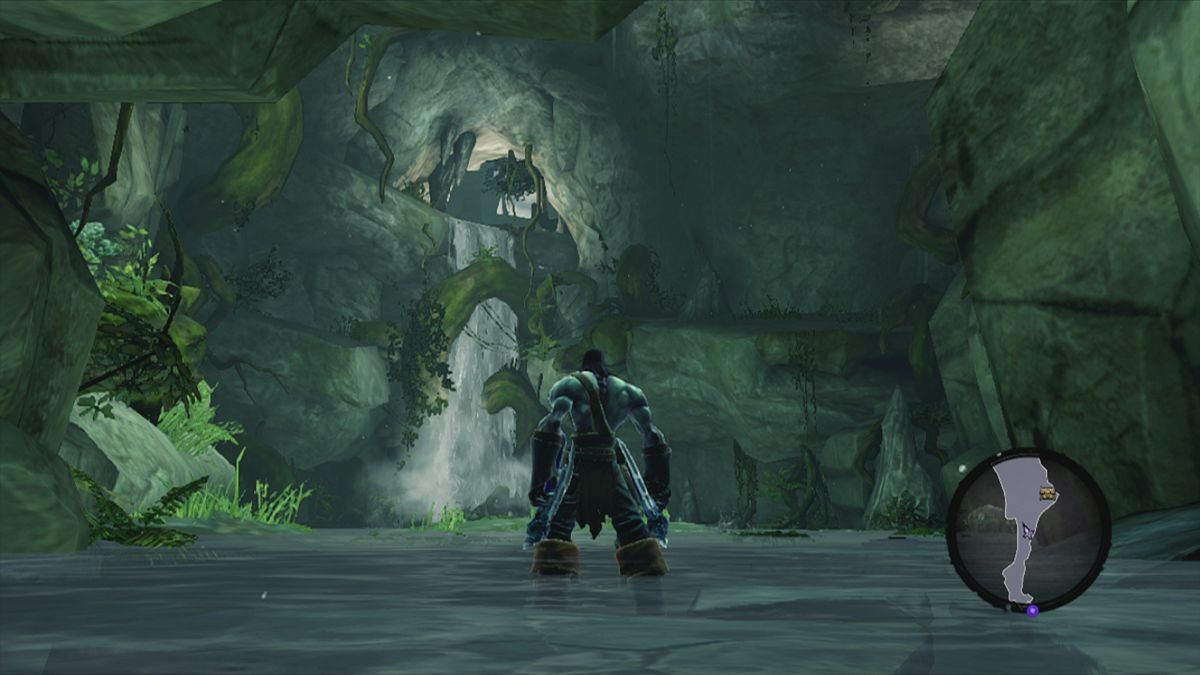
The game is played from a behind-the-back view that keeps Death, his scythes, and nearby enemies in clear focus during fights. Large outdoor areas, dungeon interiors, horseback travel, and towering bosses give the journey a properly oversized fantasy-apocalypse scale, while the QTE finishers put the camera’s attention on the final blow.
Story
Death has a strong reason to move: while War’s story from Darksiders unfolds on Earth, he sets out to restore humanity and prove his brother was framed. Running parallel to the first game gives this sequel a useful sense of purpose. You are not replaying War’s mission from another angle; you are following the Horseman who believes he can undo its consequences.
The story works chiefly because Death’s task is direct and personal. He crosses different lands, seeks a way to correct a catastrophe, and hunts the forces responsible. That keeps the stakes big without losing the family motive at the center. The campaign’s mix of new regions and dungeons fits that quest well: progress feels like an expedition rather than a series of isolated assignments.
You should come for the continuation of the Darksiders conflict, but expect the journey to share attention with exploration, combat, and puzzle-solving. The narrative is the spine; the long detours through ruins and locked pathways are much of the body. For background on the game’s history, its Darksiders II page is a useful companion after you have started.
Overall Experience
Darksiders II is generously packed, sometimes to a fault, yet its mix of ideas lands more often than it stumbles. It wants you to enjoy the immediate snap of a scythe combo, then linger over equipment, search for a route forward, and return to a previously blocked path with a new tool. The result is not streamlined, but it is rarely one-note.
If you liked the first game’s world but wanted a quicker, more acrobatic hero and a deeper layer of character growth, this is an easy recommendation. Death’s mobility changes the texture of exploration, and the gear and skill systems offer more room to make the combat feel like your own. The Steam release also includes the Crucible Pass DLC.
Give it a chance if you like action adventures willing to interrupt their fighting with proper dungeon puzzles and Metroidvania-style progression. You may tire of sorting through loot or hitting another locked mechanism when all you want is the next battle. But when a newly earned ability cracks open an old obstacle, or a tough encounter finally gives way to a Reaper-powered finish, Darksiders II earns the extra clutter. It is a big, scrappy sequel with enough motion, tools, and places to explore to justify its ambition.



Reviews
There are no reviews yet.