 Retro Replay Retro Gaming History, Reviews & Emulation

Retro Replay Review
Gameplay
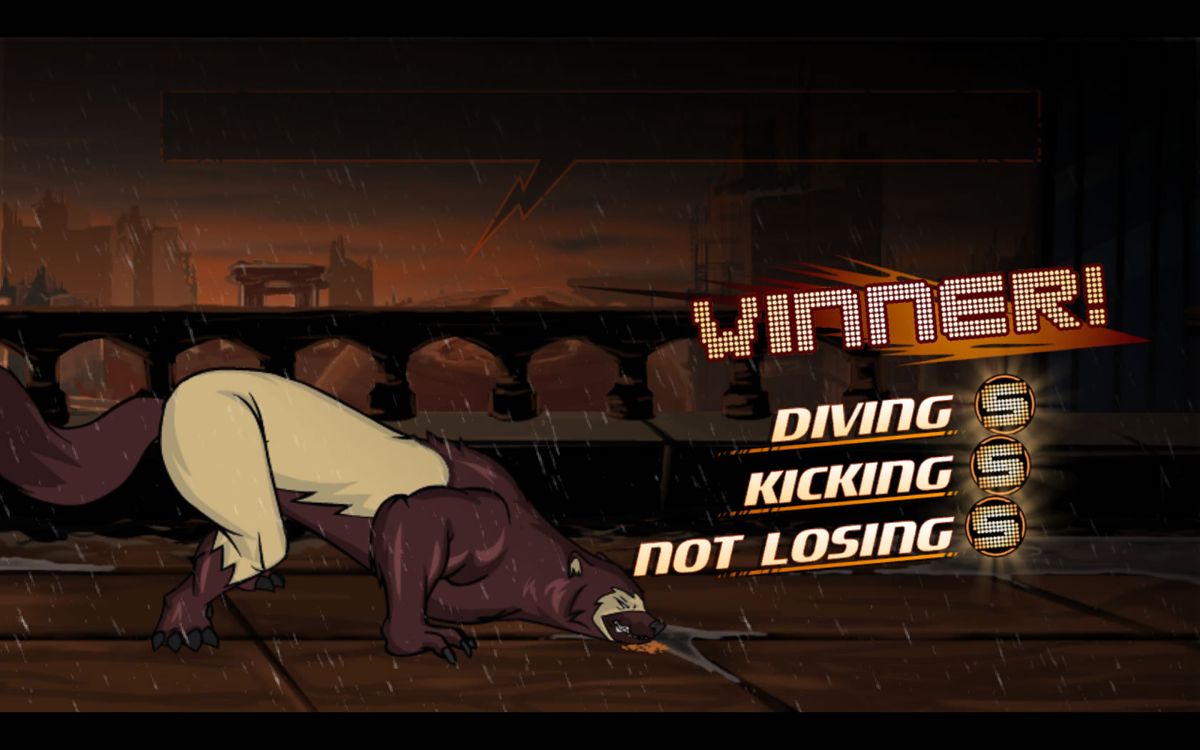
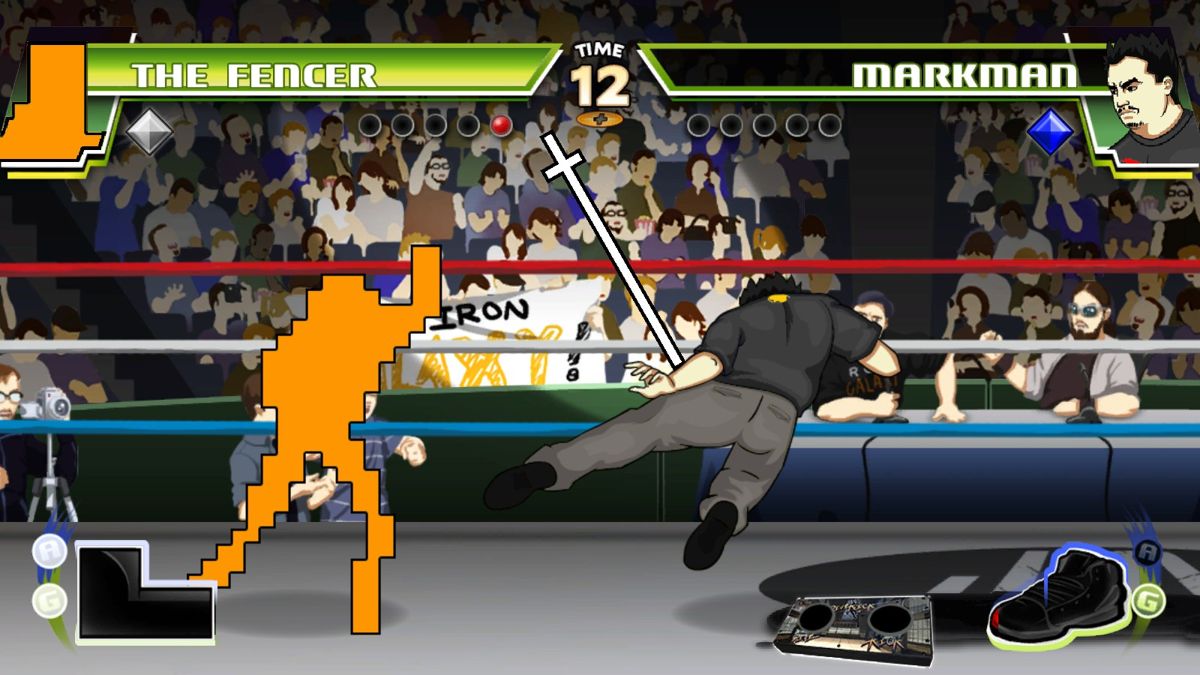
The first hour of Divekick is equal parts comedy and nerves. You have two buttons: dive and kick. That sounds like a party-game reduction of a fighter, but the instant a match comes down to a single kick landing or whiffing, the simplicity stops feeling silly. You start watching spacing, trying to bait a jump, and holding your nerve because one hit is a K.O.
What clicks is the way the limited input turns every commitment into a big decision. There is no pile of commands to memorize before you can begin playing intelligently; you can understand the basic contest almost immediately. That makes it wonderfully direct with a friend, and it gives losses a useful sting. Usually, you know exactly which reckless dive or mistimed kick got you beaten.
It is not a fighter for anyone who needs constant mechanical variety under their thumbs. The two-button foundation deliberately narrows what you do from moment to moment, so matches can feel repetitive before the mind games take hold. The roster helps: fourteen characters bring different moves, and the balance changes introduced with the Addition Edition matter because small changes can reshape a game this spare.
Online ranked and unranked matches are where that pressure has the most bite. Ranked play also includes blind selection, removing an easy layer of counter-picking before a match. If you want to learn by playing, start unranked, get comfortable with how quickly a round can turn, then take that knowledge into ranked when you are ready to let a single bad decision count.
Graphics
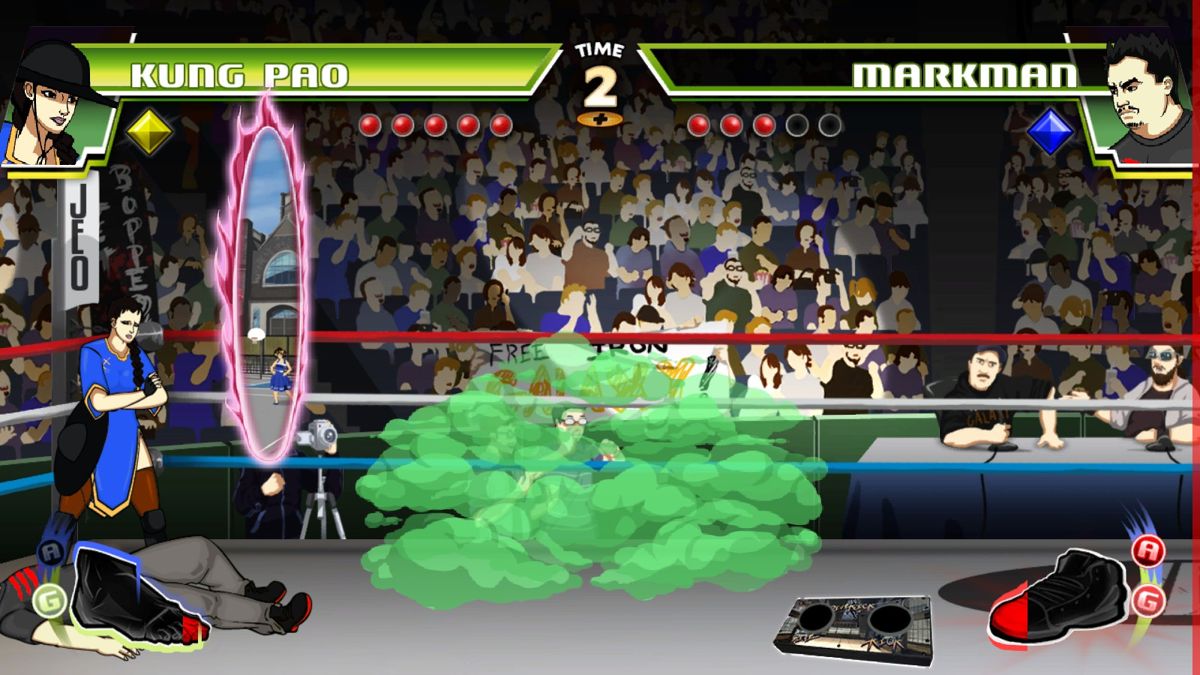
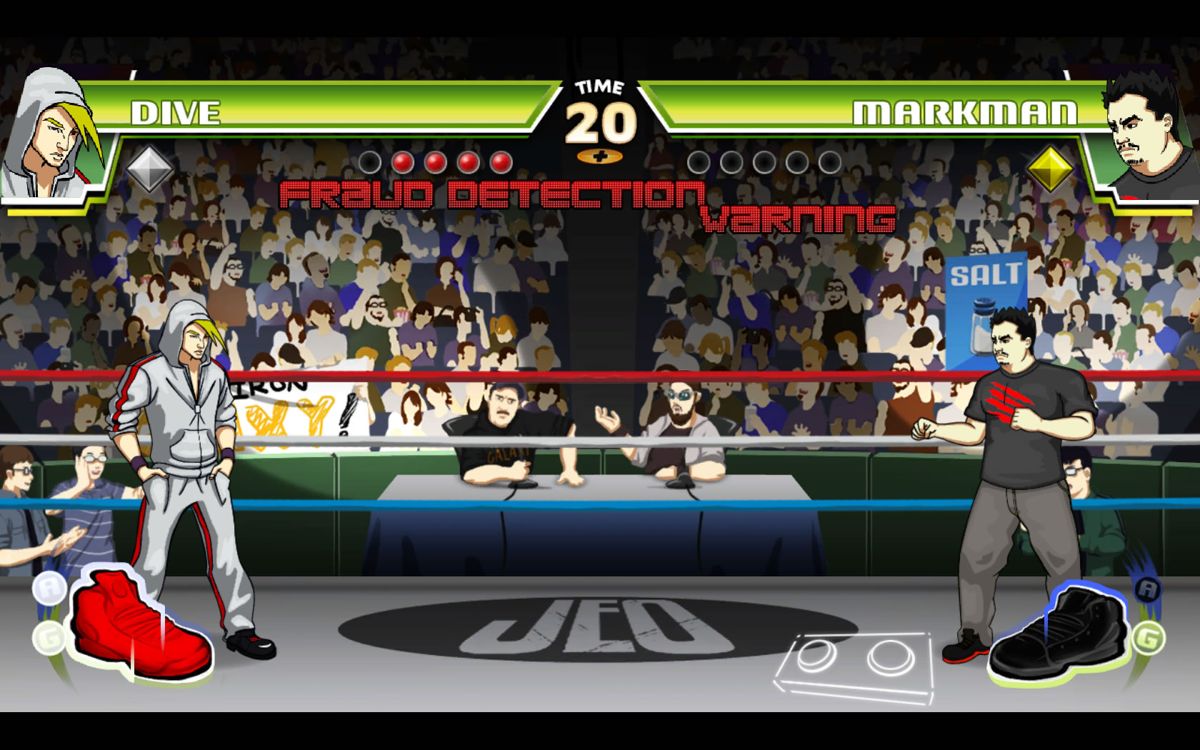
Divekick uses a side-view fighting-game layout, keeping both combatants and the crucial gap between them in plain sight. That clarity suits a game where a few pixels of distance and a sudden kick decide everything. The Addition Edition also adds the Da Beech stage, giving the expanded version another arena alongside its new fighter.
Story
There is a story mode for each character, which is a welcome bit of structure in a game built around rapid one-hit rounds. It gives you a reason to sample more than one fighter instead of settling immediately on a favorite.
Still, story is not the reason to come to Divekick. The central drama is the duel itself: who moves first, who guesses wrong, and who eats the round-ending kick. Treat the individual story modes as extra character context and a solo route through the roster, not as a major narrative campaign.
That modest approach fits the game’s tone. Divekick is focused on poking fun at fighting-game conventions while making the underlying competitive tension real. The stories extend that character-based framing, but the meaningful payoff remains learning how each fighter changes the same compact contest.
Overall Experience
Divekick is clever because it does not merely simplify fighting games; it exposes why they are exciting in the first place. Distance, prediction, and composure remain after the command lists have been cut down to two buttons. A newcomer can land a kick and understand the goal immediately, while a competitive player can find plenty to chew on in matchups and timing.
The frustration is equally exposed. Since a single hit ends a round, there is little room to recover from a poor read, and that can make a losing streak feel brutal. But that harshness is also what makes a win satisfying. You are rarely wondering why you lost, and you can jump right back in to try a different answer.
Give it a chance if you like fighters but have bounced off long move lists, or if you want a competitive game that gets to its point fast. Veterans should not mistake the tiny control scheme for a lack of depth; the tension comes from what you choose to do with those two inputs. Divekick is a focused novelty that earns its staying power through sharp, stressful one-on-one play rather than sheer complexity.


Reviews
There are no reviews yet.