 Retro Replay Retro Gaming History, Reviews & Emulation

Retro Replay Review
Gameplay
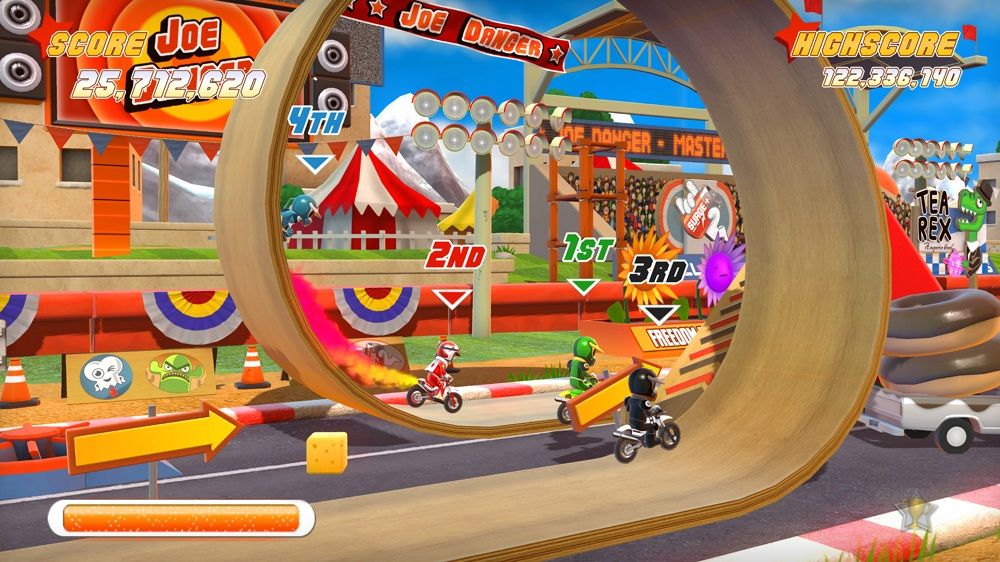
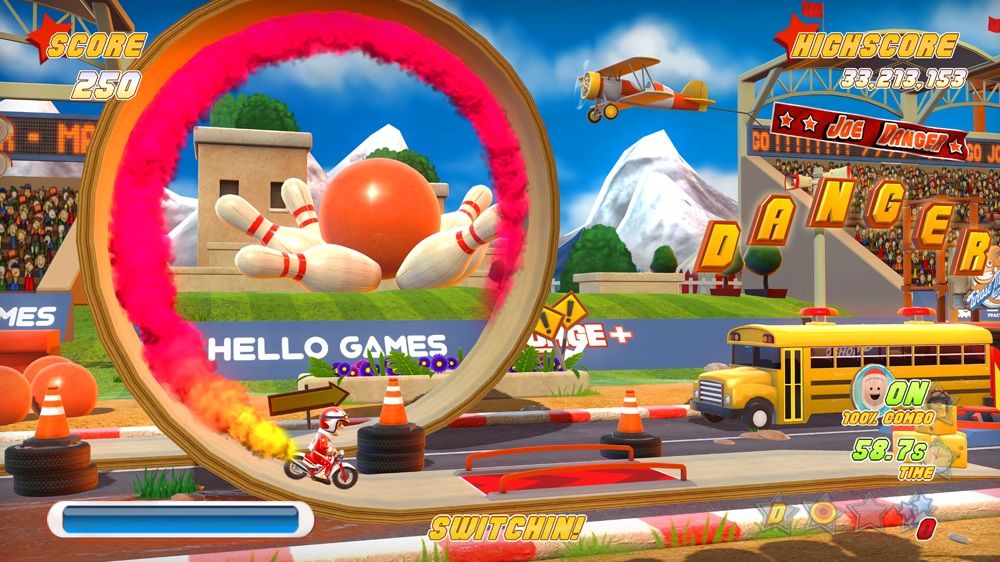
The first few runs of Joe Danger are wonderfully direct: accelerate, manage your bike over ramps and hazards, jump when the road turns nasty, and try not to turn Joe’s comeback into another spectacular crash. It has that great arcade rhythm where a clean landing immediately makes you want to carry the momentum into the next obstacle. Wheelies and stunts feed the boost meter, so playing safely can get you through a course, but playing boldly is how you build the speed for its bigger risks.
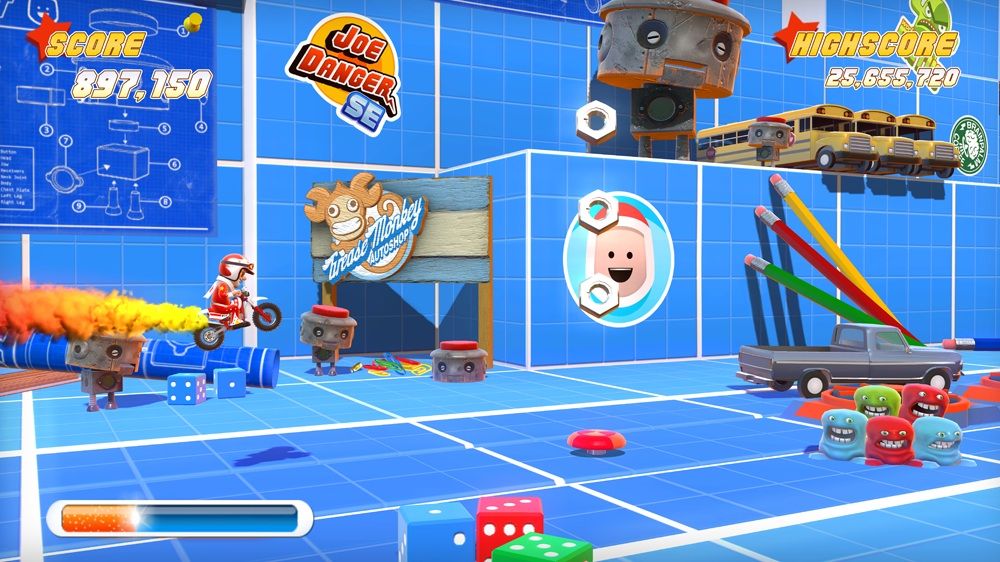
What makes the career stick is that every level asks more than one thing of you. A quick finish may be one goal, but the same course can also hide stars, scatter coins and DANGER letters across alternate routes, demand a long combo, or ask you to activate every target. You do not need to clear every objective to move forward, which keeps the campaign from becoming a wall. Still, returning later with a sharper understanding of a level is where the game gets especially satisfying.
The tracks are not simply single-file obstacle courses. At junctions, you can swerve between lanes, and the different layers often split collectibles and objectives across several runs. Backtracking, launch pads, hidden spots, and double-jumping with boost add a little platform-game curiosity to the racing. That combination is smart, though it can also be the source of frustration: if you want a pure time-trial racer, being asked to slow down and search for a hidden item may break your flow.
Crashes are softened by checkpoints, so experimentation is encouraged rather than punished with a full restart. Race events add opponents you can knock down, while the bowling-pin launch stages are a goofy change of pace built around throwing Joe through the air and adjusting him with aftertouch. Sandbox stages, multiplayer modes, and an editor that lets you build and share courses give the game a generous amount of ways to keep playing beyond the core challenge ladder. Being able to alter a course even while racing is particularly mischievous, although career levels can occasionally require editor intervention to clear an obstacle.
Graphics
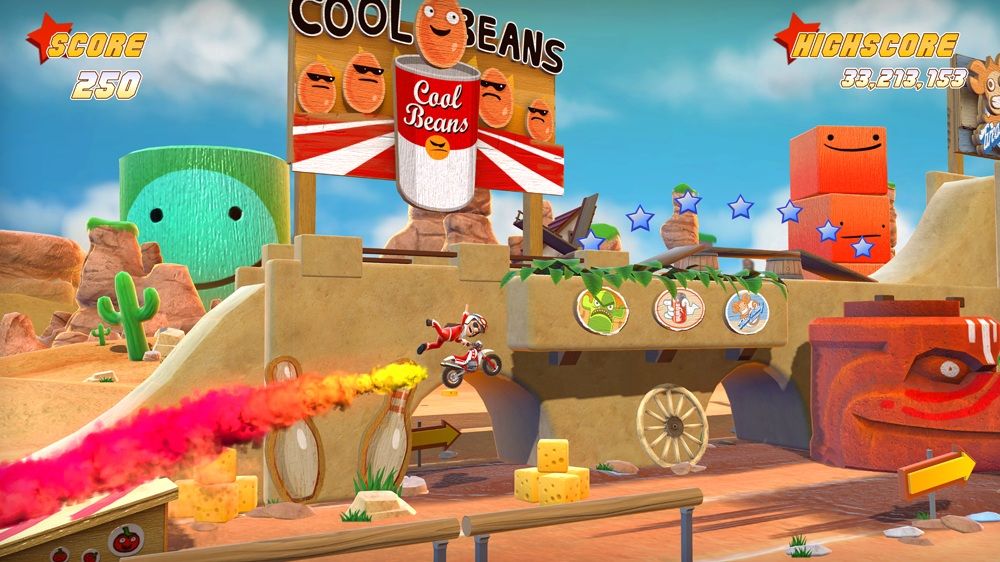
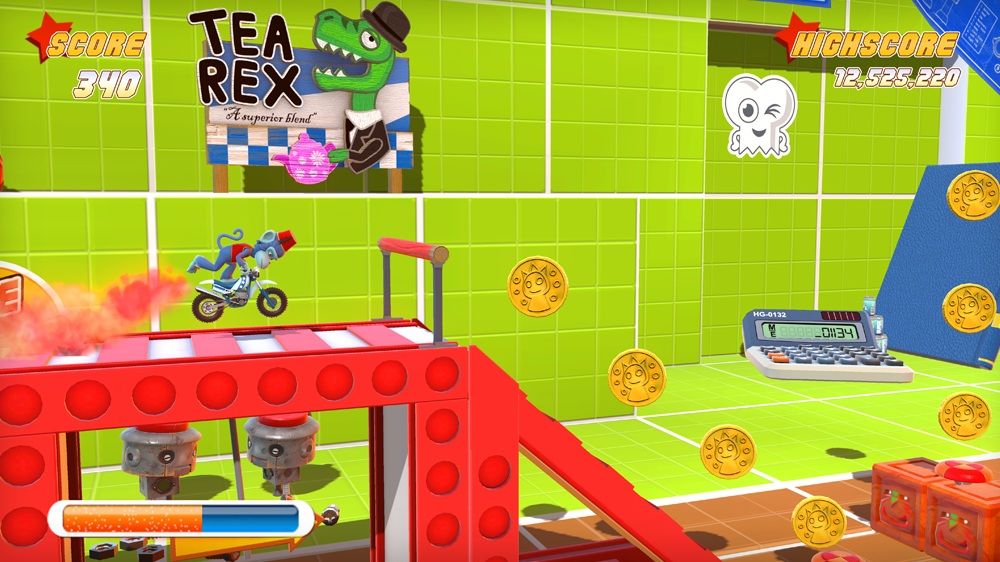
The cartoon look suits the stunt-rider nonsense perfectly. Joe races through side-view courses full of ramps, cars, shark-filled pools, launch pads, and oversized hazards, making each track read like an elaborate daredevil playset rather than a realistic circuit. The fixed side-on view also makes the timing of jumps and spins easy to judge.
Story
Joe’s story is intentionally light: he is a daredevil making a comeback after years out of action following a serious crash. That is enough framing for a game built around repeatedly sending him over impossible obstacles. The campaign is less about following a dramatic plot than restoring his reputation one gold star at a time.
The strongest storytelling comes from the career structure itself. Each new challenge feels like another demand placed on a performer who has to prove he can still pull off the dangerous stuff. The cheering crowd reinforces that showman angle whenever you keep a stunt chain alive and push for more boost.
Do not come in expecting character drama or a narrative full of turns. The premise works because it gives the levels a playful context without getting in the way of the riding, collecting, and retrying.
Overall Experience
Joe Danger is at its best when you treat a course as a stunt puzzle rather than a finish line. The first completion gives you the rush; the repeat runs reveal alternate lanes, missed pickups, and a cleaner route toward another objective. That loop has the same compulsive quality as shaving seconds off a time trial, but with enough exploration and trick scoring to make each retry feel different.
Its busiest stretches can be demanding because speed, balance, boosts, collectibles, and stunt requirements all compete for your attention. Fortunately, the ability to progress without perfecting every objective makes it far less punishing than it could have been. If a particular gold star starts to feel like work, you can move on and return when the track is more familiar.
Give it a chance if you enjoy arcade racers that reward replay, experimentation, and a little controlled chaos. It is a particularly good fit if you like the basic rhythm of old-school motorcycle stunt games but want more routes, more reasons to revisit levels, and a course editor for creating your own ridiculous runs. The 8.4 score fits: this is a polished, exuberant stunt racer with real depth beneath its cheerful cartoon surface.


Reviews
There are no reviews yet.