 Retro Replay Retro Gaming History, Reviews & Emulation
Retro Replay Review
Gameplay
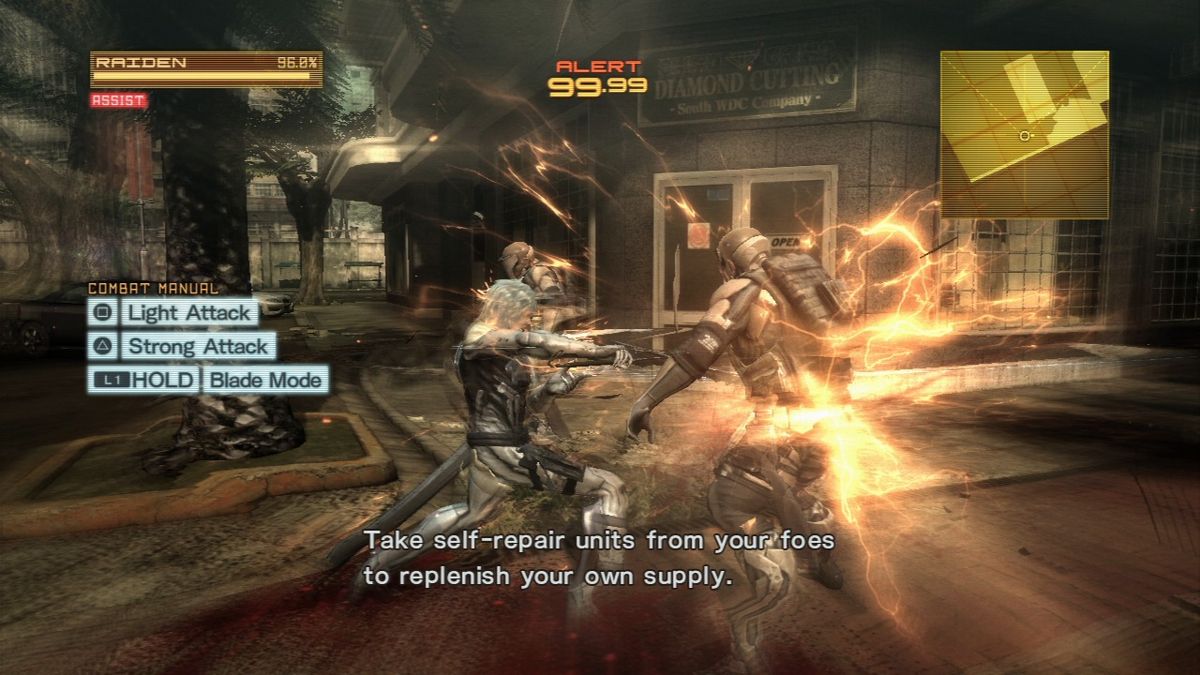
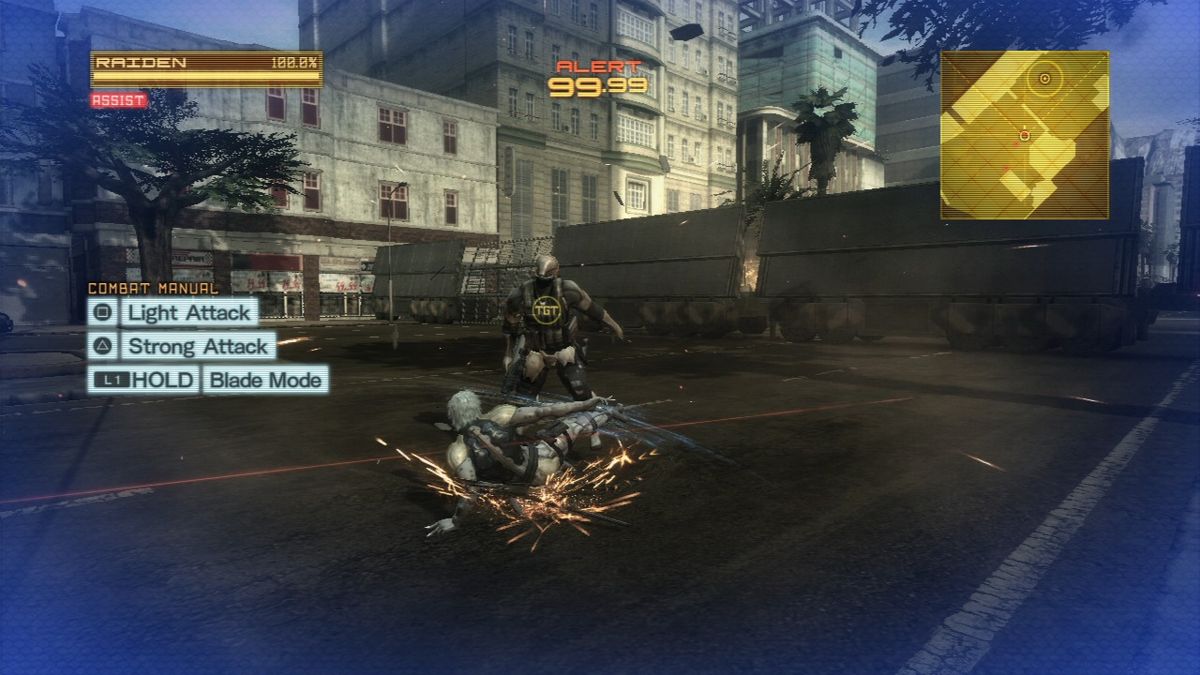
The first hour makes its priorities wonderfully clear. You are not creeping through bases waiting for a guard patrol to turn around; you are launching Raiden into fights at speed, chaining light and heavy attacks, jumping into the air, and using dashes and slides to stay on top of the enemy. It has the forward drive of a great character-action game, with Raiden’s ninja movement making even a straightforward arena feel busy and dangerous.
Blade Mode is the reason the combat sticks. Slowing down to make precise cuts is not just a flashy finishing move: you can sever limbs, strip armor, and cut out the blue power unit needed for zandatsu. Pulling that off restores health and fuel cells, so the game creates a smart, aggressive loop. You want to spend fuel on precise slicing, but you also need to earn it back by committing to the fight and landing the extraction cleanly. At first, it can feel like too much to manage amid a crowd. Then it starts to click, and a desperate recovery becomes one of the most satisfying moments in the game.
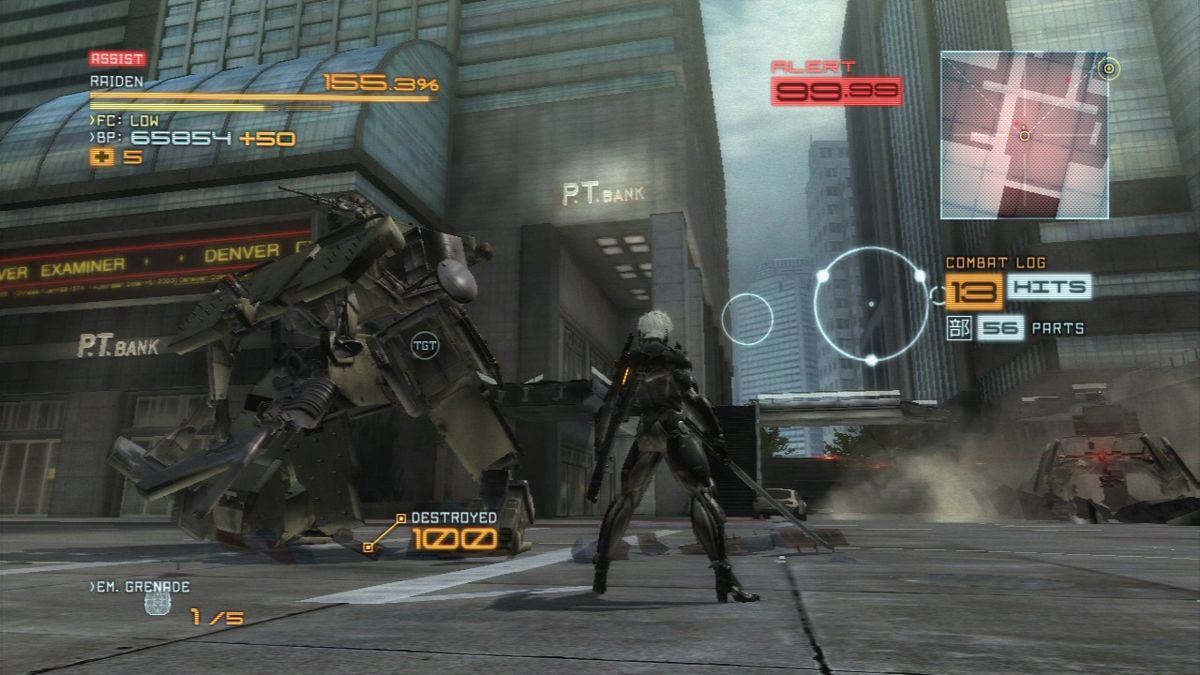
Boss victories bring new weapons and attacks, while battle points let you buy skills, armor, and upgrades for health, fuel, and weapons. That progression matters because Raiden’s move set is not meant to stay static. Experiment rather than treating the sword as a one-note combo tool; secondary weapons such as rockets, missiles, and grenades give you useful alternatives, and Ripper Mode later pushes Blade Mode even further.
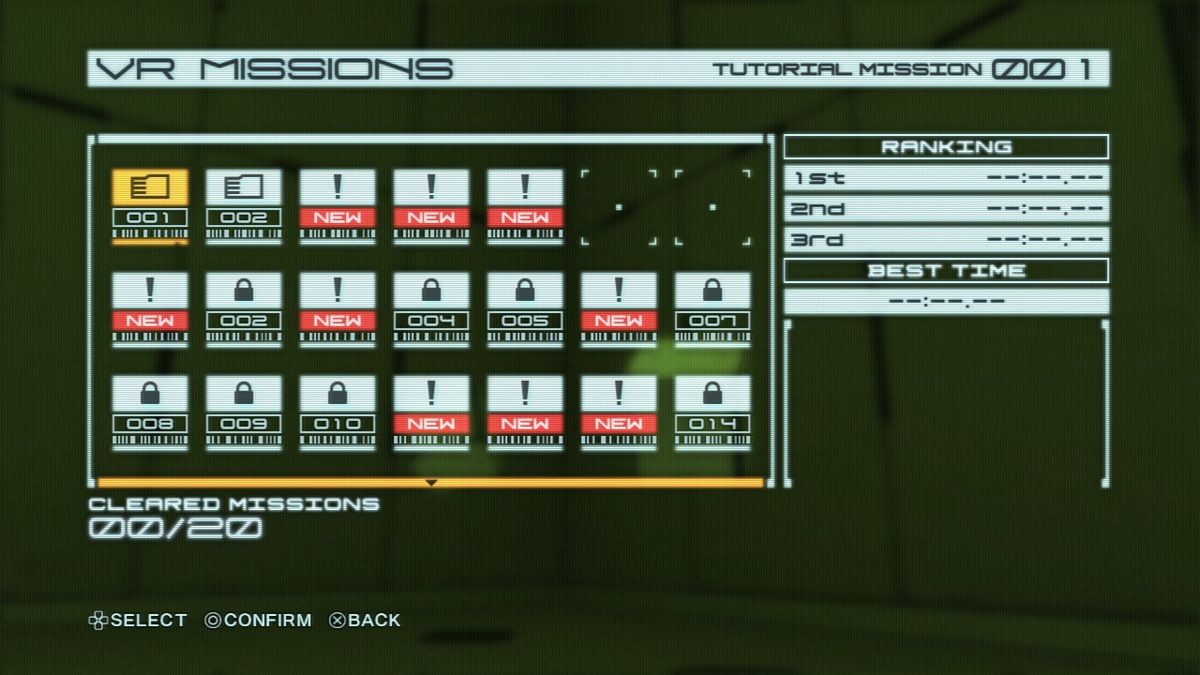
There is some stealth, including takedowns from behind or above, hiding spots, distractions, and a visor for locating enemies, items, and objectives. It is welcome seasoning, not the meal. Most levels move through linear combat sections with only light exploration, and that can disappoint you if you arrived expecting the patient infiltration of the original Metal Gear. The virtual reality missions are a worthwhile extra for anyone who wants more focused challenges outside the campaign.
Graphics
Raiden and his cyborg opponents are the visual focus, and the behind-the-back camera keeps his blade work front and center. Blade Mode gives the action its best images: enemies can be cut apart with targeted precision, while armor and destructible bits of the environment react to the sword. The result is violent, clear, and admirably committed to the game’s ridiculous energy.
The visor also gives the player a practical view of nearby chests, enemies, and the next objective. It is a useful visual break from the chaos, especially when a level is asking you to hunt for hidden collectibles.
Story
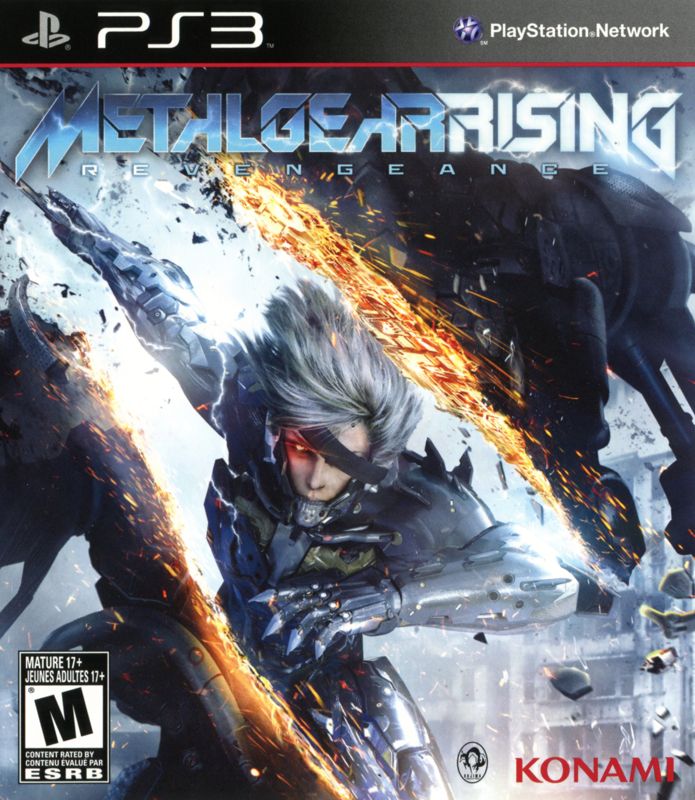
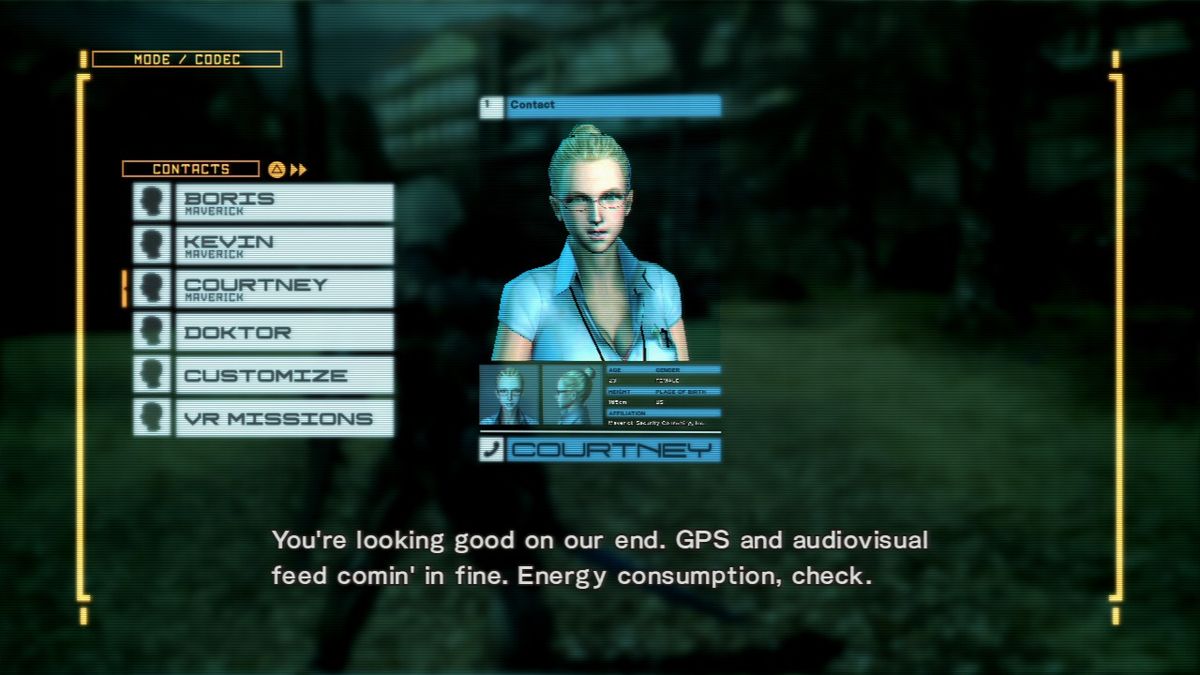
Set four years after Metal Gear Solid 4, Revengeance puts Raiden back in the lead after his earlier starring role in Metal Gear Solid 2. The destruction of the Patriots has not brought peace; private military companies are now pursuing cyborg superhumans, and Raiden works security for Maverick Securities alongside Boris, Courtney, Doktor, Kevin, and Sunny.
The inciting mission is blunt and effective. While protecting an African prime minister, Raiden is stopped by Desperado Enterprises, the politician is killed, and Raiden is badly damaged. His return turns into an investigation of Desperado’s plans, carried chapter by chapter through confrontations with increasingly formidable cyborgs.
This is a far more direct story framework than the series is known for, which suits the game’s momentum. Cutscenes and interactive action sequences lean hard into spectacle—running along walls and bridges, leaping between rockets, and battling a helicopter in midair. Quick-time events can make you feel more like a passenger than a fighter, but the heightened violence and total lack of restraint fit Raiden’s revenge mission.
Overall Experience
Revengeance works because it does not apologize for changing the Metal Gear formula. Stealth remains available in small doses, but the core fantasy is being an impossibly agile cyborg swordsman who turns pressure into momentum. When you are low on resources, surrounded by enemies, and suddenly land a precise zandatsu to refill yourself, the game delivers an immediate, tangible payoff.
Frustration tends to arrive when the linear structure and quick-time sequences slow down the combat rush, or when Blade Mode’s precision asks more of you than the surrounding chaos allows. But the campaign keeps moving, and the upgrade path plus optional VR missions give you reasons to learn its systems instead of merely surviving them.
At 7.9, this is a strong, distinctive spin-off rather than a substitute for classic Metal Gear sneaking. Give it a chance if you want demanding, expressive hack-and-slash combat and are happy to meet the story on its wildly over-the-top terms. For further background on its place in the series, see this game history overview.


Reviews
There are no reviews yet.