 Retro Replay Retro Gaming History, Reviews & Emulation


Retro Replay Review
Gameplay
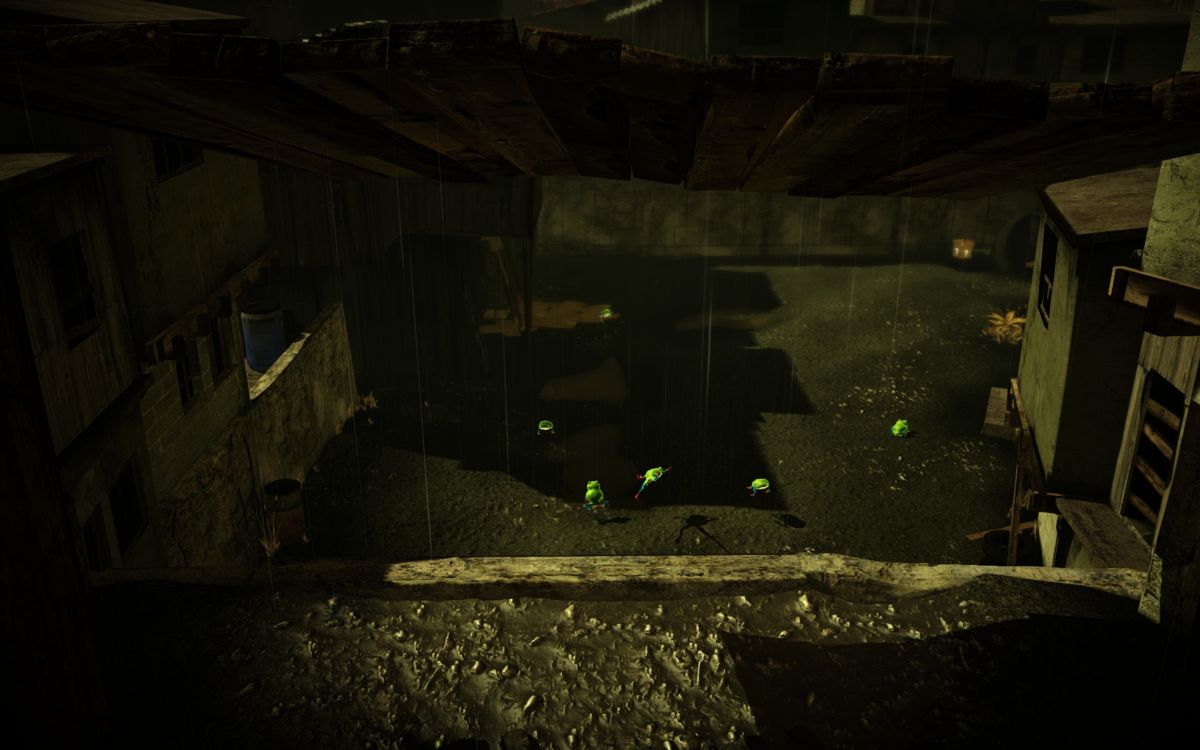
The first hour of Papo & Yo asks you to accept a troubling bargain. Quico is a young, unarmed boy, and his huge monster friend is often the key to getting anywhere. You guide it with fruit, work levers and strange contraptions, and reshape the city to open routes forward. Then poisonous frogs enter the equation, turning the monster angry and violent when it eats one. That tension gives even modest puzzle-solving an edge: you are not simply moving a companion into position, but trying to live alongside a danger you cannot fully control.
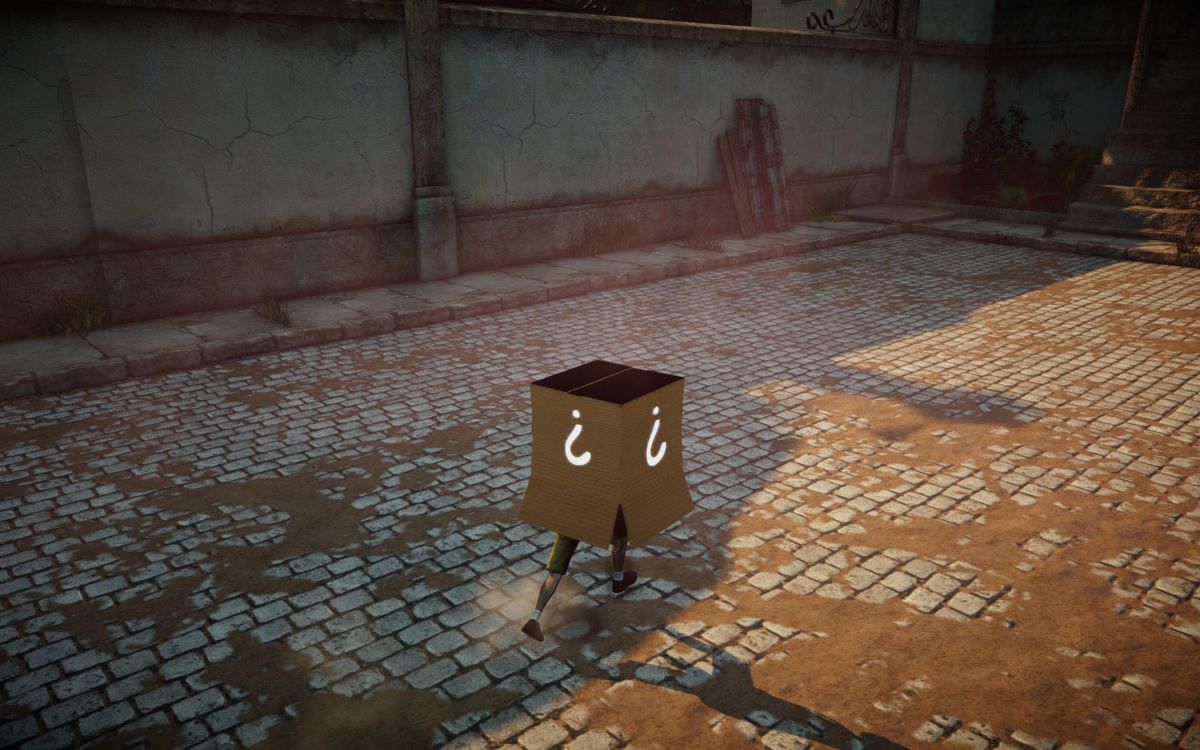
The platforming and puzzles favor observation over dexterity. You look for a lever, a shifting building, or an odd piece of scenery that can alter the path, then figure out how Quico and the monster can use it. The city’s ability to morph is the game’s most memorable trick because it makes familiar suburban spaces feel unstable and toy-like. It also keeps the objectives from settling into a routine of merely finding a key and opening a door.
That said, do not come in expecting a punishing puzzle game. The interactions are deliberately simple, and much of the satisfaction comes from understanding the monster’s needs and risks rather than mastering a deep set of systems. If you need every challenge to be mechanically demanding, the straightforward setups may leave you wanting more. But if you like puzzles that serve a feeling, rather than exist purely to stump you, the relative simplicity leaves room for the game’s anxiety to land.
Graphics
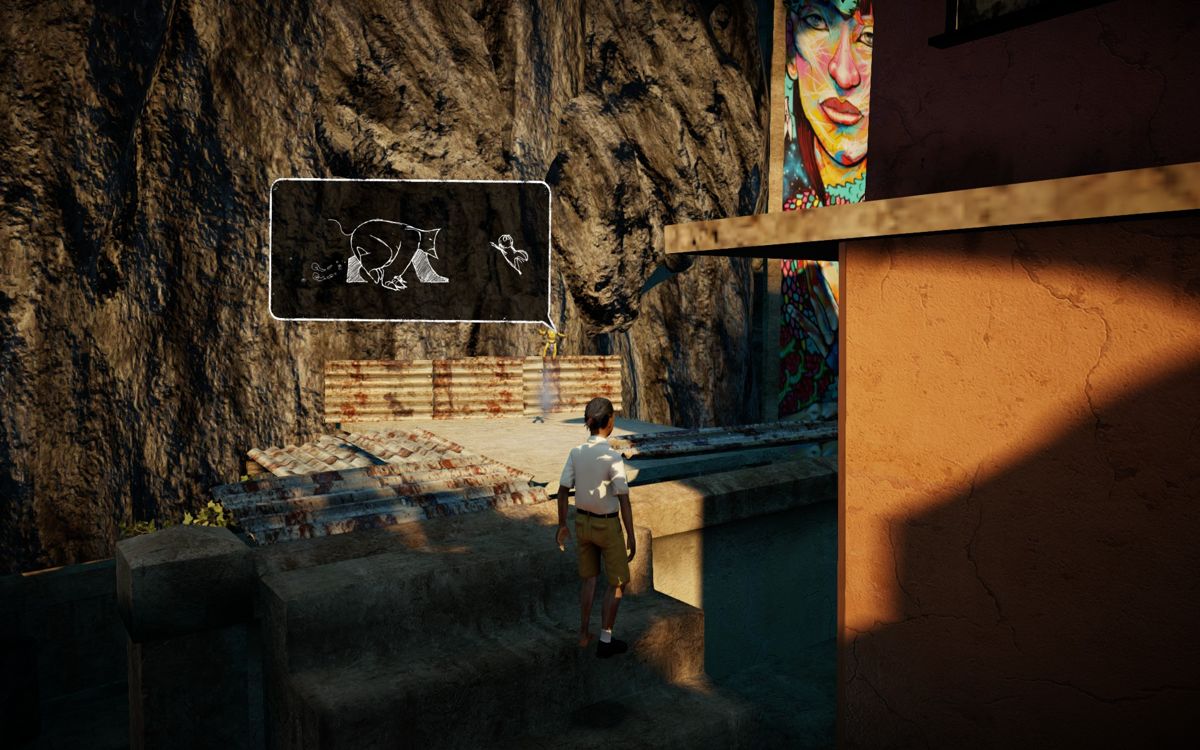
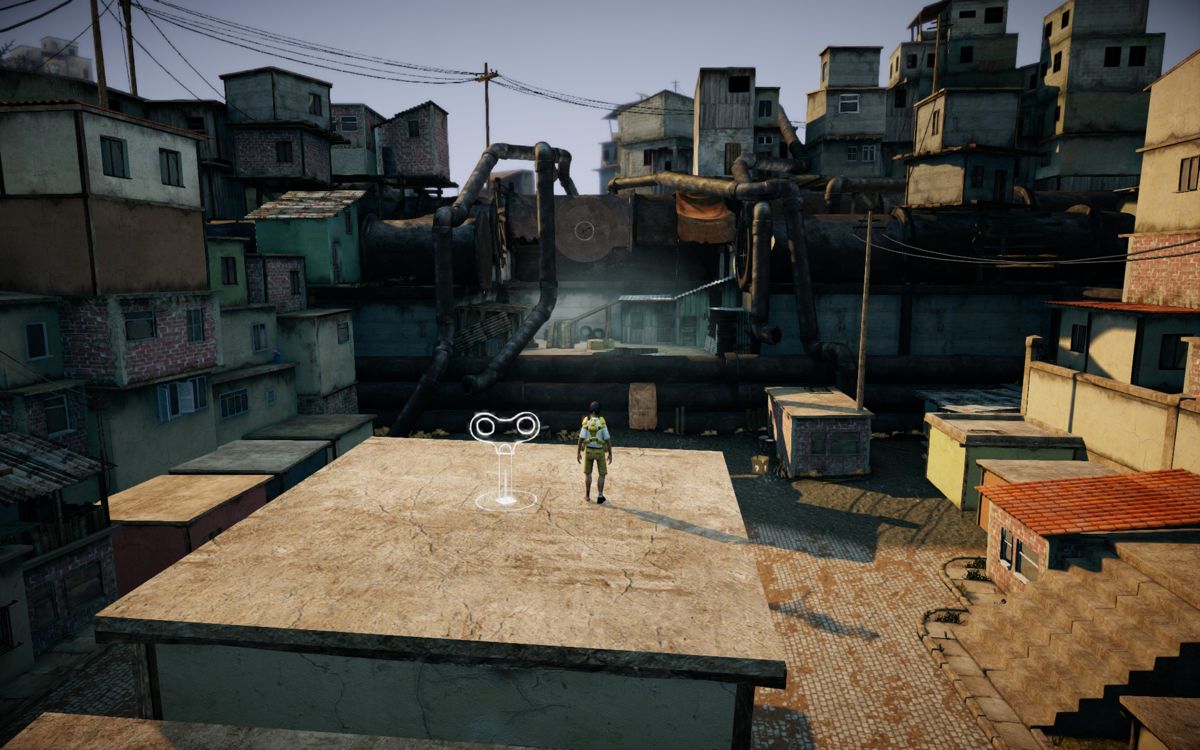
The surreal city is modeled after ordinary South American suburbs, but its streets and buildings can twist and shift into impossible puzzle spaces. Quico, Lula the doll, Alejandra, the enormous monster, and the poisonous frogs are easy to distinguish within that strange environment, while the behind-the-character camera keeps your attention on the routes ahead.
At key moments, the surreal imagery gives way to more accurate depictions of the real-life pain behind Quico’s journey. That contrast is potent because it does not let the fantasy remain safely abstract.
Story
This is a deeply personal game, and that matters more than any individual puzzle. Quico’s relationship with the monster is an allegory for creator Vander Caballero’s teenage years living with an alcoholic father. The monster is lovable, useful, frightening, and capable of changing without warning. You can care for it and still need to protect yourself from it. That is a hard emotional contradiction, and Papo & Yo puts you inside it rather than explaining it from a distance.
Lula and the mysterious Alejandra join Quico along the way, but the central relationship remains the boy and the monster. The poisonous frogs give the metaphor a clear shape without making it feel like a lecture: addiction is represented as something the monster craves even though it hurts everyone nearby. The game’s strongest moments come from refusing to turn that pain into a clean, triumphant adventure-game problem.
You should expect a story that uses fantasy to talk about trauma, fear, and family instability. It is not a breezy tale despite its colorful, imaginative world. The occasional move into accurate imagery makes the allegory especially direct, and the emotional payoff depends on being willing to sit with its discomfort.
Overall Experience
Papo & Yo is worth playing because it makes its puzzle-platforming relationship feel personal. Guiding the monster can be endearing one minute and nerve-racking the next, and that instability gives its environmental puzzles a purpose beyond filling time between story scenes. The experience stays with you less because of difficult brainteasers than because it understands how confusing it can be to love someone who also scares you.
The rougher edge is that the mechanical side is light. You manipulate levers, surreal machinery, fruit, and shifting spaces; you are not building toward elaborate combat or precision-platforming mastery. That can make the journey feel slight if you want dense systems and escalating challenge. Its willingness to stay focused, however, is also why the metaphor is not buried under genre clutter.
Give it a chance if you value games that use interaction to explore painful subject matter and you are happy with accessible environmental puzzles. Go elsewhere if you want action first. For some added background on the game’s history and release, see this Papo & Yo overview; then return to the game itself for the part a summary cannot convey: the uneasy feeling of needing the very creature you are trying to survive.


Reviews
There are no reviews yet.