 Retro Replay Retro Gaming History, Reviews & Emulation

Retro Replay Review
Gameplay
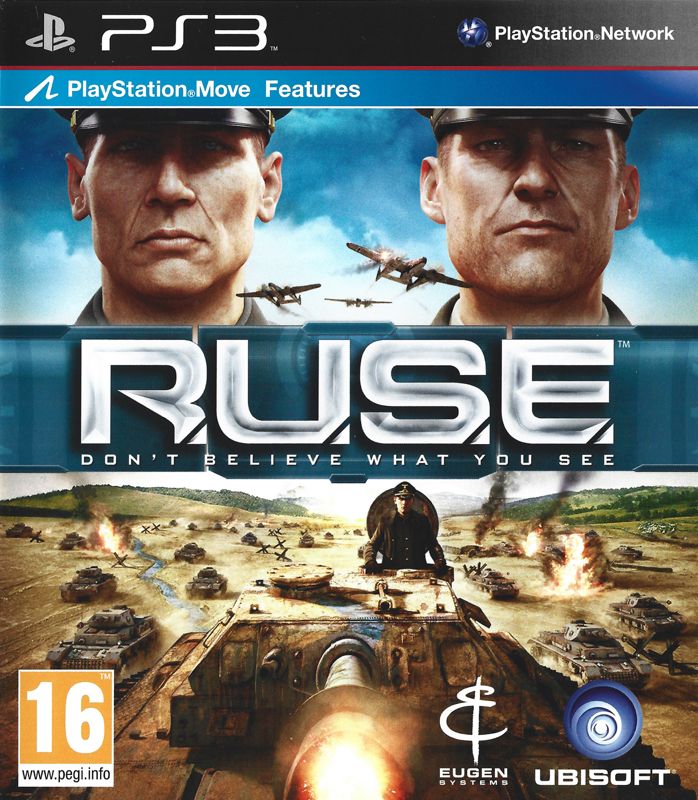
R.U.S.E. feels strongest when you stop treating it like a conventional WWII RTS and start thinking like a commander staring at a giant operations map. The first hour is about getting comfortable with the unusually wide zoom range: move in close and you can direct individual units, pull back and you are shifting whole formations across a sprawling battlefield. That change in perspective is more than a neat camera trick. It makes a distant threat feel urgent and forces you to decide where your attention belongs.
The basic fighting is familiar enough to get your bearings quickly. Different unit types counter one another, resource depots can be captured, and you build production structures and defensive towers. Base building stays deliberately light, so matches are less about constructing a perfect compound and more about keeping the right forces in the right places. That is a welcome choice for anyone who likes RTS battles but gets tired of spending half a match managing an economy.
Deceptions are where the game earns its name. You can hide friendly units in part of the map, use fake forces as bait, reveal enemy movement with huge red route arrows, or disguise heavy units as lighter ones and vice versa. These moves create the best moments: an opponent reacts to the army you want them to see while the real attack rolls somewhere else. They also mean that rushing in without reconnaissance can become frustrating fast. You need to watch the wider map, question obvious targets, and accept that a convincing feint can cost you a position.
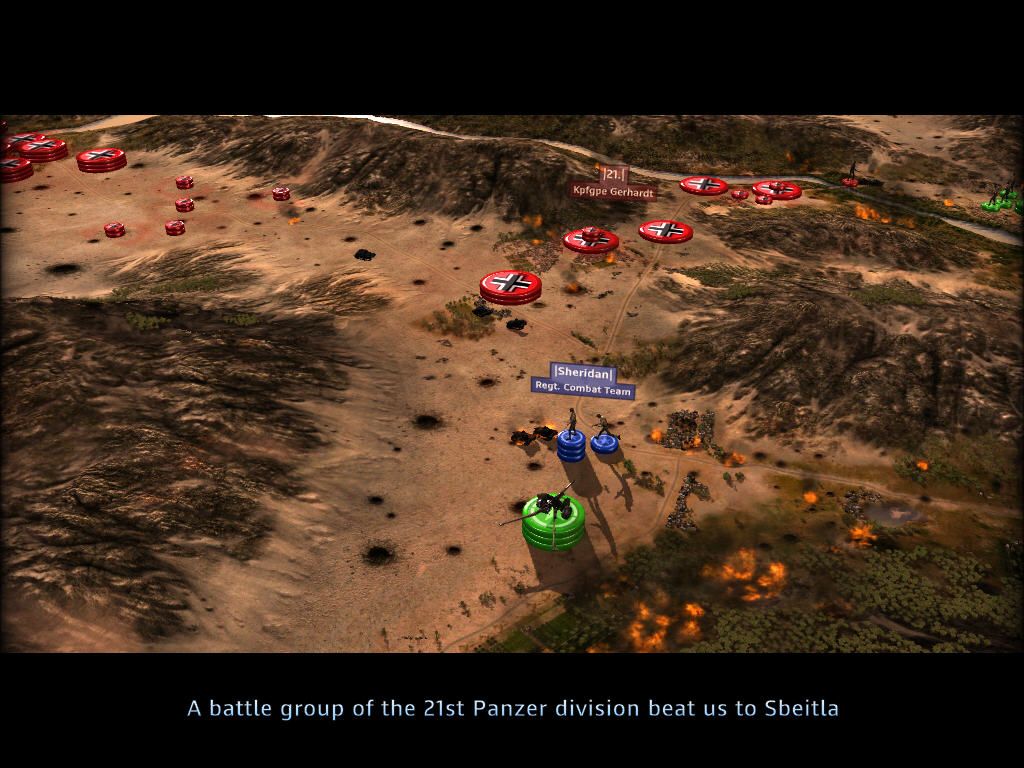
The stepless zoom is excellent at connecting grand strategy with unit-level orders, though it asks you to actively manage that shift. At a far distance, forces become abstract stacks and you can only command whole troops; zoom closer when you need to split units and be precise. Once that rhythm clicks, it is hard not to appreciate how naturally the game handles battles that stretch across a huge map.
Graphics
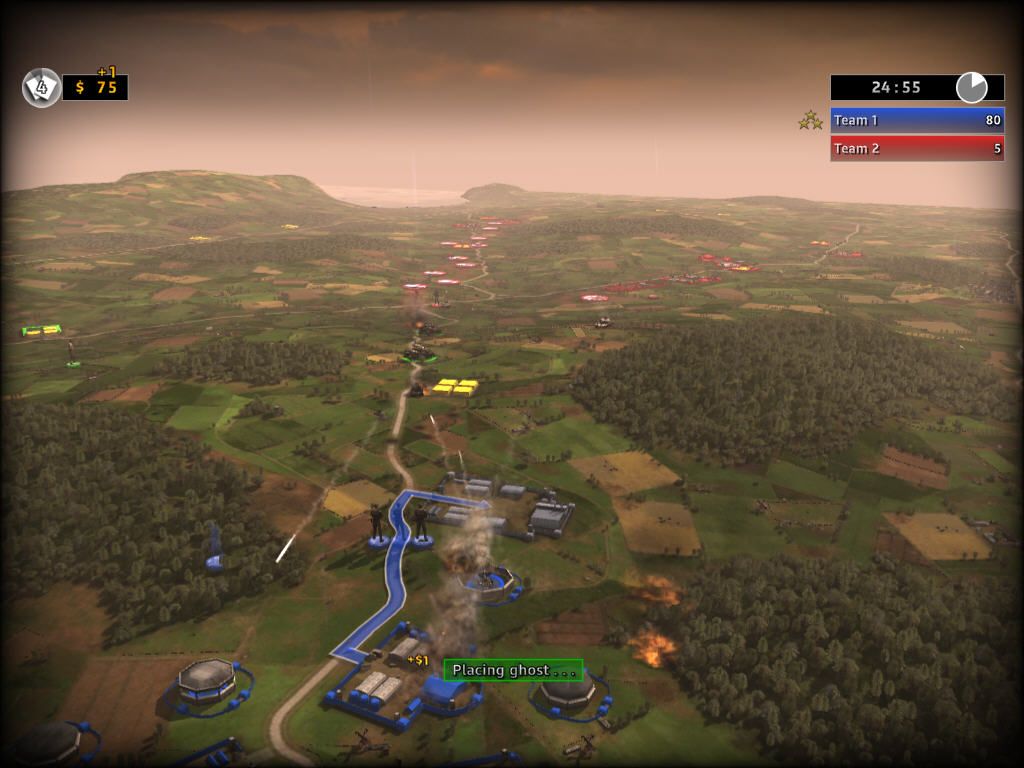
The battlefield is seen from a diagonal overhead view, built around land maps rather than a detailed 3D world. Close in, the military units are visible as models moving over the terrain; far out, they become stacked, differently colored poker-chip-like markers. That abstraction may sound dry, but it makes the big-picture battlefield easy to read and gives the zoomed-out view a satisfying tabletop-war feel.
Story
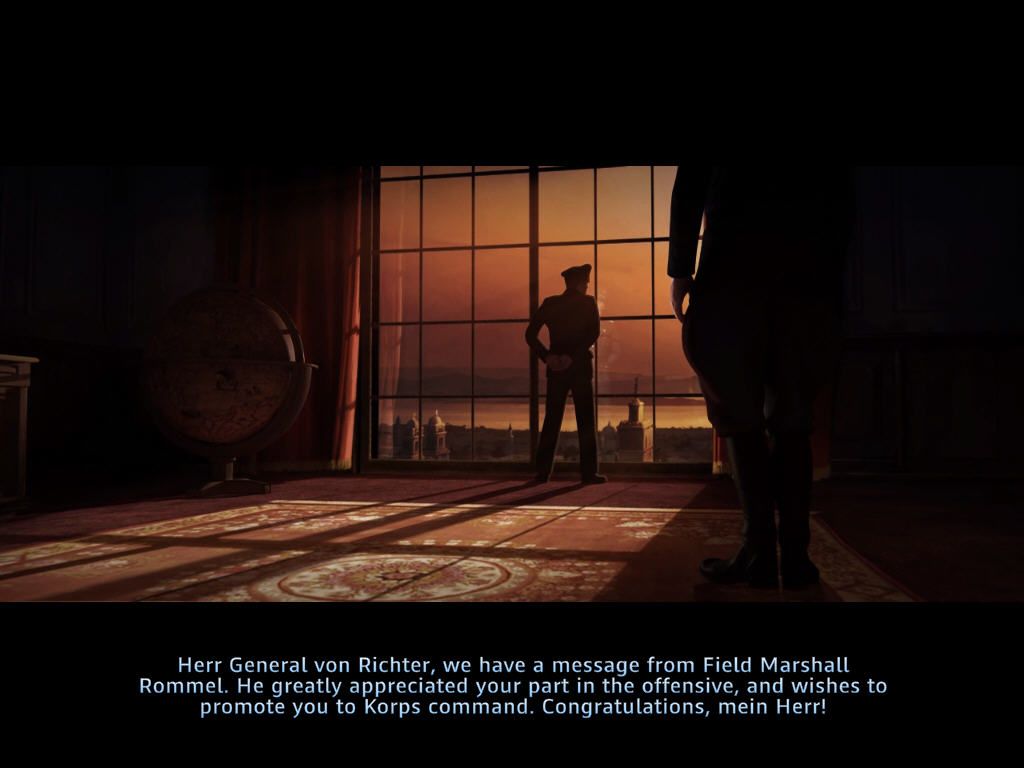
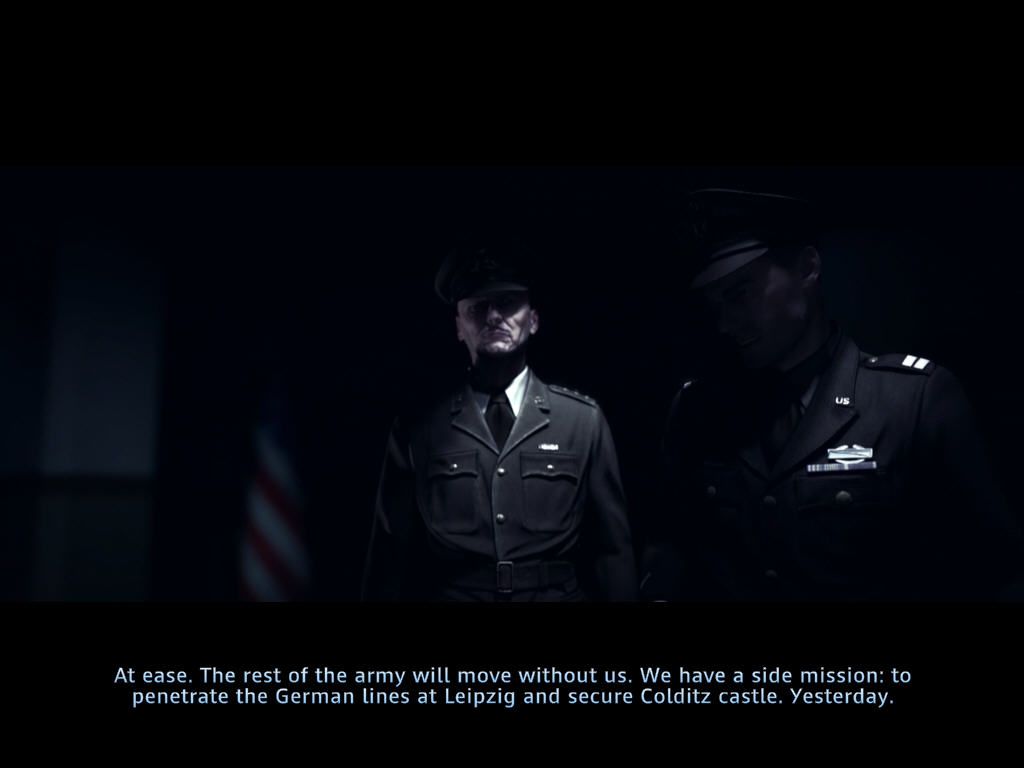
The campaign follows American officer Joe Sheridan and German commander Erich von Richter as they lead troops through war zones in Europe and North America. Its larger thread concerns the hunt for a spy, giving the missions a reason to move between fronts rather than simply presenting a disconnected string of WWII engagements.
This is not a game that asks you to linger on its characters between every battle. The story works better as a frame for command decisions: two officers on opposing sides, a wartime conspiracy, and shifting locations that keep the campaign moving. If you come for a deeply personal war drama, the strategic layer will remain the main attraction.
That focus suits the material. The spy plot matches a game built around misinformation, hidden forces, and false leads, so the campaign’s theme and its battlefield tricks point in the same direction. You are not just winning through firepower; you are trying to make the other side believe the wrong thing.
Overall Experience
R.U.S.E. is a smart, satisfying RTS for you if the thought of misleading an enemy sounds as rewarding as destroying one. Its broad maps and zoom system give battles a commanding scale, while the deception abilities prevent the standard unit-counter formula from becoming too predictable. A successful fake-out feels better than a straightforward attack because you can see the mistake you induced.
The trade-off is that the game expects patience and awareness. You cannot stare at one skirmish and assume the rest of the map will behave itself. Misread a disguised force or overlook movement on another front, and the consequences can be severe. That tension is the point, but gamers who want tightly focused, constantly close-up RTS action may find the wider operational pace less immediately comfortable.
There is enough beyond the campaign to justify learning its systems, including two co-op maps and four standalone maps against powerful AI generals. The package does not reinvent every RTS convention, yet its emphasis on large-scale command and deliberate deception gives it a distinct identity. Stick with the zoom, learn to distrust what you see, and R.U.S.E. delivers a WWII strategy game with more cunning than its straightforward setup first suggests.


Reviews
There are no reviews yet.