 Retro Replay Retro Gaming History, Reviews & Emulation

Retro Replay Review
Gameplay
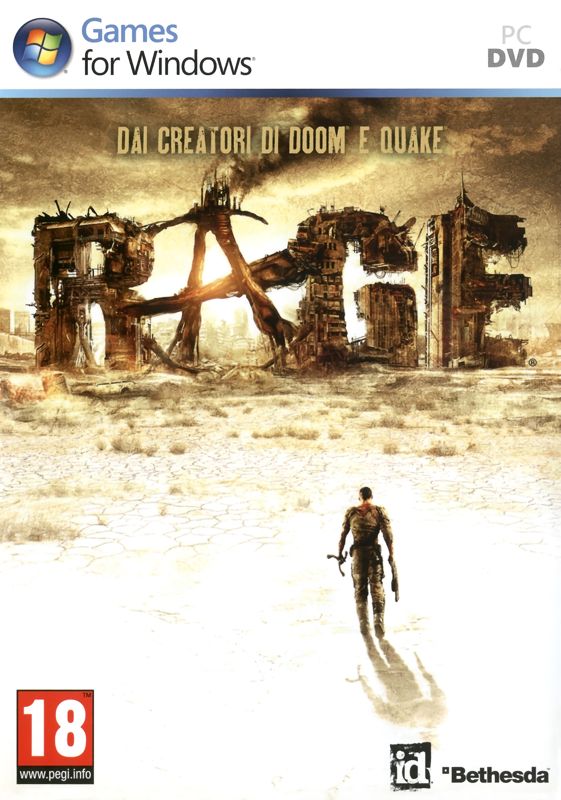
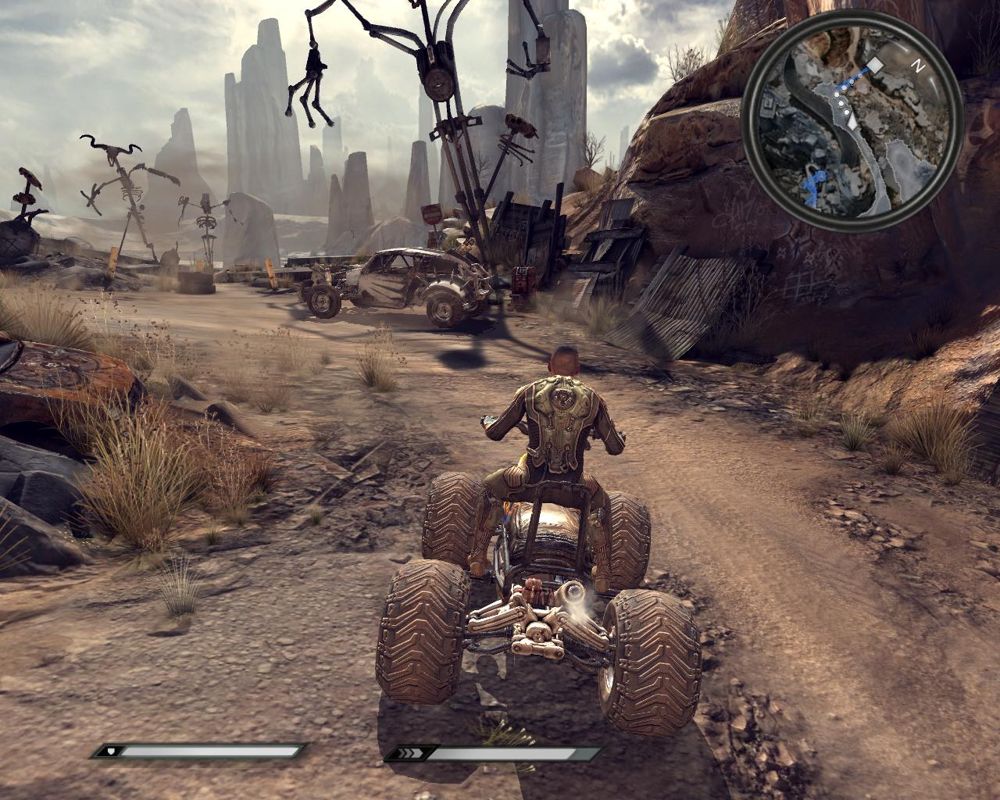
Rage starts with a strong survival-shooter hook: you emerge from an Ark pod into a world that has already moved on without you, then begin taking work from settlements while staying out of the Authority’s hands. The first stretch has a satisfying sense of forward motion. A job points you toward a destination, you climb into a buggy, and the Wasteland turns the trip into more than a loading corridor because hostile vehicles and races give the roads their own purpose.
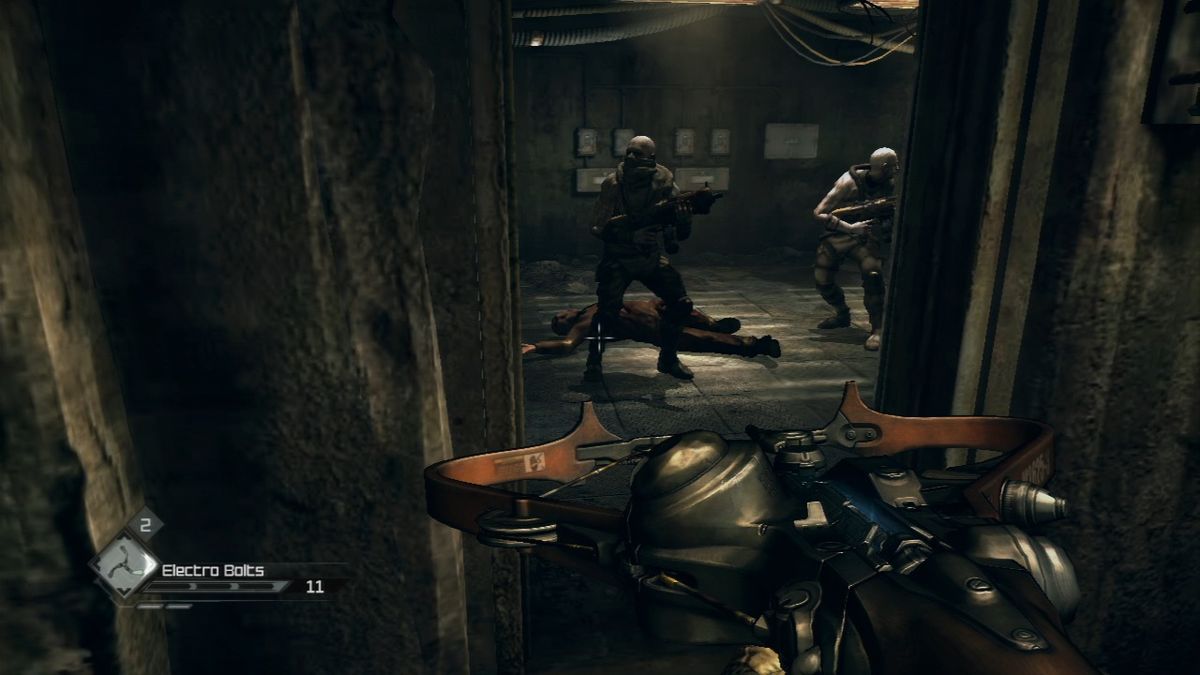
On foot, this is a traditional first-person shooter built around clearing enemy spaces and recovering whatever a mission demands. Health regeneration keeps the pace moving, while the limited defibrillator revives add a useful second chance when a fight goes wrong. The best wrinkle is the crafting system. Since you can make items anywhere once you have recipes and components, junk collecting has a clear payoff: bandages for recovery, ammo for endurance, lockpicks for access, or more aggressive solutions such as Wingsticks, sentry turrets, and RC bomb cars.
That flexibility helps the combat loop stay lively, but it does not transform Rage into a deep build-driven shooter. There are no new character skills to earn, and the permanent armor choice is a single commitment rather than an evolving specialization. Your growth is equipment-based: better weapons, better vehicles, and smarter use of consumables. That is clean and approachable, though it can feel lean if you want every mission to unlock another layer of your character.
The side activities are more than idle distractions. Vehicle races, armed buggy combat, Mutant Bash TV arena battles, a holographic board game, and collectible-card matches give you alternate ways to earn money or break up the main loop. The card game in particular asks you to build a deck before facing an opponent, which is a pleasant change of pace. Multiplayer also commits to the vehicle side rather than standard deathmatch, while co-op Legends offers short standalone stories for online or local split-screen.
Graphics
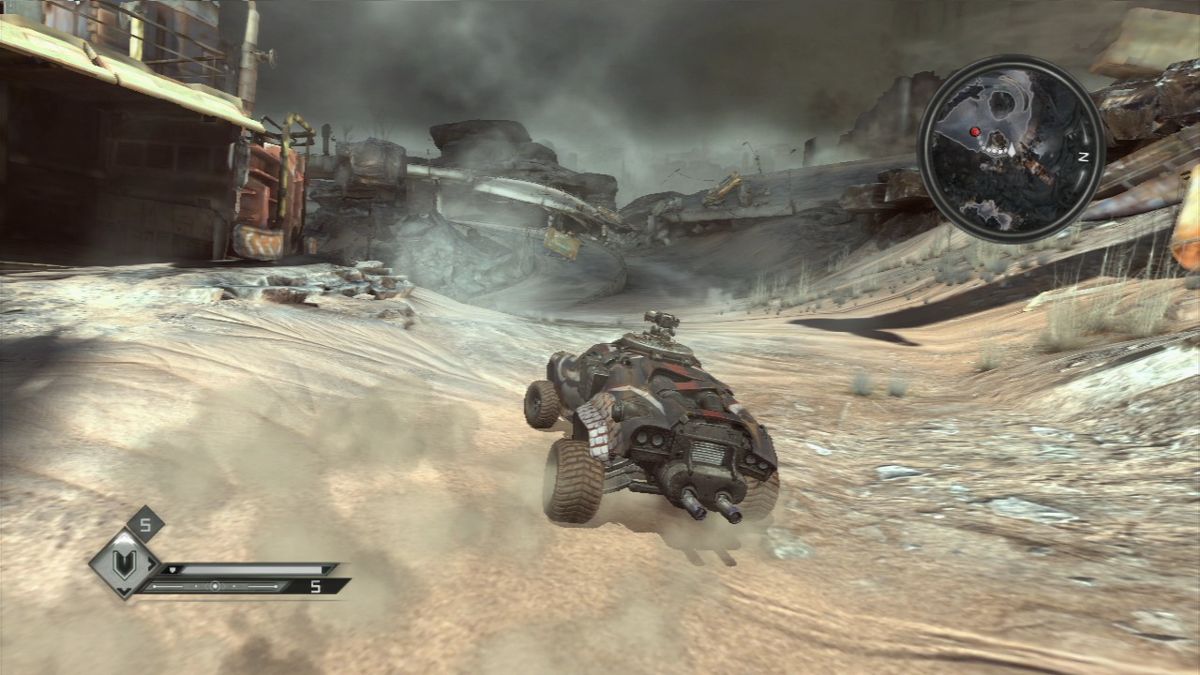
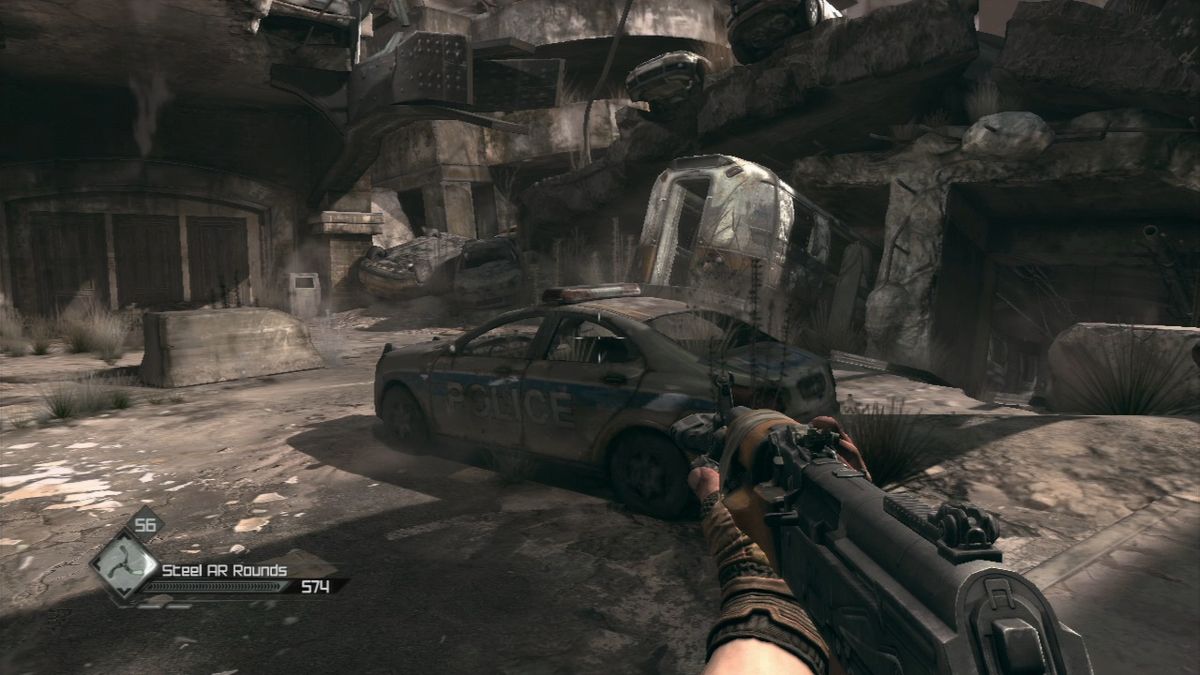
Rage puts you behind the wheel on Wasteland roads and then moves you into first-person enemy lairs, settlements, arenas, and mission spaces. The visual contrast between buggy travel and enclosed shooting areas gives the adventure a useful change of scenery, while id Tech 5 and its Megatexture approach were built to handle those broad connected spaces on console-focused hardware.
Story
The opening premise is immediately legible: an asteroid has devastated Earth, the Ark Project preserved selected people in underground stasis, and your damaged pod leaves you as its only survivor long after other survivors have rebuilt. You are not discovering an empty planet so much as entering a rough new society without a place in it. That gives even the basic settlement jobs a reasonable personal frame.
The Authority supplies the central threat. It wants to capture you for the nanites placed in your body as part of the Ark Project, so helping settlements is tied to your need to survive in a world where a powerful force has a direct interest in you. The story is functional rather than sprawling: it gets you out into the Wasteland, gives your errands stakes, and leaves room for the shooting, driving, and scavenging to do most of the talking.
Rage’s co-op Legends are worth treating as side stories, not required campaign chapters. They draw on characters and locations from the main game but do not alter the single-player plot. That makes them a good optional detour with a friend, especially if you want more of the setting without worrying about interrupting your campaign progress.
Overall Experience
Rage is at its strongest when you accept its straightforward rhythm. Take a contract, tune your loadout, drive across dangerous ground, shoot through a mission area, grab materials, and decide what to craft or upgrade next. The combination of FPS action and armed buggy travel gives it a personality that a pure corridor shooter would lack, and the smaller diversions stop the Wasteland from becoming a one-note commute.
Frustration is most likely to set in if you arrive expecting a deep progression system. You cannot steadily shape your character through skill trees, and the campaign’s choices largely live in purchases, crafted supplies, and one lasting armor bonus. Some gamers will find that refreshingly direct; others will miss the long-term sense of building a distinct playstyle. Knowing that before you start makes a major difference.
Give Rage a chance if you want an old-school-leaning shooter with vehicle combat, a practical crafting layer, and enough side modes to keep the central mission structure moving. The payoff is not reinvention. It is a sturdy, varied post-apocalyptic action ride that understands the simple pleasure of driving somewhere hostile, arriving prepared, and making your tools count.


Reviews
There are no reviews yet.