 Retro Replay Retro Gaming History, Reviews & Emulation

Retro Replay Review
Gameplay
Your first drop tells you what Section 8: Prejudice wants to be. Instead of quietly spawning into a map, you leap from a plane without a parachute and crash into the action. It is a punchy opening to every match, and it suits a shooter that puts battlefield positioning ahead of personal kill totals. You are not there merely to pad a scorecard; you are there to take ground and make it costly for the other side to take it back.
Conquest is where that focus pays off. Bases continuously generate points, so a kill can be useful without being the whole point of the round. Regular side missions, including escort work, keep pressure on teams to move rather than settle into one familiar firing lane. The system asks you to pay attention to what the team needs, and that makes a coordinated win feel earned. Money from kills can be spent on mechs, bikes, mobile artillery, and tanks, giving combat a practical reward loop even when kills themselves do not advance the victory score.
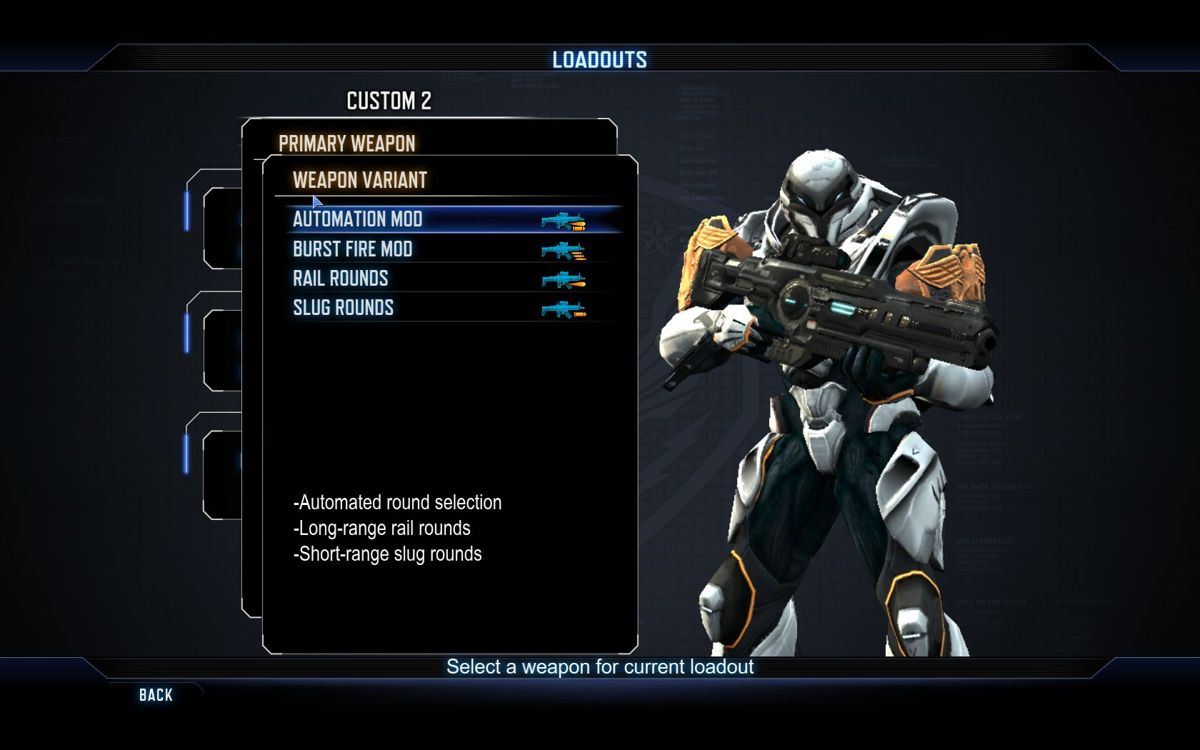
The lack of fixed classes is another good fit for that structure. Experience unlocks weapons and stronger stats such as added damage or armor, but you are not locked into a predefined battlefield job. That freedom is inviting, especially if you dislike being told you must commit to one role before a match starts. At the same time, progression toward better gear and stats can make the game feel more welcoming once you have put in some time, rather than immediately.
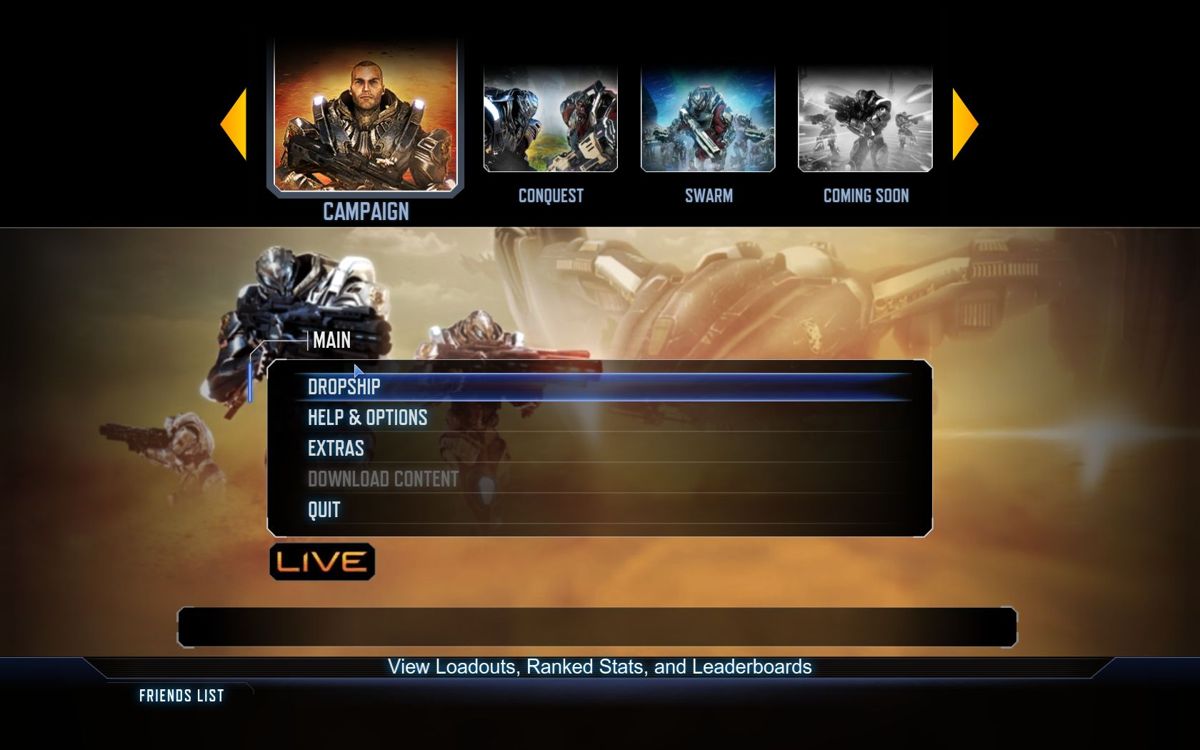
There is useful variety outside Conquest, even if the modes are not equally ambitious. Assault strips the goal down to taking every base under a time limit, then swaps the attackers and defenders for a second round. Swarm moves in another direction, letting up to four players defend a base from enemy waves while still dealing with the kinds of missions found in Conquest. Every mode works with bots, which makes this an unusually easy game to sample solo or use for practice before facing other players.

Graphics
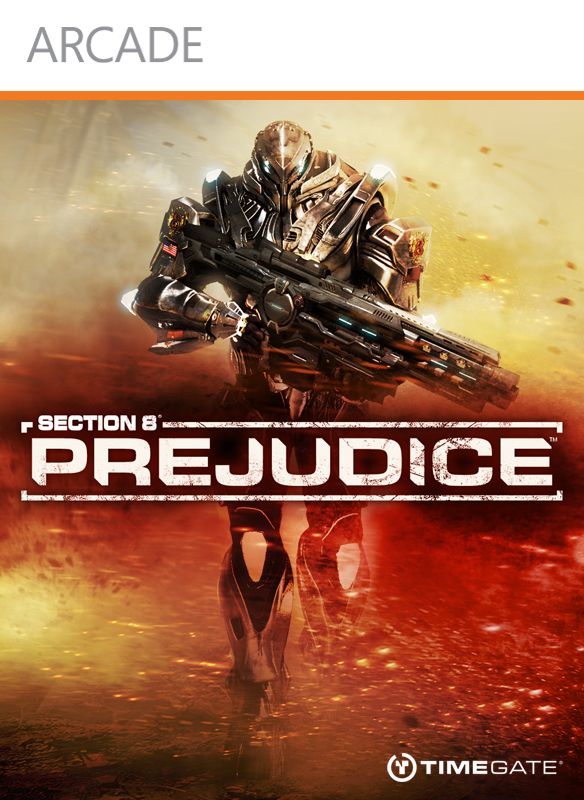
The game is viewed from a first-person perspective, with sci-fi combat built around infantry fighting alongside bikes, tanks, mobile artillery, and mechs. Cutscenes frame Alex Corde’s campaign, while the airborne map entry gives matches a memorable visual start: you fall from a plane straight toward the battlefield.

Story
Alex Corde’s campaign begins with a straightforward military-sci-fi emergency: an unknown force threatens human colonies with weapons of mass destruction, and Section 8 has to stop it. That is enough of a hook to carry you from mission to mission, and the cutscenes plus changing objectives give the solo play more shape than a simple string of bot matches.
Still, the campaign’s real purpose is obvious. It teaches the multiplayer game. That is not automatically a flaw—many shooters benefit from a guided introduction—but it does mean the story rarely feels like the main reason to stay. Think of it as a playable orientation for the larger competitive experience, not a deeply developed solo campaign that happens to include multiplayer.
If you want a self-contained sci-fi story with the campaign doing most of the heavy lifting, this will likely feel slight. If you want to learn its objectives, equipment economy, and combat flow before entering Conquest, it has a clear job and performs it capably.
Overall Experience
Section 8: Prejudice is most satisfying when it gets you thinking like part of a force rather than a lone shooter star. Conquest rewards base control, defense, and side objectives, while its cash economy gives you reasons to chase the tools that can change a fight. The result has more tactical direction than shooters where every encounter collapses into a race for eliminations.
The compromise is that the single-player campaign feels like preparation, not the destination. Fortunately, Assault, Swarm, and bot support make the package more flexible than a multiplayer-only shooter. You can learn the maps and modes at your own pace, defend against waves with a small group, or head directly into the large-team Conquest matches.
Give it a chance if objective play is your favorite kind of shooter competition and you like the idea of buying battlefield hardware through your performance. Skip it if you need a substantial narrative campaign to justify the purchase. Its strongest moments come from a team realizing that the scoreboard is not asking who shot the most enemies, but who actually controlled the war.


Reviews
There are no reviews yet.