 Retro Replay Retro Gaming History, Reviews & Emulation
Retro Replay Review
Gameplay
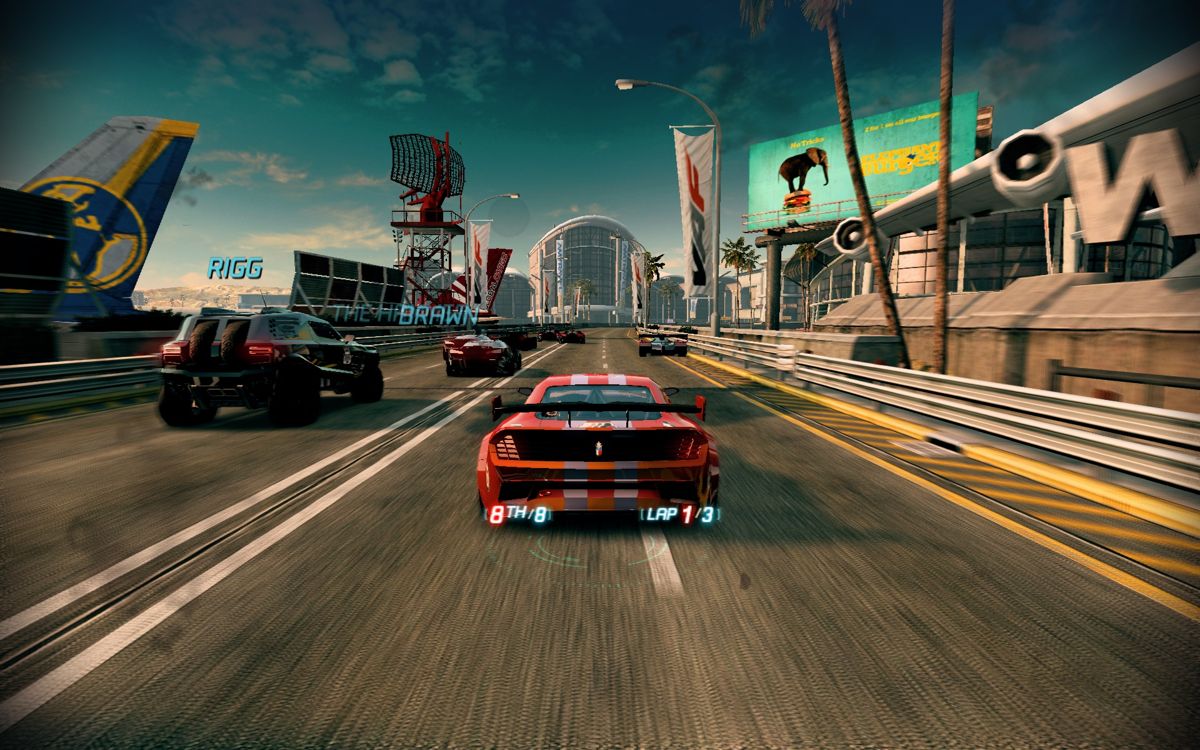
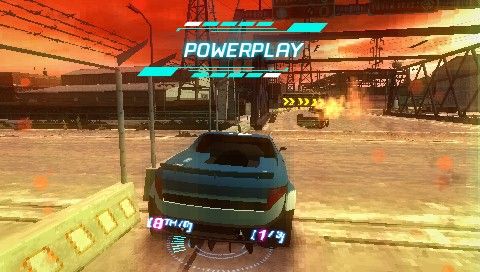
The first few races make the pitch immediately clear: drive hard, drift with purpose, and keep one eye on the cars ahead for an opening to ruin their day. A full Power Play bar is not a reward you sit on for long. It is an invitation to trigger a shortcut, set off an obstacle, or reshape the route with a larger event. That makes position feel volatile in a way conventional arcade racing often does not.
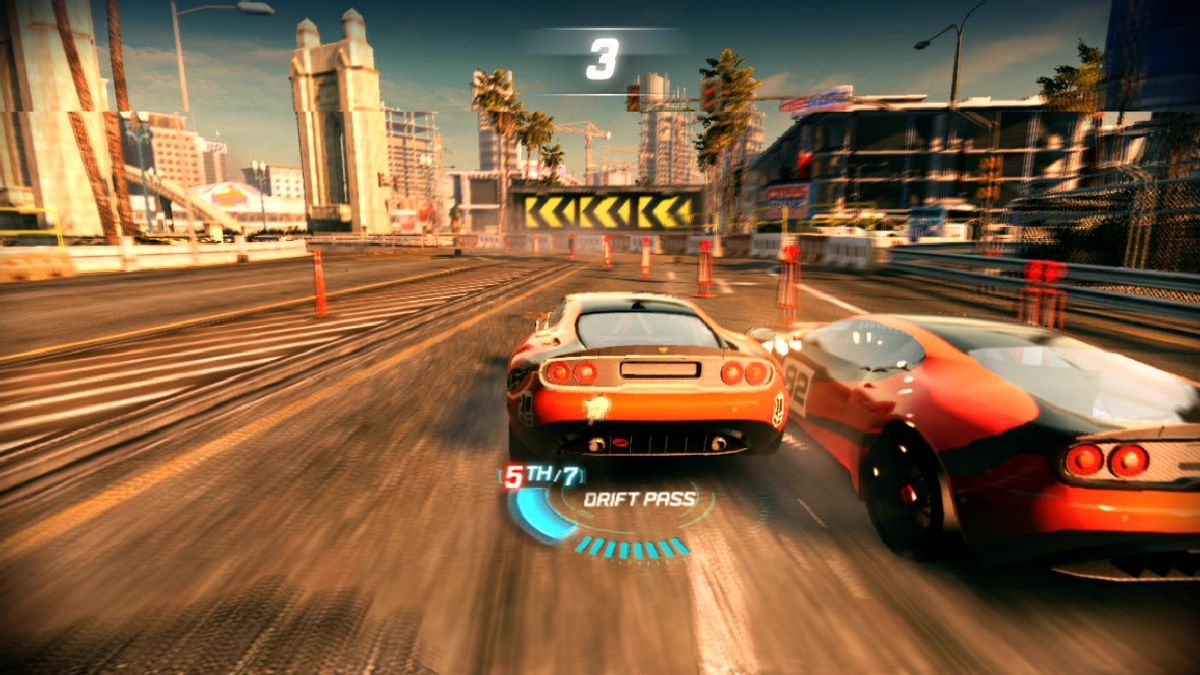
What makes the idea work is that the meter comes from active driving. Drafting, jumps, avoiding danger, and especially sustained drifts all build toward another attack. You need to manage the throttle through corners rather than merely throw the car sideways, and that gives the chaos a useful foundation. When the drifting starts to click, you stop treating Power Plays as random fireworks and start using them as tools for timing, pressure, and recovery.
There is frustration in the bargain. A badly timed activation can catch you as readily as a rival, and one mistake can cost more than a place when the pack is tightly bunched. Still, the game earns that cruelty because you are rarely without a route back into contention. Destruction, Air Strike, Air Revenge, Time Trial, and Elimination also put different demands on the same core skills, rather than leaving you to run standard races alone.
Graphics
Split/Second understands that its destruction needs to be readable at racing speed. Cars, hazards, and the available Power Play markers all serve the immediate business of making a snap decision while the road is moving underneath you. The important visual pleasure is not quiet scenery; it is seeing a threat develop ahead and deciding whether to commit to the gap.
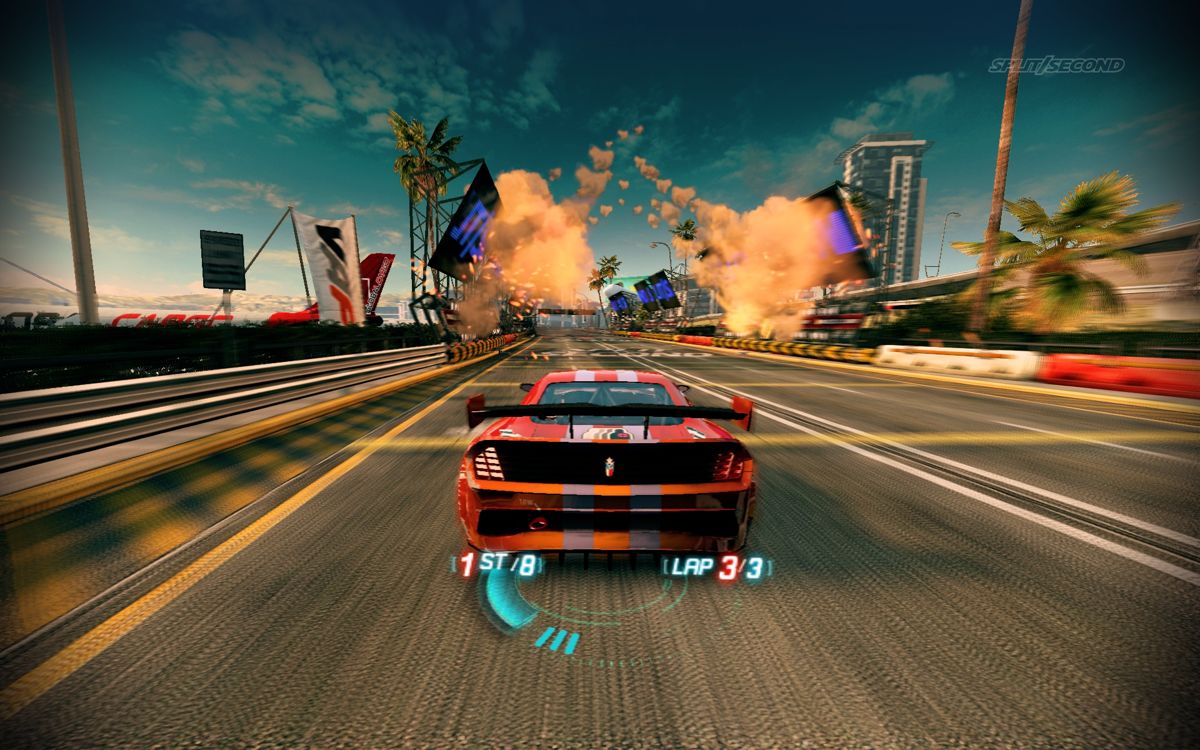
The larger track-changing events give the races a proper sense of escalation. A burning bridge or a ship becoming an alternate route is more than a backdrop when it changes where the field can go next. That connection between spectacle and route choice keeps the explosions from feeling detached from the driving.
Its strongest visual moments come from consequence: a route closes, a shortcut briefly opens, or a rival gets shaken into a crash by something you triggered. You are watching the course become less predictable in real time. That is a much better fit for this game than polish for polish’s sake, and it reinforces the nervous, combative pace.
Story
The story is deliberately light: you are one of eight drivers brought into a twelve-episode television season, trying to become champion. It is a serviceable excuse for a campaign built from events, credits, elite races, and unlocks. Do not come expecting a character-driven racing drama.
Still, the TV framing helps the structure feel more purposeful than a bare list of cups. Each episode has a final elite race to reach, while bonus events ask you to wreck a required number of cars elsewhere. That gives destructive driving a campaign-level reason beyond the immediate satisfaction of knocking somebody out of the way.
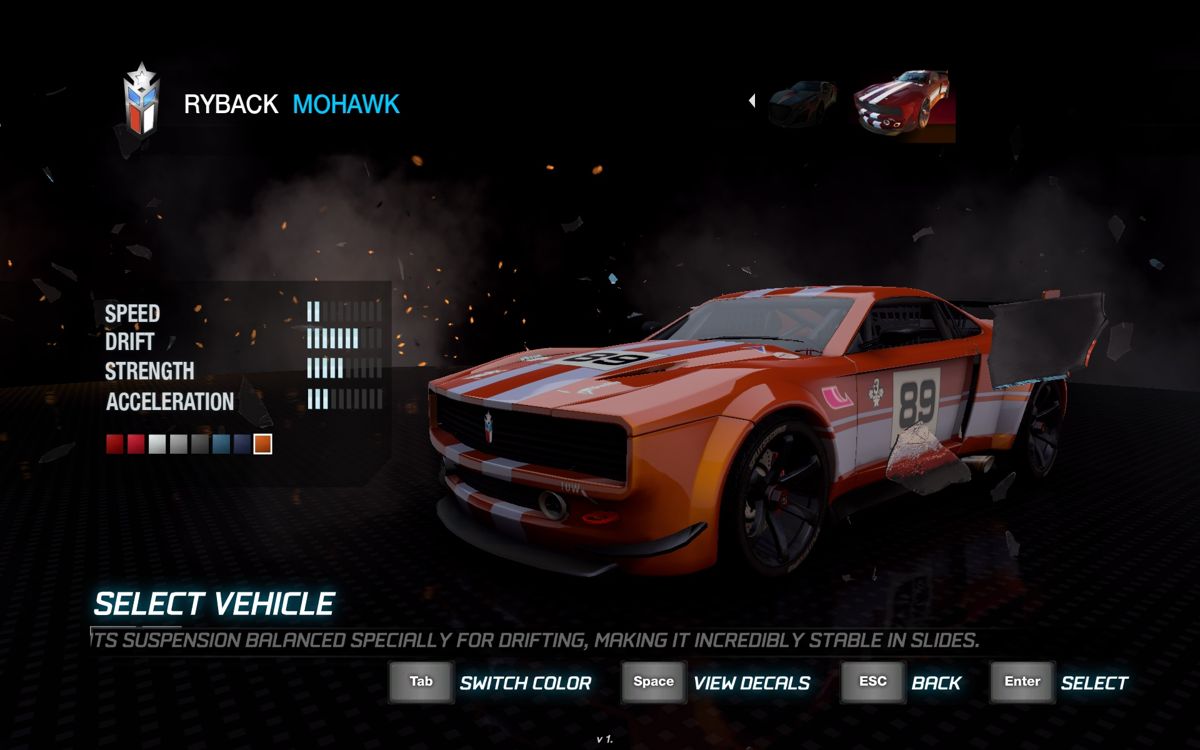
Progression is straightforward and effective. Better finishes earn credits, credits open the key event in an episode and new cars, and special decals reward particularly dramatic accomplishments. The narrative does not carry the game, but it stays out of the way and supports the urge to push through one more event.
Overall Experience
This is arcade racing for anyone who finds a clean overtake satisfying but would rather make it happen by collapsing the plan around the other driver. Its best races feel like a chain of quick calculations: hold the drift, bank the meter, watch the target, and pull the trigger before somebody does the same to you. Few racing setups turn good driving into such immediate offensive potential.
The trade-off is that control can feel precarious when the course starts erupting. If you want carefully measured, low-drama racing, the sudden reversals may feel punishing rather than exciting. But if you can accept that a lead is always temporary, the uncertainty becomes the point. A wreck is not simply failure; it is often the dramatic reset that makes the next recovery memorable.
The campaign has enough modes and unlock goals to sustain its central hook, while two-player split-screen and online races extend the appeal beyond solo play. More importantly, the core idea survives repetition because Power Plays are tied to how you drive, not handed out as a passive catch-up trick. Split/Second remains an easy recommendation for you if you want an aggressive racer where smart drifting and reckless spectacle are inseparable.


Reviews
There are no reviews yet.