 Retro Replay Retro Gaming History, Reviews & Emulation


Retro Replay Review
Gameplay
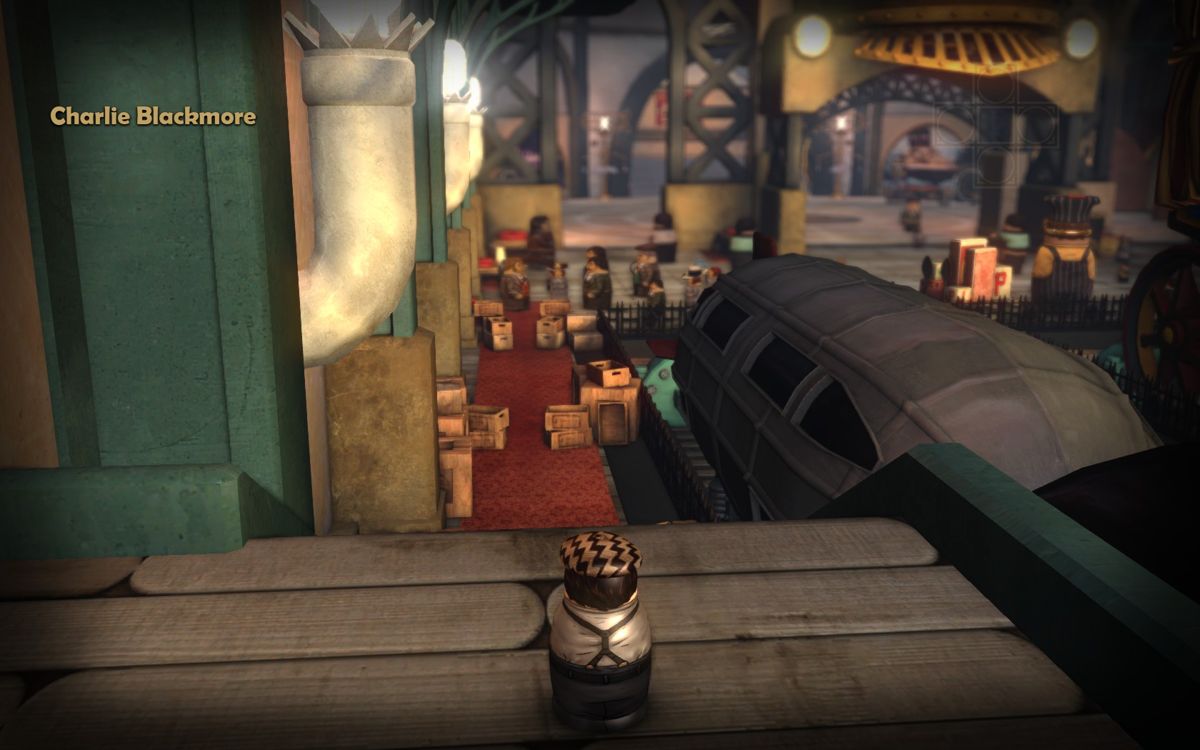
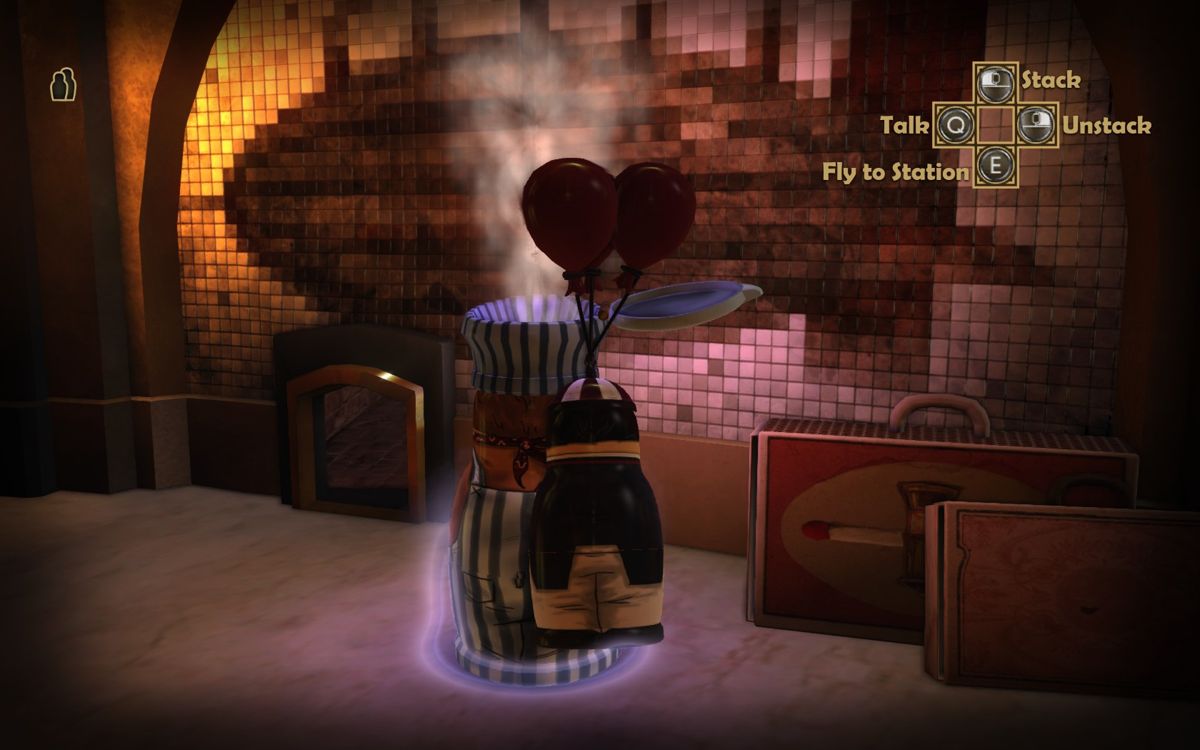
The first hour of Stacking is a delight because it teaches its central trick without making it feel like homework. Charlie Blackmore is a tiny Russian doll, and the simple act of stacking into another doll changes what you can do. A larger doll is not just a new body; it is a new way to approach the problem in front of you. That makes even a straightforward objective feel inviting rather than routine.
What really clicks is the game’s willingness to let you solve puzzles in multiple ways. Instead of hunting for one fussy adventure-game answer, you can look around, try out the dolls available in an area, and see which ability creates an opening. That freedom gives you room to be clever, or simply practical. It also means getting stuck is usually a prompt to experiment with a different doll rather than a reason to start blindly clicking on everything.
The optional hi-jinks are where the idea earns its staying power. They encourage you to revisit situations with a more playful mindset and find alternate solutions, rather than treating completion of the main path as the end of a level. If you enjoy poking at a puzzle box until you understand its moving parts, these side goals are a strong reason not to rush.
There can be a little friction if you prefer adventures with constant forward momentum. Stacking wants you to pause, survey the dolls around you, and test possibilities. But its puzzles are built around an easy-to-grasp rule, not obscure logic. Give it a little patience and the experimentation becomes the point.

Graphics
Charlie and the surrounding cast are Russian dolls, giving every character a compact, toy-like silhouette. The behind-view camera keeps Charlie’s small size and the larger dolls he can inhabit easy to read as you move through each puzzle area.
The 1920s Depression-era setting and industrialist villain give the doll world more texture than a generic toybox. It is an unusual combination, but the contrast between the cute nesting-doll cast and the grim premise is part of the game’s charm.
Story
You play as Charlie Blackmore, trying to recover his kidnapped family from the Baron, an industrialist whose plans are plainly no good. It is a clean rescue setup, and it works because the game does not need to burden its puzzle-solving with a complicated plot before giving you something fun to do.
The Depression-era backdrop adds a little bite to the journey. A story about people being taken by a powerful industrialist has more weight than the same setup would in a purely whimsical setting, even with Russian dolls at the center of it. That tension keeps the premise from feeling disposable.
Still, the story is mainly the thread that carries you from one puzzle-filled location to the next. Come for Charlie’s mission and the eccentric setup, but expect the memorable moments to come from figuring out how to use the right doll in the right place.
Overall Experience
Stacking is an unusually approachable puzzle adventure: its core idea is instantly understandable, while its multiple solutions give you more freedom than the genre often allows. It respects curiosity. You are not merely asked to find an answer; you are encouraged to see what other answers might work.
At 8.1, it earns its reputation as a smart, charming game built around one excellent concept. The optional hi-jinks are especially valuable for anyone who hates leaving a clever system unexplored. They transform progress from a checklist into an invitation to mess around with the world.
Try it if you want an adventure game that replaces inventory wrangling with light, inventive experimentation. If you need relentless action or a dense, dramatic narrative, its gentle pace may not grab you. For anyone ready to spend time inhabiting a world of Russian dolls and discovering several ways through a problem, though, the payoff is absolutely worth it.



Reviews
There are no reviews yet.