 Retro Replay Retro Gaming History, Reviews & Emulation
Retro Replay Review
Gameplay
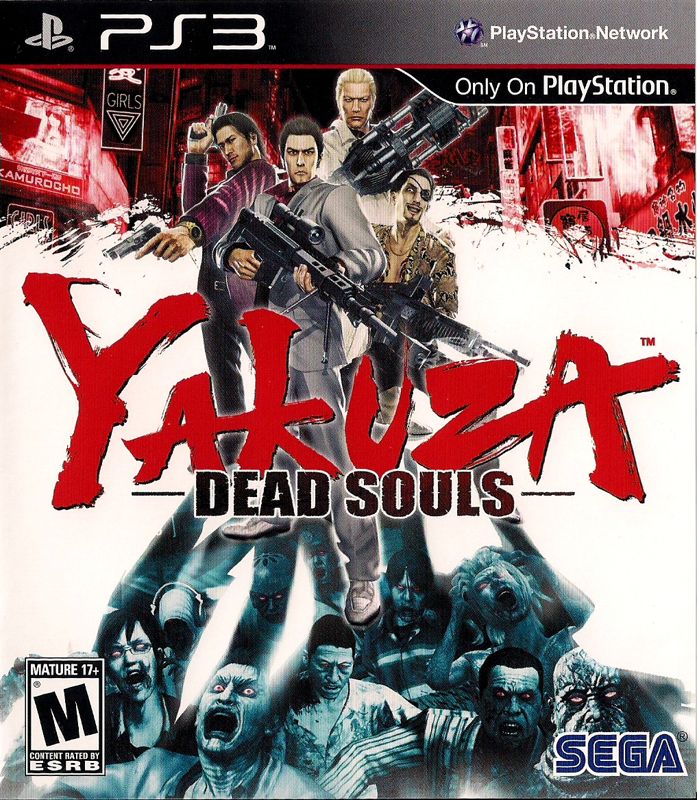
The first hour has a wonderfully ridiculous pull: Kamurocho, a place already used to gang wars and disasters, has become a zombie quarantine, and the usual street-level Yakuza energy is redirected into survival shooting. Dead Souls knows the premise is wild, then commits to it. If you have spent time with the earlier games, seeing this familiar district invaded by the undead is reason enough to give the spin-off a chance.
You are not meant to win these fights by leaning on the old fist-first instinct. Zombies shrug off kicks and punches, so each of the four protagonists carries up to four weapons instead. Unlimited-ammo pistols give you a dependable baseline, while shotguns, anti-armor rifles, and incendiary grenades let you prepare for the kind of threat ahead. When a pack closes in and more than twenty infected are attacking at once, choosing the appropriate weapon is more important than trying to look stylish.
The enemy roster gives the shooting a little more thought than simple crowd clearing. Monkeyboy moves quickly, Cry Baby can summon more zombies, and the Prototype bosses demand a stronger response than ordinary infected. That variety helps, but swarms are still the central rhythm, and they can become tiring when you want to get back to the next character beat or side activity. Dead Souls works better in shorter bursts than as a nonstop action game.
Its best counterweight is the familiar Yakuza habit of stuffing a dramatic main plot beside sincere, strange side stories. People cut off by the quarantine need help returning to infected areas to save someone or settle unfinished business. Perfect Partners add a useful sense of continuity to those detours: some people you help can join permanently, enter quarantined zones when called, and grow stronger alongside the protagonists.
There is also a lot of old Kamurocho comfort food left intact. You can dine, visit hostess bars, play batting cages, and use crane machines, among other minigames. Subterreania replaces the coliseum with a randomly generated enemy dungeon whose rewards improve as you descend. It is a fitting optional challenge for anyone who enjoys building toward another run rather than simply finishing the campaign.
Graphics
Dead Souls keeps the action in third-person view, putting its attention on armed protagonists, packed zombie groups, mutants, and the burning, quarantined streets of Kamurocho. The clearest visual pleasure is the collision of a recognizable city district with horror-game clutter: familiar leisure spots remain part of a place now overrun by infected.
Enemy variety is easy to understand at a glance because the mutant threats are distinct in concept, from the agile Monkeyboy to the zombie-calling Cry Baby and the larger Prototype bosses. The screen can get busy when a swarm surrounds you, which suits the panic even when it makes the action feel crowded.
Story
This is a sequel to Yakuza 4 set one year later, but it is deliberately a far more fantastic branch of the series. Shun Akiyama, Goro Majima, Ryuji Gouda, and Kazuma Kiryu each search for answers as Kamurocho falls apart. That lineup is the story’s greatest hook: it brings together personalities who carry very different baggage into one shared crisis.
Akiyama’s role as the enigmatic moneylender, Majima’s position as head of the Tojo clan’s Majima family, Gouda’s exile from the Omi Alliance, and Kiryu’s status as the Dragon of Dojima give the premise more weight than a throwaway zombie scenario. The outbreak does not erase the crime-series history; it throws these established figures into a new kind of pressure cooker.
The smaller stories matter, too. The quarantine has interrupted ordinary lives, and many side missions revolve around people needing to return to infected territory for somebody they care about or for unresolved business. That is classic Yakuza territory in a new costume: melodrama and personal errands sitting comfortably beside utter nonsense.
Overall Experience
Dead Souls is not subtle, and it is better for it. Turning Yakuza’s street fights into gun battles against zombie hordes is a risky reinvention, but the game earns goodwill through its commitment to Kamurocho, its returning cast, and its huge pile of optional diversions. The weirdness is not a garnish; it is the whole reason to play.
Frustration can set in if repeated swarms start to feel like an obstacle between you and the district’s more characterful parts. The shooting asks for practical weapon choices, and the special enemies break up the routine, yet the action does not have the same natural identity as Yakuza’s usual brawling. You should go in ready for a curious experiment rather than the series at its most polished.
Still, the payoff is real if you enjoy Yakuza’s cast and can meet the game on its own goofy terms. The partner system, side cases, minigames, and deep optional dungeon give it enough texture to survive the novelty of shooting zombies. For further background on this unusual entry, see Yakuza: Dead Souls history and release information.
Retro Replay Score
6.9/10
Merchant availability
We are always buying and selling retro games. Yakuza Dead Souls is currently out of stock. Contact us about selling a complete-in-box copy or ask to be notified when one is available.
- Our complete-in-box selling price: $152.99 when in stock.
- We buy complete-in-box copies: up to $119.22, subject to condition, authenticity, and included contents.
- Original launch MSRP: Not verified.
- Availability: Out of stock. Orders cannot be placed while this listing is out of stock.
Pricing basis: our selling price is 90% and our buy price is 70% of the PriceCharting complete-in-box market value of $170.32, checked 2026-09-29. This listing is for the standard North American game, original case, and manual. Special editions, bundled accessories, sealed copies, and other regions are priced separately. Prices may be updated as the market changes.
Reviews
There are no reviews yet.