 Retro Replay Retro Gaming History, Reviews & Emulation

Retro Replay Review
Gameplay
The first few minutes of Abzû make a strong case for doing very little in a game. You can swim in any direction, turn the camera freely, burst ahead when you want momentum, or coast through fish and vegetation at your own pace. Unlimited air means there is no survival-game tension attached to going deep, so the focus stays on movement and curiosity. Breaking the surface for a flip is a small but joyful reminder that the diver is built for play, not just transit.
Exploration works best when you stop treating each area as a route to the next one. Fish gather in vivid schools, some species feed on others, and optional shells and places that release additional fish reward poking into corners. The meditation statues are especially good at reinforcing the point: relinquish control of the diver, move the camera, and watch the local sea life. It is a peaceful detour that feels appropriate rather than like a collectible checklist.
There is a clear forward path beneath all that wandering. You bring orbs to temples, free drones that can open passages, and solve light environmental puzzles to reach new self-contained areas. Larger creatures can occasionally be ridden, giving travel a little spectacle without changing the game into an action challenge. The less successful moments are the more directed sequences, where movement or camera freedom is reduced, including hazards to avoid and stretches that lock the diver to a plane. They add variety, but they also interrupt the open-water freedom that makes Abzû special.

Graphics
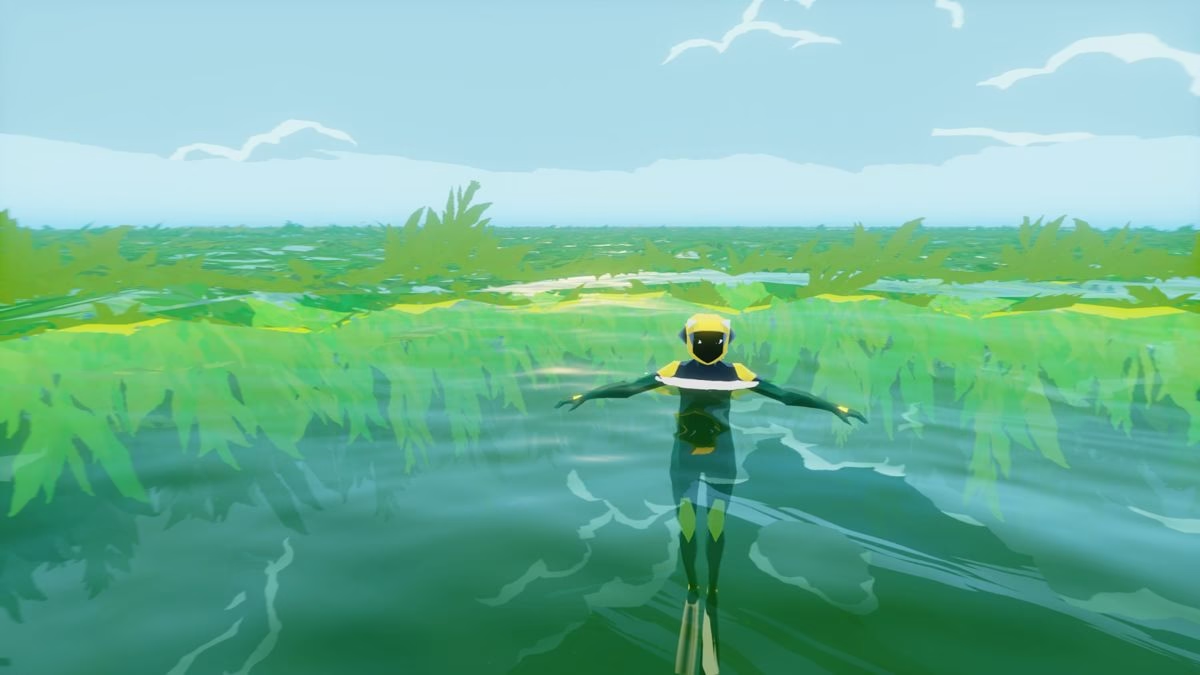
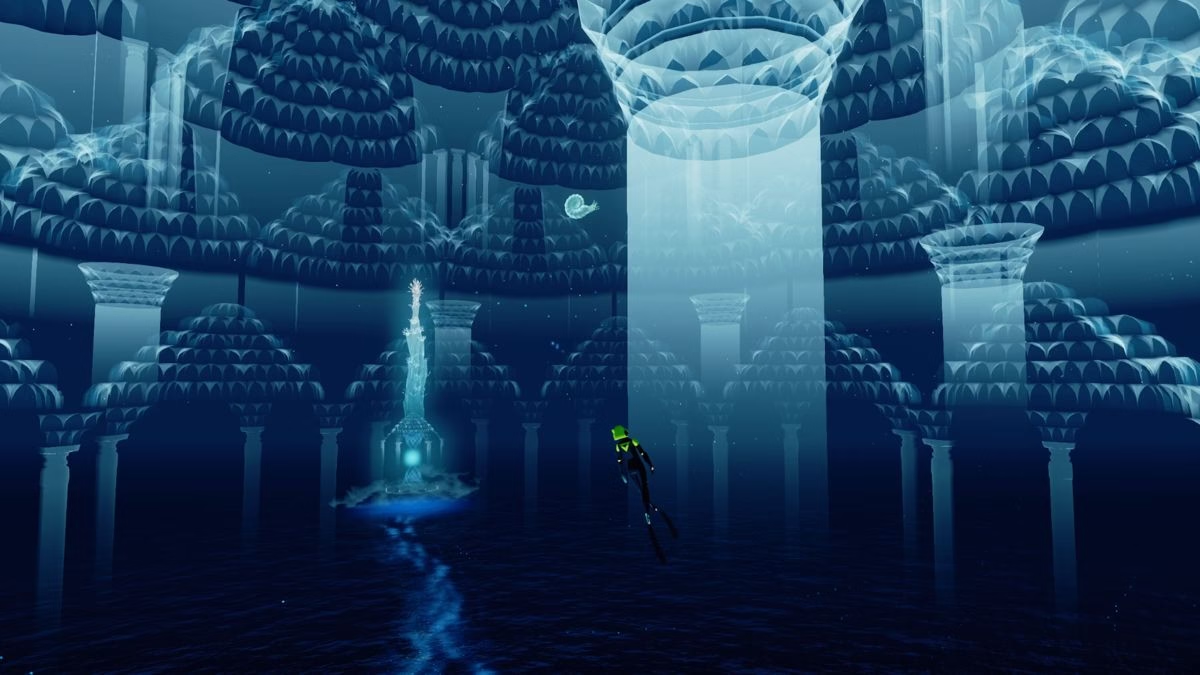
Abzû’s underwater spaces are strikingly colorful and cleanly stylized. A dense kelp forest glows green around clouds of yellow and orange fish, while the diver’s dark suit and bright yellow head stand out instantly against the water. The surface has broad, painterly bands of green and blue beneath a pale sky, and the deep temple replaces that warmth with cool blue stone, columns, and patterned arches.
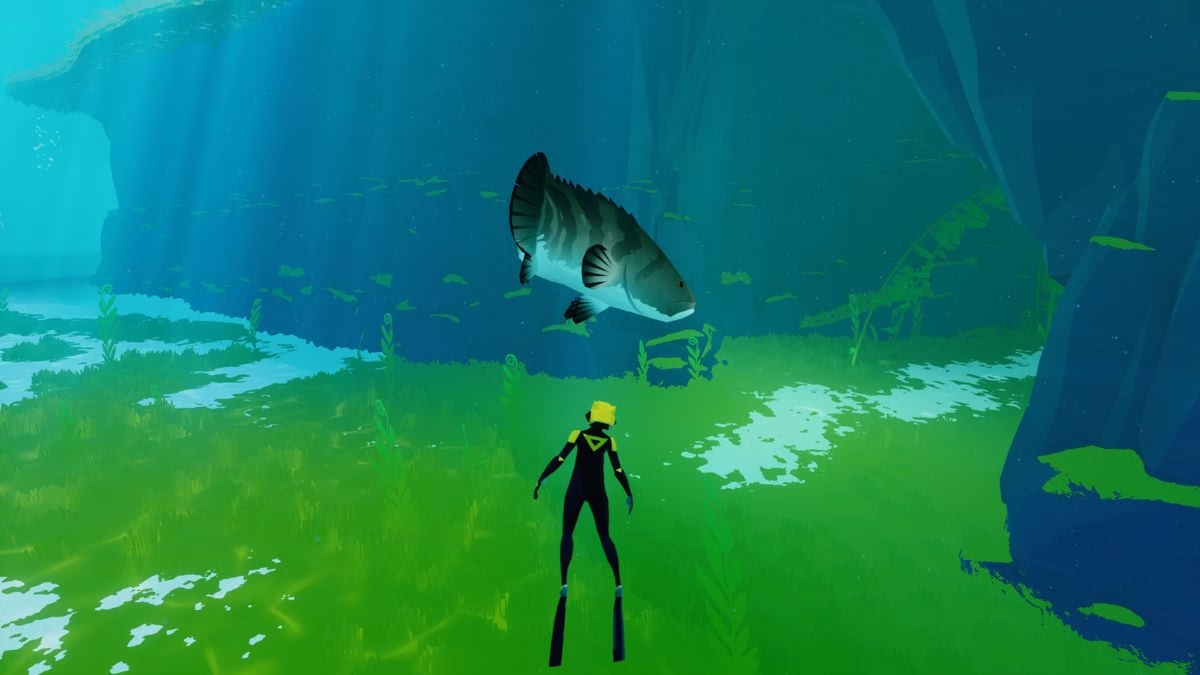
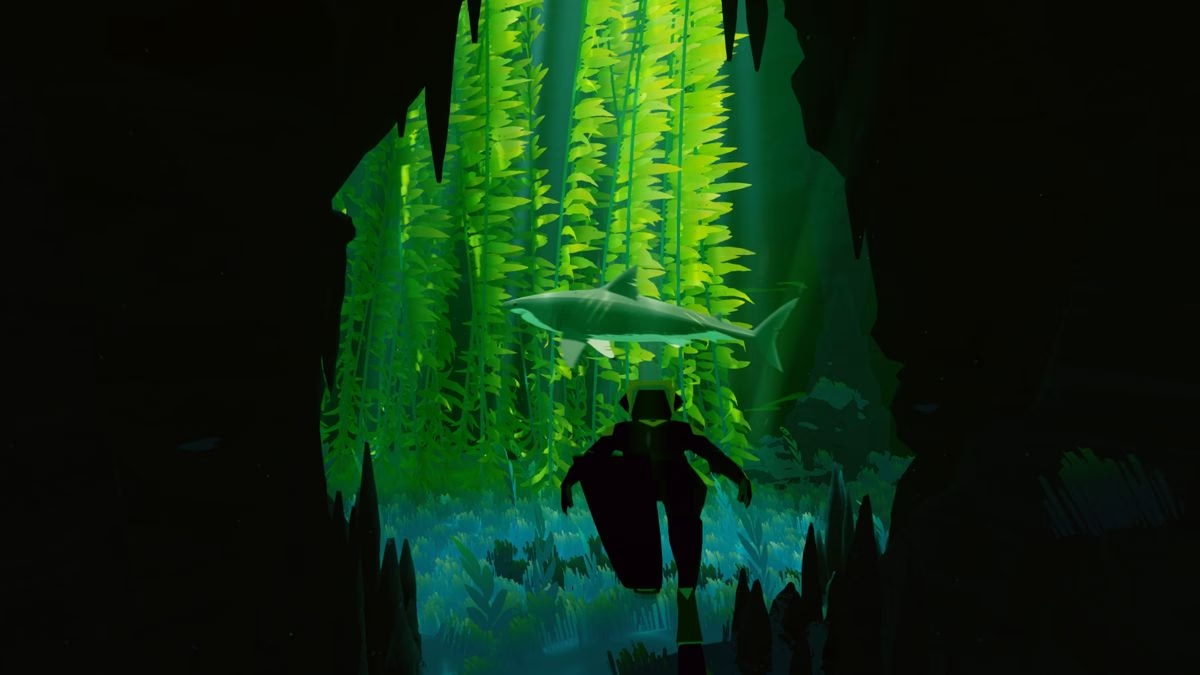
The creatures give each area its personality. Small fish form lively clusters around the diver, while a broad black-and-white fish and a shark feel imposing simply because of their scale against the small human figure. Dark caves framing bright vegetation make the descent feel mysterious without losing the game’s bold color palette.
Story
Abzû does not open by explaining its world or asking you to memorize lore. Instead, it lets the ocean do the talking. Background details gradually point toward an ancient civilization, and the temples give your journey a sense of purpose even before the larger meaning is clear.
That restrained approach suits a game about observation. Bringing orbs to temples and moving into new waters creates a steady feeling that you are restoring or uncovering something, rather than merely ticking off destinations. The story is carried by spaces and progression, so its emotional effect depends on whether you enjoy reading meaning into ruins, wildlife, and the changing environment.
If you want a heavily plotted adventure with lots of direct explanation, Abzû will feel spare. Its narrative is more of a quiet current than a dramatic conversation. For a player willing to meet it halfway, the gradual reveal gives the final stretch more weight than the game’s minimal opening suggests.
Overall Experience
Abzû is at its best when you let it set the pace. Swim off the main line for a while, pass through a school of fish instead of around it, ride a big creature when the chance appears, and use the meditation spots. The game does not punish experimentation, and that lack of danger is central to its charm.
The tradeoff is that its gentle guidance can become disorienting. With few explicit prompts and no HUD spelling out goals, it is possible to lose your bearings, especially when surfacing does not provide much help. The puzzles are not the main draw, and the more scripted segments may test your patience if you came purely for unrestricted swimming.
Even with those caveats, Abzû is an easy recommendation for you if a compact, reflective exploration game sounds more inviting than a demanding challenge. It has enough progression to keep the journey moving, but its real payoff is the time spent suspended among reefs, ruins, kelp, and living schools of fish. It is a memorable place to visit, particularly when you want a game that asks you to breathe, look around, and keep swimming.


Reviews
There are no reviews yet.