 Retro Replay Retro Gaming History, Reviews & Emulation
Game Overview
Gameplay
Röki understands that wandering around with the wrong inventory item is only charming for so long. You guide Tove directly through its environments, inspect highlighted points of interest, and collect objects to combine or place back into the world. It is a familiar adventure-game loop, but the direct movement keeps it from feeling like a static point-and-click conversion. The practical rhythm is simple: explore a new area, talk to someone unusual, read the clues Tove records, then figure out which object belongs where.
The best accessibility decision is the interaction highlight. You can call out the parts of an area that matter, which cuts down on pixel hunting and lets you focus on solving the puzzle rather than sweeping every corner for a tiny hotspot. The journal also gives the game useful structure: its notes preserve Tove’s thoughts and clues, while the map makes it easier to revisit locations. Röki wants you thinking about connections between objects and people, not wondering whether you missed an invisible switch.
That safety net naturally lowers the pressure. There is no combat and no failure state, so the game is more interested in curiosity than mastery. Later twists, including masks that change how you engage with the environment and puzzles shared between two controllable characters, add welcome variety to the basic inventory work. If you want a punishing logic gauntlet, the frequent guidance may feel overly accommodating. If you usually like adventure games until one opaque puzzle stalls you cold, it is a real strength.
Story
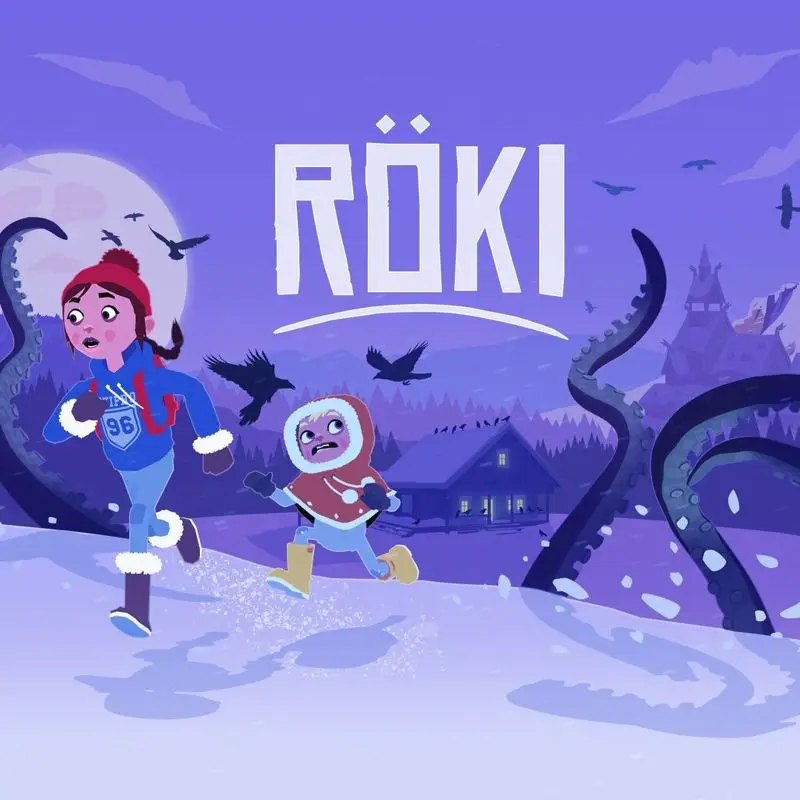
Tove’s search for Lars has enough emotional weight because her family is troubled before the monsters arrive. Her father’s grief and neglect leave her doing the work of an adult, so escaping into a folklore-haunted forest does not feel like a random fantasy detour. Röki balances dark Nordic material with a creepy-but-cute tone, giving its magical encounters room to be unsettling without turning the whole journey into misery. The lack of voice acting puts the burden on the writing and brief vocal sounds, but the story’s core is clear: this is a child trying to protect her family when the adults cannot.
Overall Experience
Röki is a thoughtful choice for a relaxed weekend adventure, especially if Scandinavian folklore sounds more inviting than another murder mystery or combat-heavy fantasy quest. Its nonviolent design and clear interaction help make it easy to settle into, while the family drama gives the journey stakes beyond simply clearing puzzles. You are not being asked to prove quick reflexes. You are being asked to pay attention and keep moving forward.
The tradeoff is that Röki can feel a little too eager to help. Sprinting, fast travel through the map, a clue journal, and universal interaction highlighting all reduce friction, but together they leave less room for the satisfying uncertainty that makes the best adventure games feel like discoveries. Whether that is a flaw depends on what you bring to it. For many players, especially those tired of arbitrary adventure-game dead ends, the streamlined approach will feel respectful rather than easy.
Its payoff is a compact folklore journey with a sincere heart and enough puzzle variation to avoid becoming a simple scavenger hunt. Give it a chance if you want an adventure that treats kindness, observation, and persistence as its main tools. Skip it only if you need high-stakes danger or dense, unguided puzzle design to feel engaged.


Reviews
There are no reviews yet.