 Retro Replay Retro Gaming History, Reviews & Emulation

Retro Replay Review
Gameplay
The first thing Requiem gets right is its willingness to make you feel exposed. Grace’s side of the game leans into survival horror with limited resources, darkness, and a pursuing creature that turns simple movement through an area into a tense calculation. Hiding beneath furniture, staying low, or tossing a bottle to pull danger elsewhere gives you options, but none of them make the threat feel comfortably manageable.
The lighter is an especially fitting piece of tension. It helps cut through the darkness, yet using it can draw attention, so you are constantly weighing immediate visibility against the chance of being found. That is classic Resident Evil pressure: you are not merely moving forward, you are deciding which risk you can survive. Gamers who liked the cat-and-mouse anxiety of earlier stalker enemies should find Grace’s portions the more memorable half.
Leon provides the deliberate counterweight. His chapters shift toward the action-forward rhythm associated with Resident Evil 4, with guns, melee attacks, enemy weapons, and a hatchet that can parry until its durability runs out. Molotov cocktails can clear groups in a hurry, so these sections let you enjoy being dangerous without abandoning the series’ need to conserve and improvise. Freely switching between first-person and third-person views is a welcome touch, letting you favor close-up panic or a wider look at a crowded fight.

Graphics
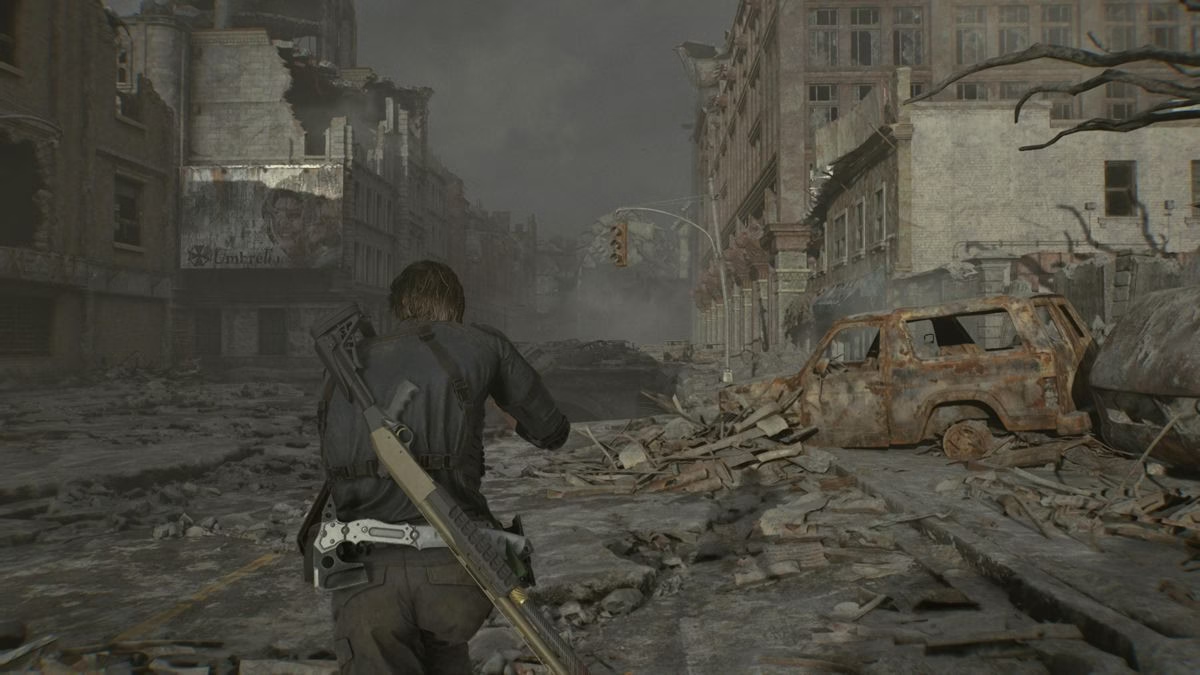
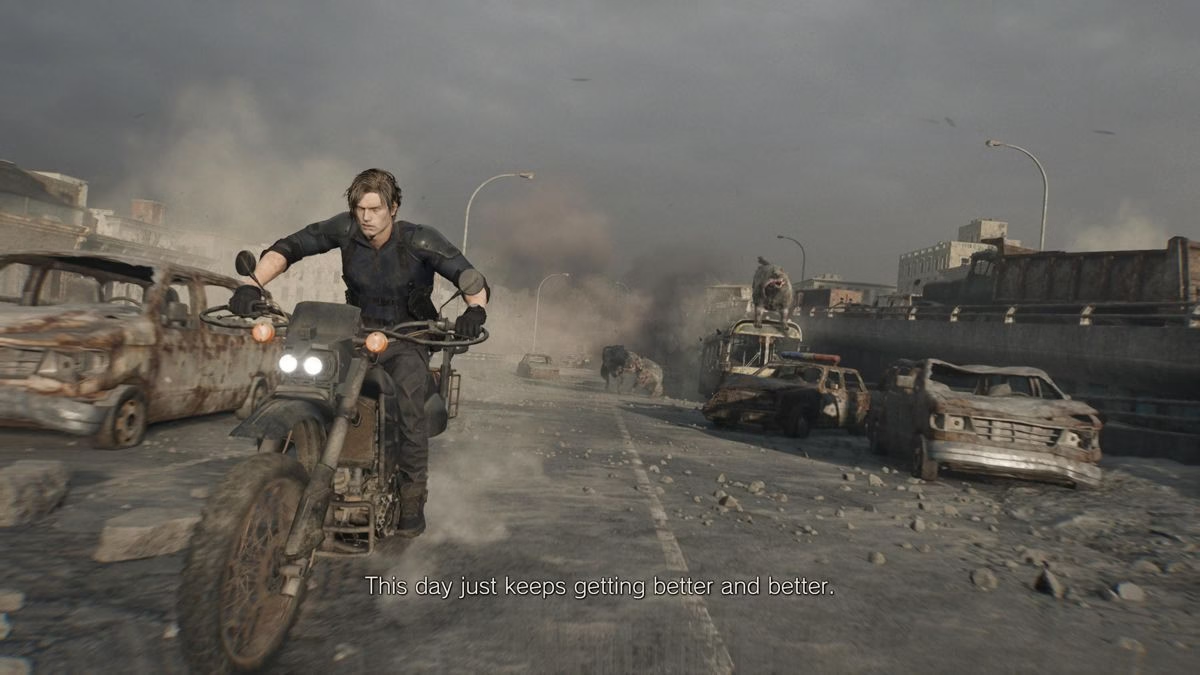
Raccoon City looks properly ruined: cracked streets disappear under rubble, cars sit burned out and abandoned, and damaged buildings fade into a gray, smoky distance. Leon’s motorcycle ride through that wreckage has the grimy scale the setting deserves, while the close third-person view keeps his gear and movement front and center.
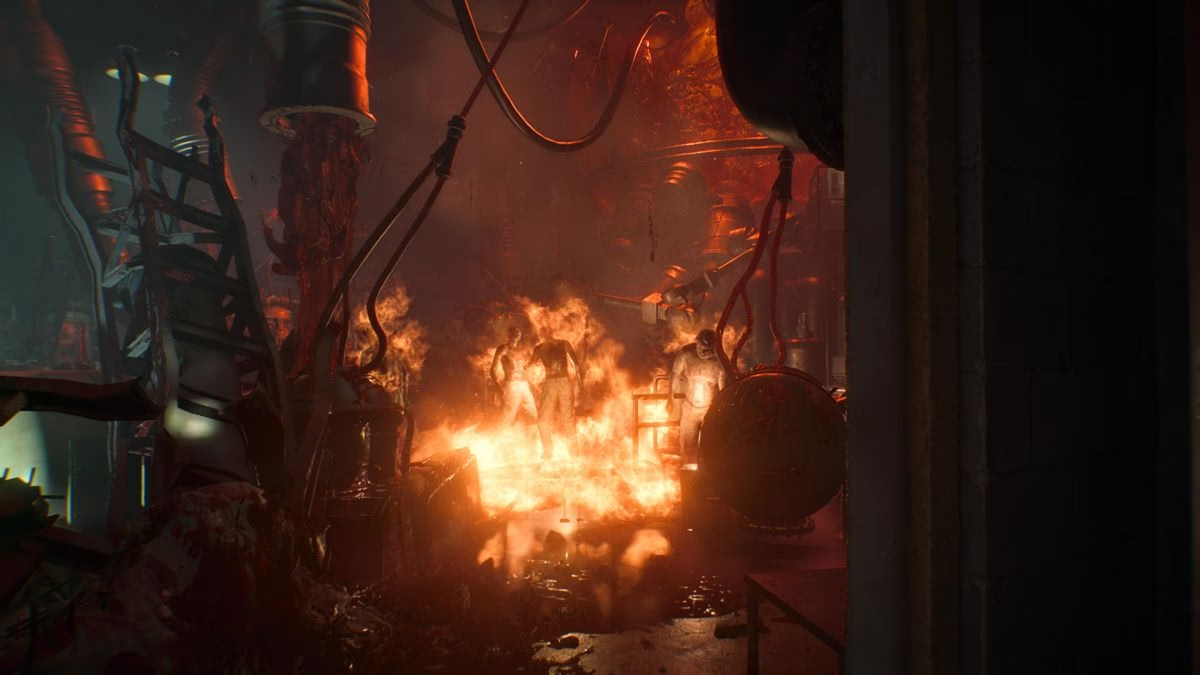
Indoor locations are moodier and more claustrophobic. The garage’s concrete, brick arches, barred storage spaces, and pools of weak light make it feel cold and unsafe. Fire scenes cut through the darkness with harsh orange flames, illuminating tangled industrial equipment and enemies in a way that makes the chaos easy to see.
Story
Requiem has an effective reason to return to Raccoon City rather than treating it as a nostalgia stop. The city has been destroyed for decades, and its bombed-out remains turn the old disaster into a physical place that still carries consequences. The setting feels personal for Grace, whose investigation into mysterious deaths leads back to the Wrenwood Hotel, where her mother Alyssa died.
Grace’s FBI work and eventual imprisonment in the Rhodes Hill Chronic Care Center give her story a vulnerable, investigative angle. She is not entering the nightmare as an established combat legend, which makes the horror emphasis feel earned instead of forced. Her connection to Alyssa Ashcroft also gives longtime fans a meaningful thread back to Resident Evil: Outbreak.
Leon’s concurrent investigation broadens the mystery without displacing Grace. He follows murders involving Raccoon City survivors and a former Umbrella scientist, placing the familiar veteran in a case that speaks directly to the franchise’s long history of corporate atrocities and lingering victims. The two-character format has a clear dramatic advantage: Grace carries the dread of uncovering the truth, while Leon brings the perspective of someone who has spent years confronting its consequences.
Overall Experience
Requiem’s biggest strength is that the contrast between its leads feels purposeful rather than like a compromise. Grace gives you the slow-burn dread of being hunted in the dark; Leon gives you the release of meeting horror with training and firepower. The changes in tone should keep a long campaign from settling into a single predictable loop.
That split can also be the dividing line. If you only want stripped-down survival horror, Leon’s more aggressive chapters may feel like an interruption. If you come for Resident Evil’s action side, Grace’s need for stealth, evasion, and careful resource use will demand patience. The game is most rewarding when you embrace both moods instead of wishing one would replace the other.
For series fans, this is a confident return to Raccoon City that understands the place should still hurt. For newcomers, it offers a useful cross-section of what Resident Evil does well: uneasy exploration, monster pressure, action set pieces, and a conspiracy rooted in old trauma. Requiem earns its high standing by making those competing sides of the series feel connected instead of incompatible.


Reviews
There are no reviews yet.